GAS: Domestic market gets 41.3% as Nigeria’s supply averages 4.95bcf/d in 10 months
•LPG retail price rises 12.5% to N1,800 per kg •Make domestic market attractive to secure adequate supply — NALPGAM By Udeme Akpan Despite Nigeria’s 215.19 trillion cubic feet (Tcf) of proven natural gas reserves, the domestic market received an average of 2.04 billion cubic feet per day (bcf/d), representing 41.3 per cent of the country’s total supply of 4.95 bcf/d in the first 10 months of 2026. Make domestic market attractive to secure adequate supply — NALPGAM The Executive Secretary/Chief Executive Officer of the Nigerian Association of Liquefied Petroleum Gas Marketers, NALPGAM, Bassey…
•LPG retail price rises 12.5% to N1,800 per kg •Make domestic market attractive to secure adequate supply — NALPGAM By Udeme Akpan Despite Nigeria’s 215.19 trillion cubic feet (Tcf) of proven natural gas reserves, the domestic market received an average of 2.04 billion cubic feet per day (bcf/d), representing 41.3 per cent of the country’s total supply of 4.95 bcf/d in the first 10 months of 2026.
The Nigerian Midstream and Downstream Petroleum Regulatory Authority, NMDPRA, disclosed this in its latest report obtained by Vanguard. The report showed that the Nigeria LNG Limited, NLNG, received the remaining 58.7 per cent, averaging 2.91 bcf/d. In October, total average daily gas supply rose by 2.7 per cent to 4.951 bcf/d, from 4.822 bcf/d in September.
Domestic supply increased by 2.3 per cent to 2.113 bcf/d, while deliveries to NLNG grew by three per cent to 2.838 bcf/d. April recorded the highest average daily supply during the 10-month period at 5.141 bcf/d, comprising 2.01 bcf/d for domestic market and 3.13 bcf/d for NLNG. Gas supply to power plants increased by 10 per cent to 0.571 bcf/d in October.
Deliveries to gas-based industries also rose, while supplies to commercial users declined. Supply to the Escravos Gas-to-Liquids facility fell by two per cent. Gas exports also strengthened. Average daily LNG exports increased by seven per cent to 52,721 metric tonnes per day, from 49,198 metric tonnes per day in September, while pipeline exports through the West African Gas Pipeline (WAGP) rose by 11 per cent to 0.149 bcf/d, from 0.134 bcf/d.
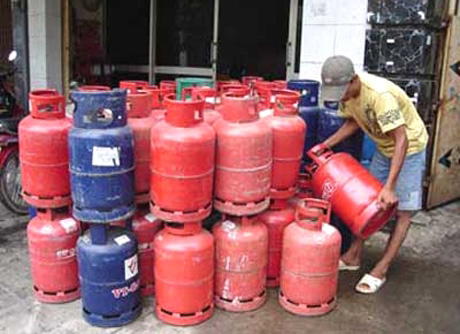
LPG retail price rises 12.5% to ₦1,800 per kg Meanwhile, the average retail price of liquefied petroleum gas, LPG, also known as cooking gas, rose by 12.5 per cent to ₦1,800 per kilogramme in November 2026, from ₦1,600 in October. Checks by Vanguard attributed the increase largely to limited supply. The average depot price of LPG stood at ₦1,274 in the Daily Depot Price Intelligence Report for Friday, November 20, 2026.
The report covered Lagos, Warri, Calabar and Port Harcourt but did not provide a regional breakdown of LPG prices. Make domestic market attractive to secure adequate supply — NALPGAM The Executive Secretary/Chief Executive Officer of the Nigerian Association of Liquefied Petroleum Gas Marketers, NALPGAM, Bassey Essien, told Vanguard in an interview that Nigeria must make its domestic gas market commercially attractive to secure adequate supplies.
He said: “Gas exports generate foreign exchange, but the domestic market must also be commercially attractive enough to secure adequate supply. ‘’The solution is not to stop exports but to make the domestic market competitive enough to attract supply while preserving export earnings.” On Domestic Gas Delivery Obligation, DGDO, Essien noted that regulation alone could not guarantee physical deliveries without adequate infrastructure and effective payment systems.
“The Domestic Gas Delivery Obligation, DGDO, requires producers to supply the local market, but regulation alone cannot guarantee physical delivery where gathering, processing, transportation and payment systems are inadequate,” he said. He identified the proposed Gas Swap Framework as a way to address infrastructure and supply gaps by connecting producers with available gas but limited evacuation capacity to operators with infrastructure but insufficient supply.
Essien added: “Gas is also essential to fertiliser, cement, petrochemicals, steel, methanol, glass, ceramics, food processing and other industries. ‘’Greater domestic utilisation can, therefore, create wider economic value through electricity, manufacturing, employment, taxation and investment.” Similarly, the Lead Consultant for Industry and Private Sector Development at the ECOWAS Commission, Prof.
Ken Ife, said Nigeria must focus on converting its vast reserves into reliable supplies for the domestic economy, while sustaining export earnings. He said: “Nigeria’s gas challenge is no longer simply about how much gas the country has in the ground, it is about how quickly it can turn those reserves into reliable, commercially viable supplies for the domestic economy while sustaining the export revenues needed to finance further investment.”
- gas
- supply
- bcf
- market
- nigeria
- cent
- price
- delivery