UN climate talk breakdown a disaster for Australia and the Pacific
If ever there was a year when countries should have been motivated to act on climate change, it was this year. But the COP31 result is a disastrous one, once again, for Australia's international climate change credibility.
The answer to the question of just how the world was unable to agree, in 2026, that it should reduce its use of fossil fuels lies somewhere between two simplistic explanations.
That it is that 'it's the end of multilateralism as we know it' or 'it's all Chris Bowen's fault'.
If ever there was a year when countries should have been motivated to act on climate change, it was this year, at the annual UN talks held in Antalya, Türkiye.
Even putting aside collapsing glaciers in Nepal, record heatwaves in Europe, and 2026 being the hottest year on record, the UN conference was the first to concede the ambition to keep global warming to "just" 1.5 degrees Celsius above pre-industrial levels had been blown only a decade after it was set in Paris.
That is a recipe for more forecast extreme heat and weather, flooding, sea level rises and collapsing ecosystems — all with grave implications for food, water and health.
From the sweeping ambitions to set up a world carbon trading scheme in Copenhagen in 2009 to proposals in Türkiye which, at best, were designed to keep global consensus on life support, the ambition and scope of these international talks has only been in the one, downward direction.
Amid the finger-pointing about who is responsible for the collapse of the talks, it is worth considering the underlying dynamics, if only as a guide to where things might go next.
While it may well have been a year of climate crisis, there were also a number of wars, a serious breakdown in the United States' role in global affairs and related to both of those developments, a new uncertainty over energy supply and prices, which saw countries in a frenzy of hoarding and seeking access to fossil fuel supplies.
The rewiring of geopolitics as a result has also had a striking influence on these talks.
For example, earlier this year, Türkiye, Saudi Arabia and Pakistan signed the Mecca Agreement — a NATO-like defence pact.
While Mecca does not immediately cross over with UN climate talks, it is a pointer to the changing relationships taking place, and to the growing assertiveness of middle powers like Saudi Arabia and Türkiye in setting the global agenda.
Saudi Arabia has always been a major force in the "pro-fossil fuels" camp at the UN negotiations.
While it has had quite a few geo-strategic disasters this year — including the war in Yemen — its experience in OPEC makes it a formidable negotiator in multinational forums like the UN climate change talks.
And with the United States absent from the talks, there was a vacuum to fill.
Türkiye itself is a rising power in the region, and is very much conscious of that — whether it is as a major weapons supplier to countries from Europe to Africa, to putting itself at the centre of negotiations like these ones, or making clear it sees itself as a regional rival to Israel.
The problem in terms of climate change is that Türkiye is also one of the economies of the world which is still heavily reliant on fossil fuels.
Its position on climate change is therefore heavily compromised — and is seen as being so.
That brings us to Australia, which is also both heavily reliant on fossil fuels — despite all the greening of the electricity grid — and heavily reliant for the income that flows from our fossil fuel exports.
Australia's climate credibility has been hit hard by a decade of withdrawal from the climate ambition club under the Coalition, and presently because of vast new fossil fuel projects underway.
These include the development of the Browse oil and gas field off Western Australia, the Valhalla fracking project in the Kimberley, the Beetaloo basin in the Northern Territory and the approval of a new coalmine in the Hunter Valley.
Little wonder that there was widespread scepticism about both countries taking the joint presidency this year.
This joint structure was a first — and most observers seem to hope it will be a last too.
Trying to make sure everyone had an important job but having one party — Türkiye — effectively naming the terms of the proposal under discussion, and another — Australia — having to negotiate it was always problematic.
While "exclusive authority in relation to the negotiations" was delegated to Australia, Türkiye's COP President Murat Kurum had publicly asserted months before the conference that his country still held the "final decision" on conference outcomes.
There were conflicting messages on Sunday, with Kurum telling reporters he was "hopeful" of a breakthrough, right before another draft text was rejected.
Bowen and Kurum issued the final draft together in a last-ditch effort to save the talks, before Bowen acknowledged that "unbridgeable red lines" over fossil fuels and climate finance had doomed the agreement.
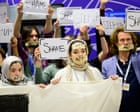
Australia's pitch for the presidency, and its agreement to have a "joint" process, was heavily based on arguing our Pacific neighbours needed to be heard.
That's a judgement driven as much in wanting to boost our standing with our neighbours on national security grounds as anything else.
But the result is a disastrous one, once again, for Australia's international climate change credibility.
The outcome in Türkiye will do nothing for the stocks of the Albanese government at home either: even if it just adds to the toxic perceptions building of a timid government unable to deliver any substantial policies.
Those looking for a "glass half full" argue there was quite a lot done in other parts of the climate change talks — and that the energy transition is happening without governments.
This view was summarised by Christiana Figueres, a former UNFCCC executive secretary, who said that "outside the negotiating rooms, the clean energy transition is accelerating, despite concerted efforts by major oil and gas producers to distract and delay".
"We saw it in the progress achieved under the Action Agenda, and pledges or signals by around half the global economy to lift electricity to 35 per cent of global final energy consumption by 2035."
But many wonder why Türkiye and Australia insisted on having the cover letter, which caused all the disagreement.
Even if you take the argument that this COP meeting was all about "implementation", not new pledges, there has not been a lot of movement on the question of financing for developing countries.
Panama's Environment Minister Juan Carlos Navarro said it was just "not acceptable to have a COP or a cover decision that does not even mention fossil fuels and we simply will not put up with it".
Tuvalu's Climate Minister Maina Talia told reporters it was a "red line" for the low-lying Pacific nation.
"We're talking about the root cause of all of this," he said.
Meanwhile, the UN's climate chief, Simon Stiell, said he would seek advice on potentially reforming the process before next year's conference in Ethiopia.
He told delegates the UN climate process has "suffered setback before and come back stronger".
- climate
- australia
- talk
- disaster
- pacific
- change
- country
- result