Ghana must mobilise more domestic capital to finance economic growth – Stanbic’s Kwamina Asomaning

Ghana must strengthen its capacity to mobilise domestic capital to finance economic growth and reduce its exposure to external financial shocks, Kwamina Asomaning, President of the Ghana Association of Banks and Chief Executive of Stanbic Bank Ghana, said. On her part, the Managing Director of the Ghana Stock Exchange (GSE), Abena Amoah, urged Ghanaian businesses and institutions to explore the Exchange’s capital-raising opportunities to finance their growth.
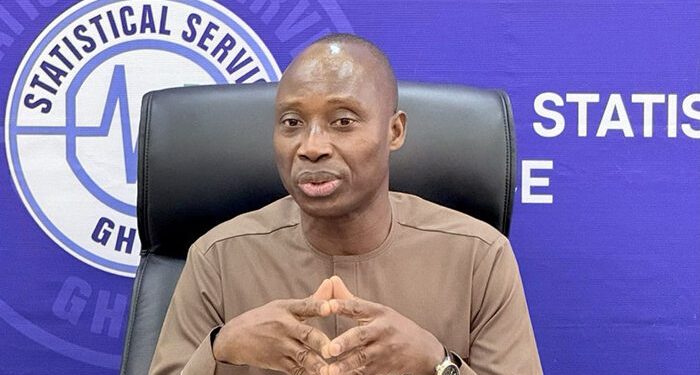
Ghana must strengthen its capacity to mobilise domestic capital to finance economic growth and reduce its exposure to external financial shocks, Kwamina Asomaning, President of the Ghana Association of Banks and Chief Executive of Stanbic Bank Ghana, said.
He said domestic savings could provide a more sustainable source of funding for productive sectors if the country developed appropriate investment opportunities and maintained investor confidence.
Speaking at the official listing of Cocoa Capital PLC’s inaugural commercial paper in Accra on October 14, 2026, Mr Asomaning said government alone could not meet the country’s investment needs, making collaboration among banks, capital markets and domestic investors increasingly important.
“Our economic aspirations require sustained investment in agriculture, infrastructure, manufacturing, trade and technology. Government cannot finance these requirements alone. Neither can traditional bank lending or external borrowing,” he said.
He noted that although external financing would continue to support Ghana’s development, mobilizing funds locally would strengthen the economy’s resilience to currency fluctuations and international refinancing risks.
The listing marked the first issuance under Cocoa Capital PLC’s GH¢16.3 billion note programme and the admission of its inaugural commercial paper to the Ghana Fixed Income Market.
The Series 1, Tranche 1 issuance attracted approximately GH¢3.59 billion in investor demand, of which GH¢3.395 billion was accepted and allocated at an annual interest rate of 11 per cent.
Mr. Asomaning said the transaction demonstrated the potential of coordinated action among financial institutions, regulators and investors to direct capital towards economic activity.
“We therefore need a financial system in which banks and capital markets are not viewed as competitors, but as complementary parts of the same architecture for growth,” he said.
The proceeds will support the Ghana Cocoa Board’s (COCOBOD) cocoa bean purchasing requirements for the 2026/27 crop season. Mr. Asomaning said timely financing would help move cocoa from farmers through the licensed buying and marketing chain to international markets, supporting livelihoods, exports and foreign-exchange earnings.
He, however, cautioned that attracting investment would depend on transparency, accountability and the ability of borrowers to meet their obligations.
“Capital follows confidence, and this confidence cannot be taken for granted. It must be earned through transparency, accountability, disciplined execution and the consistent fulfilment of obligations,” he said.
Mr. Asomaning also stressed that innovative financing instruments must be supported by reforms to address the cocoa sector’s structural challenges.
He welcomed the legislative backing given to cocoa-sector reforms announced by the Minister for Finance, but urged their full and consistent implementation to provide greater certainty for investors and businesses across the value chain.
Mr. Asomaning said the success of the commercial paper programme would ultimately depend on the prudent use of proceeds, transparent administration and timely repayment.
He expressed hope that the inaugural issuance would deepen Ghana’s domestic capital market and demonstrate how collaboration across the financial sector could support productive growth.
On her part, the Managing Director of the Ghana Stock Exchange (GSE), Abena Amoah, urged Ghanaian businesses and institutions to explore the Exchange’s capital-raising opportunities to finance their growth.
She said the GSE offered multiple financing options, including equity, corporate bonds, commercial paper and sustainable financing instruments, which businesses could use to broaden their funding sources. “We hope this will encourage other public and private sector institutions to come talk to us and raise funds locally,” she said.
Ms. Amoah further disclosed that since January 2025, Ghana’s public capital markets had mobilized about GH¢6.8 billion for businesses and institutions through equity and debt issuance.
She also announced that the GSE was preparing to introduce the GSE Academy to help companies prepare for investment, improve engagement with investors and deepen public understanding of investment opportunities and risks.
- capital
- ghana
- asomaning
- growth
- cocoa
- sector
- investor
- market