science

Is it true that … we only use 10% of our brains?
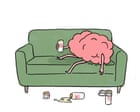
Is it true that … we only use 10% of our brains?

This idea really bugs Dr Mary Spiller, senior lecturer in the University of East London’s Department of Psychology and Human Development, who’s shocked by how prevalent it remains, despite being untrue. Spiller says the myth’s origins can partly be traced to the work of William James, one of the founders of modern psychology, working in the late 19th and early 20th centuries.

The idea that we access a fraction of our cognitive potential goes back decades, but does medical science agree?

This idea really bugs Dr Mary Spiller, senior lecturer in the University of East London’s Department of Psychology and Human Development, who’s shocked by how prevalent it remains, despite being untrue.

Spiller says the myth’s origins can partly be traced to the work of William James, one of the founders of modern psychology, working in the late 19th and early 20th centuries. He wrote: “We are making use of only a small part of our possible mental and physical resources.”

Misunderstandings about brain scans may also have helped the myth spread, she says. Images of brain activity often show some areas lighting up while others appear dark, which can give the impression that only certain parts of the brain are working.

“The sections that aren’t lit up aren’t inactive,” she says. “When we’re comparing the brain in two different conditions, the areas highlighted are simply the ones that are more active in one condition than the other.”

Cases where people have had large parts of their brain removed and can still function afterwards aren’t evidence that we don’t use all of our brains, either, even if it might seem as if they are.

“What that’s showing is the amazing potential of our brain’s neuroplasticity,” she says. If someone has half of their brain removed, the remaining half can reorganise itself so that people can continue to function. “Different regions of the brain have specialised roles, such as movement, language and vision, but there’s also a degree of neuroplasticity within those regions. Things can change.”

“We use all of our brains,” she says. “We use all of our brains pretty much all of the time. Even when we’re sleeping.”

  • idea
  • spiller
  • psychology
  • use
  • brain
  • fraction
  • potential
  • decade

Summaries and tags are generated automatically. Stay informed with VidiaNews.

Related news

It will soon be too late to regulate use of autonomous weapons, warns Red Cross
world

It will soon be too late to regulate use of autonomous weapons, warns Red Cross

Warning about putting ‘genie back in the bottle’ comes as UN conference fails to agree on regulation instrument The International Committee of the Red Cross (ICRC) and rights groups warned that soon it will be too late to put the “genie back in the bottle” as the development of autonomous weapons appears to outpace efforts to regulate them. The stark warning came as more than 120 member states of the UN Convention on Certain Conventional Weapons concluded a week-long conference in Geneva.

Read →
‘I didn’t know’: former Australia Test coach Darren Lehmann denies any knowledge of sandpaper use
sports

‘I didn’t know’: former Australia Test coach Darren Lehmann denies any knowledge of sandpaper use

Lehmann’s version of events of 2018 tour remain unchanged ‘We’ve just got to try to move on’ from ball tampering saga Darren Lehmann has denied knowledge of a plan to use sandpaper to alter the ball during Australia’s Test tour of South Africa in 2018, contradicting Cameron Bancroft’s claims. The former Australian Test coach was implicated in Bancroft’s 4,000-plus word statement on the events that led to the Western Australian being busted on-field with sandpaper down his trousers in Cape Town.

Read →
International talks on controlling use of autonomous weapons collapse
technology

International talks on controlling use of autonomous weapons collapse

Week-long efforts fail to establish negotiating mandate on AI warfare after Russian ‘filibustering’ Week-long efforts to agree a negotiating mandate for a legally binding international treaty to control on the use of autonomous weapons collapsed just before 5am on Saturday morning, after all night talks failed to overcome Russian objections. Despite an overwhelming majority of states at the Review Conference on Conventional Weapons at the UN in Geneva wanting to agree a negotiating mandate leading to a legally binding treaty, the need for consensus forced the conference to adopt a much weaker

Read →