The Inconvenient Truth: We are building Heaven for the few on the foundations of Hell for the many
NyansaKasa (Words of Wisdom): “When possessions become more valuable than people, wealth builds comfort for a few while quietly manufacturing suffering for many.” The Democratic Republic of the Congo mined roughly 73 per cent of the world’s cobalt in 2025, the mineral that powers the batteries in our phones and electric vehicles, yet the World Bank estimates that around three in four Congolese live in extreme poverty.
Humanity has mastered the art of accumulation while quietly forgetting the arithmetic of conscience. The question is no longer whether we can create wealth, but whether we can create it without manufacturing misery for those who never agreed to pay its price.
Imagine two children born on the same morning beneath the same generous African sky, perhaps no more than twenty kilometres apart. One arrives in a private maternity suite where the air conditioning hums like a lullaby and an education fund has already been opened in her name, while the other arrives in a community where the nearest functioning clinic is a long walk away, clean water is a daily negotiation, and childhood is quietly mortgaged to survival. Neither child applied for the circumstances of birth, and neither will be consulted about the inequalities waiting patiently to receive them. Yet one may grow up in something resembling heaven on earth while the other inherits conditions that can feel uncomfortably close to hell, and the most inconvenient truth of all is that much of the distance between those two cradles was created not by nature but by human choices.
NyansaKasa (Words of Wisdom): “When possessions become more valuable than people, wealth builds comfort for a few while quietly manufacturing suffering for many.”
There is a familiar scene in business districts across the world. A successful proprietor takes delivery of a fifth luxury vehicle, posts a photograph with a caption about hard work and divine favour, and then returns to an office where staff have not been paid for three months.
The employees are told, with great sincerity, that patience is a virtue, and one cannot help suspecting that the next motivational seminar will explain why this virtue is best practised by those waiting for their salaries rather than by those signing the cheques.
This is not an argument against wealth, enterprise or ambition, for wealth created through innovation, honest effort and responsible risk has lifted hundreds of millions out of poverty. The problem begins when accumulation loses its moral boundaries, when personal success becomes detached from social responsibility, and when greed is quietly rebranded as vision.
Materialism carries a peculiar psychological trap, because the more some people acquire, the less satisfied they appear to become. It is a race with no finishing line, run at great expense by participants who will eventually leave every trophy behind, rather like a man who spends a lifetime polishing a car that cannot accompany him on his final journey. The latest figures suggest that the race is accelerating. Oxfam reported in January 2026 that billionaire wealth rose by more than 16 per cent in 2025 to a record $18.3 trillion, an increase it estimated could end extreme poverty 26 times over, at a time when close to half of humanity still lives in poverty. Not every fortune is ill-gotten, but a world that can find trillions for the summit and very little for the valley must at least pause to examine its conscience.
NyansaKasa (Words of Wisdom): “When enough is never enough, abundance becomes another form of poverty dressed in expensive clothing.”
Wealth Beneath the Soil, Poverty Above It
Africa offers some of the most uncomfortable illustrations of this contradiction. The Democratic Republic of the Congo mined roughly 73 per cent of the world’s cobalt in 2025, the mineral that powers the batteries in our phones and electric vehicles, yet the World Bank estimates that around three in four Congolese live in extreme poverty.
Across the continent, UNCTAD estimates that some $88.6 billion leaves Africa every year as illicit financial flows, a sum close to the official development assistance and foreign direct investment that the continent receives combined. In Ghana, illegal mining has turned once proud rivers the colour of strong tea and threatened farmland that has fed generations. Consider the person who grows wealthy from activities that poison a river and then buys imported bottled water for the household, having achieved remarkable financial independence from the consequences of his own behaviour; unfortunately, the village downstream has not.
NyansaKasa (Words of Wisdom): “The one who grows rich by poisoning the river may buy clean water, but cannot buy back the innocence of the stream.”
Greed rarely remains a private vice for long, because given time and tolerance it hardens into institutional habit. Picture the commissioning of a new public school, complete with speeches, photographs and a beautifully tied ribbon, followed eighteen months later by cracks racing across the classroom walls, and one is tempted to conclude that the ribbon was the strongest material used in the entire project.
Corruption, seen in this light, is not merely an accounting irregularity but a silent transfer of safety, opportunity and dignity from ordinary citizens to a privileged few. UNCTAD’s own research found that African countries with high illicit outflows spend markedly less on health and education than those with low outflows, so every diverted dollar has a classroom and a hospital bed attached to it.
NyansaKasa (Words of Wisdom): “When greed helps to build public institutions, society eventually pays for what private hands secretly removed.”
The Boardroom Must Also Look in the Mirror
Boards exist to oversee strategy, risk and long-term sustainability, yet financial performance alone has never been a complete measure of institutional success. A company may deliver attractive dividends while exposing workers to unsafe conditions, reward executives generously while starving staff development, and report rising margins while postponing environmental obligations to a future financial year that somehow never arrives- practices that accumulate reputational, regulatory and financial risk with the quiet patience of compound interest. Directors must therefore ask whether employees are treated fairly, whether suppliers are paid on time, whether executive rewards reflect sustainable performance, and whether the organisation creates value beyond the immediate interests of those who control it.
NyansaKasa (Words of Wisdom): “A boardroom that counts profit without counting its human cost may applaud success while quietly drafting tomorrow’s crisis.”
Many societies proclaim deep religious and moral values while tolerating conduct that openly contradicts them. One meets the devout employer who spends the morning praying for prosperity, the afternoon withholding wages and the evening thanking Heaven for another blessed day of business, while his employees, one imagines, are praying too, mainly that their salaries will eventually receive divine approval. This is no criticism of faith, which has inspired extraordinary compassion and service, but of the widening distance between what we profess in sacred places and what we practise in the marketplace.
NyansaKasa (Words of Wisdom): “Faith becomes a performance when the hands raised in worship are the same hands withholding another person’s dignity.”
What Must Change, and Who Must Change It
Reversing this trend demands more than condemnation; it requires a deliberate redesign of incentives, institutions and imagination. Governments must strengthen the agencies that protect public resources, enforce environmental standards with the same vigour they bring to tax collection, and make public procurement transparent, professional and genuinely focused on value for money.
African governments, working with partners in the financial capitals of the world, must pursue illicit financial flows through public registers of beneficial ownership, better trade data that can detect mispricing and the determined return of stolen assets. Boards must link executive rewards to long-term value, fair labour practices and environmental stewardship rather than to quarterly applause. Education systems must cultivate ethical reasoning and civic responsibility alongside technical competence, while families, faith communities and the media must reconsider whom they celebrate, choosing the honest builder over the flamboyant spender.
Above all, a shift in mindset is required. We must move from asking how much a person owns to asking what that ownership enables them to contribute, and from treating prosperity as a private trophy to understanding it as a shared inheritance held in trust for others. Inclusive thinking recognises that the cleaner downstream, the supplier at the end of the payment queue and the child not yet born are all stakeholders in our decisions, even when they have no seat at the table.
NyansaKasa (Words of Wisdom): “A society begins to heal when it rewards the creation of genuine value more generously than the display of accumulated possessions.”
Imagine an African child born twenty-five years from now, inheriting the rivers we protected or poisoned, the institutions we strengthened or hollowed out, and the opportunities our choices made possible or impossible. One day that child may ask why, knowing that greed was damaging communities and the environment, we continued to celebrate those who profited from it. It would be awkward to reply that questioning the source of their wealth was considered impolite at dinner. History may listen politely to our excuses, but the next generation will simply inherit the consequences.
NyansaKasa (Words of Wisdom): “The unborn child will not inherit our excuses for greed, but will inherit every consequence of our refusal to confront it.”
The mansion remains when its owner departs, the luxury car eventually belongs to someone else, and the titles that once commanded admiration fade quietly into footnotes. What endures is the human impact of our choices: whether our success created opportunity or suffering, whether our wealth built lives or broke them, and whether our ambition left society stronger or merely left us richer.
Heaven and hell on earth are not inevitable conditions of existence but arrangements made by human hands, and what human hands have arranged, human hands can rearrange. The Africa we desire, and indeed the world we desire, is in our own hands, and the inconvenient truth is that those same hands must now stop building a temporary paradise for the few on the foundations of a living hell for the many.
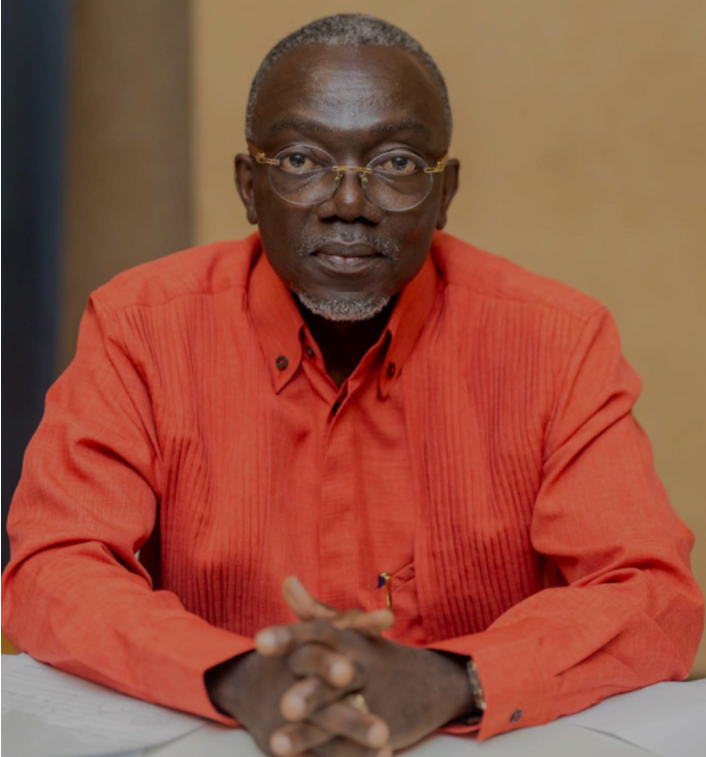
Ing. Professor Douglas K. Boateng is a strategist in governance, industrialisation and supply chains, and serves as a professional chairperson, an international Chartered Director (UK) and a Chartered Engineer (UK). A Pan-Africanist and social entrepreneur at heart, he has spent his career working across public institutions, corporate boards and industrial policy, in Africa and beyond, guided by the conviction that strong institutions are built one honest decision at a time. His contributions to industry and academia have earned him more than six lifetime achievement awards. He is the founder of NyansaKasa (Words of Wisdom), a collection of daily aphorisms he has written and shared since late 2019, distilling decades of experience advising governments, boards, and enterprises on governance, accountability, and institutional resilience into words meant to challenge and endure. He convenes the Boardroom Governance Summit, Africa’s largest boardroom-focused summit, and writes a widely read weekly op-ed series titled “Inconvenient Truth” and “What Is Wrong With Us”, featured on some of the region’s leading digital media platforms. Professor Boateng can be reached via LinkedIn or at info@panavest.com.
- wealth
- poverty
- truth
- heaven
- hell
- world
- race
- inconvenient