Yelwata Massacre: Farmer tells court how gunmen killed his wife, three sons

According to him, the attackers first approached the new market, where police officers and soldiers were stationed at a checkpoint. They later moved towards the old market because of the security presence.
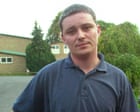
A farmer on Monday told the Federal High Court in Abuja how he lost his wife and three sons in the June 2025 Yelwata massacre in Benue State.
The witness, Ukeyima David, from Guma Local Government Area, testified as the third prosecution witness in the trial of nine men accused of involvement in the attack.
“They hacked me with a machete and killed my wife and three sons,” Mr David told the court, presided over by Judge Joyce Abdulmalik.
“My youngest child, Kingsley, was nine months old.”
He said his wife, Judith, and three sons, Samson, Michael and Kingsley, were killed during the attack.
Mr David also showed the court a scar on his back from a machete injury he said he sustained while fleeing the attackers.
The defendants include Ardo Lawal Mohammed Dono, Ardo Muhammadu Saidu and Alhaji Haruna Abdullahi.
Others are Yakubu Adamu, Musa Mohammed, Abubakar Adamu, Shaibu Ibrahim, Sale Mohammed and Bako Jibrin.
They are facing 57 terrorism-related counts over the 13 June 2025 attack on Yelwata, which reportedly killed more than 150 people.
They pleaded not guilty when they were arraigned by the Nigerian government in February.
The main trial resumed after Judge Abdulmalik dismissed the defendants’ objections to the admissibility of their statements, allowing the substantive proceedings to continue.
When prosecution lawyer Mariam Okorie asked Mr David to testify, he said the attack began at about 10:45 p.m. on 13 June 2025, while his family was asleep.
He also said he heard gunshots and later realised that armed men had surrounded Yelwata Market.
According to him, the attackers first approached the new market, where police officers and soldiers were stationed at a checkpoint. They later moved towards the old market because of the security presence.
“My children were asking me what we should do, and I assured them that security was around,” he said.
But the gunmen began killing residents as gunshots rang out across the community. Residents, he said, were unsure where to run for safety.
Mr David said he noticed that the attackers were preparing to pour fuel on his roof and set his house ablaze. He struggled to push his children outside as people shouted for help from different directions.
He said the attackers struck him with a machete as soon as he stepped outside.
After showing the injury to the court, he said he fled from the old market towards the new market, where security personnel were stationed. The attackers pursued him, threatening that his “days are numbered”.
He eventually reached a police station and reported that his family had been killed.
However, the officers told him they could not confront the attackers because they were outnumbered.
According to Mr David, the attack lasted about four hours. When it ended, security personnel took him back to the area, where he found his wife and children dead.
He said one of his sons had been hacked with a machete, while Michael had been cut near the door. His youngest son, Kingsley, “was burnt to ashes”.
Other residents were also killed in different buildings during the attack, he added.
Mr David said residents had stopped sleeping in their homes before the massacre after receiving warnings that attackers were coming to Yelwata. They instead spread tarpaulins and slept in beer parlours and shops.
He said security personnel had also advised residents to remain indoors and lock their doors whenever the attackers arrived. He attributed the attackers’ eventual discovery of their hiding places to this advice.
During cross-examination by defence lawyers, Mr David agreed that the attackers came through the market, which operates during the day.
He maintained that the attack began at about 10:45 p.m. and that the shooting continued until 2 a.m.
The witness admitted that he could not identify the attackers during the incident. He said recurring disputes between Fulani herders and Tiv residents had led people to suspect that the attackers were Fulani.
Asked whether he had death certificates or photographs of his family members to establish their deaths, Mr David said he had none.
He explained that he fled his home with nothing and that the attackers burnt the house. His family members were later buried alongside other victims in mass graves.
He also said he could not return to his hometown to bury them because Fulani herders had displaced him from his village about five years earlier.
Mr David, however, identified the third defendant, Alhaji Haruna Abdullahi, as someone who regularly visited Yelwata to settle disputes between Fulani and Tiv residents. He maintained, however, that he could not identify anyone during the attack.
The prosecution subsequently called its fourth witness, Achin Tor Mathias, a native of Yelwata and publicity secretary of the Yelwata Youth Vanguard Forum.
Mr Mathias told the court that residents had lived peacefully before a series of incidents that preceded the June 2025 attack.
He traced the tensions to 20 April 2025, when a Tiv man and a Fulani man had a disagreement at Mbagwen, another community in Guma Local Government Area.
- yelwata
- massacre
- farmer
- court
- wife
- market
- gunman
- son