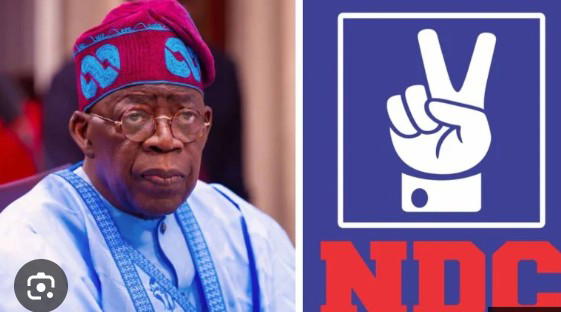
‘No party will get even 25% of Kaduna votes; everyone wants Tinubu’ – Uba Sani

“No leader in the history of Nigeria has supported subnational governments as you have done, Mr President,” Governor Uba Sani told President Tinubu.
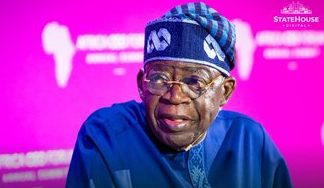
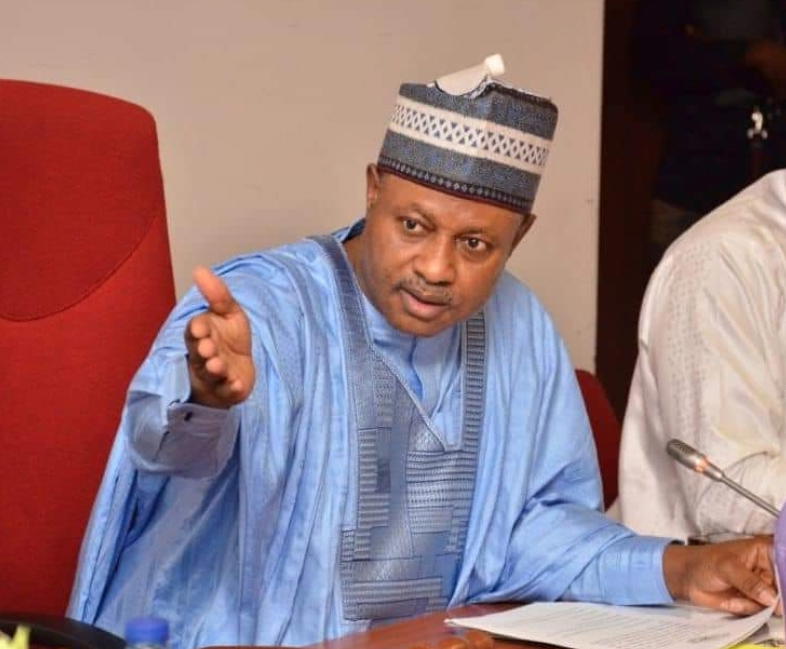
Kaduna State Governor Uba Sani expressed confidence that President Bola Tinubu will secure overwhelming support in the state in the 2027 presidential election, declaring that no opposition candidate will get even 25 per cent of the votes.
Mr Sani attributed his optimism to what he described as the Tinubu administration’s unprecedented interventions in Kaduna, particularly in infrastructure, education, agriculture, security and human capital development.
The governor spoke during an interview with TVC on Sunday, a day after the All Progressives Congress (APC) formally launched Mr Tinubu’s re-election campaign at Ranchers Bees Stadium in Kaduna.
“In Kaduna, we are not talking about 70 per cent. Allowing any candidate to even get 25 per cent in Kaduna is a failure on our side because President Tinubu has done for Kaduna something we never dreamt of having,” Mr Sani said.
He urged voters in the North to support the president based on his performance rather than ethnic or regional considerations, arguing that the federal government’s interventions demonstrated its commitment to the development of Kaduna and other northern states.
“No leader in the history of Nigeria has supported subnational governments as you have done, Mr President,” he told Mr Tinubu at Saturday’s rally.
Mr Sani cited several federal projects and interventions as reasons residents should support the president’s re-election bid.
He commended Mr Tinubu for handing over Ahmadu Bello Stadium to the Kaduna State Government, saying his administration would reconstruct the facility to meet FIFA standards, with a seating capacity of 33,000.
He also highlighted the reconstruction of the 123-kilometre Kaduna–Birnin Gwari Road, which he said had been abandoned for more than four decades. According to the governor, ₦178 billion had been released for the project.
On rail transportation, Mr Sani said the federal government had approved $865 million for the proposed Kaduna metropolitan light rail project. He added that the contractor, China Civil Engineering Construction Corporation, had received $300 million in mobilisation funds.
The governor also mentioned the ongoing reconstruction of the Zaria–Soba-Kambuwa Road and the expansion of federal tertiary education institutions in the state.
He said Kaduna now has four federal universities, including the Federal University of Education, Zaria, and the Federal University of Applied Sciences, Kachia. He also cited the proposed Shehu Musa Yar’Adua University of Petroleum Studies in Kaduna and the conversion of Kaduna Polytechnic into a federal university of technology.
Mr Sani argued that the projects and other federal interventions justified his expectation that Kaduna residents would overwhelmingly support Mr Tinubu in 2027.
Beyond defending the president’s record, Mr Sani challenged opposition parties to intensify their grassroots campaigns rather than concentrate on criticising the APC and its activities on social media.
“If you are campaigning to win elections, you have to go out and meet with the people,” he said.
The governor said he had observed the African Democratic Congress (ADC) and the Nigeria Democratic Congress (NDC) responding to the ruling party’s activities without presenting what he considered convincing campaign strategies or engaging sufficiently with ordinary Nigerians.
He singled out the Allied Peoples Movement (APM), saying he had seen the party organising town hall meetings and reaching out to voters.
“You can’t run a campaign by reacting to what another party is doing. Go and do your own campaign,” he advised opposition parties.
Mr Sani also accused opposition politicians of using artificial intelligence and manipulated images to discredit the APC, rather than taking their messages directly to voters.
He expressed confidence that the ruling party’s grassroots mobilisation would give it an advantage in the 2027 elections, adding that whether opposition parties formed alliances was not the APC’s concern.
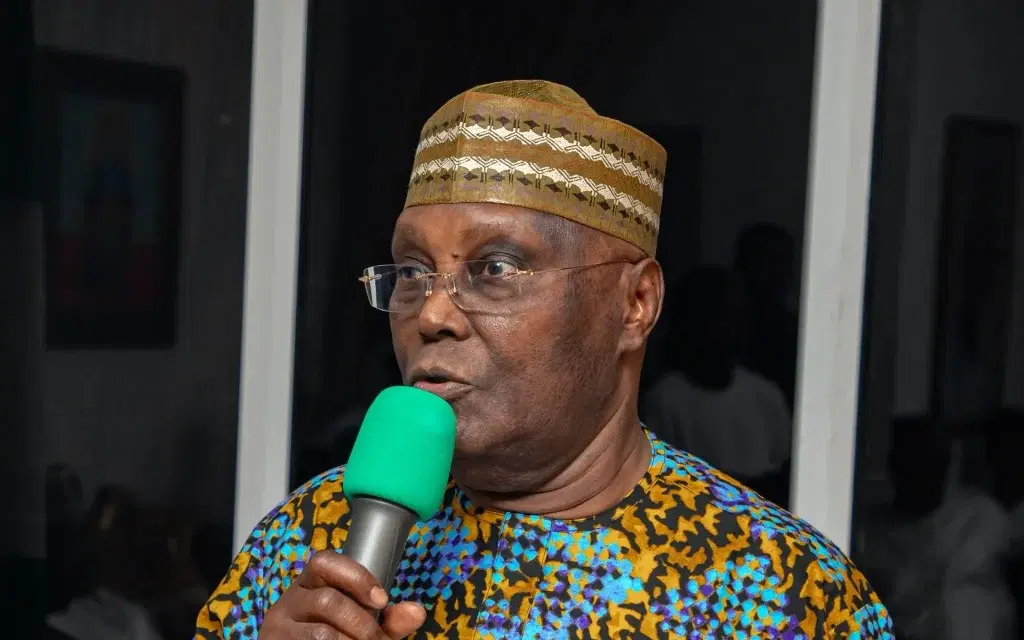
Meanwhile, ADC, whose presidential candidate is former Vice-President Atiku Abubakar, criticised Saturday’s APC campaign launch, calling it disappointing rather than evidence of widespread public support for Mr Tinubu.
In a statement, Kola Ologbondiyan, director of media and publicity for the ADC Presidential Campaign Council, alleged that the APC mobilised supporters from across the seven North-western states and beyond, with payments reportedly ranging from ₦50,000 to ₦100,000 per person.
Mr Ologbondiyan also claimed that the stadium remained sparsely occupied, with empty seats visible despite the alleged mobilisation.
The ADC’s claims and the governor’s assertions about the APC’s popularity reflect the competing narratives emerging as political parties position themselves ahead of the 2027 general election.
While the APC presented the rally as evidence of its mobilisation strength, the ADC questioned whether the gathering represented genuine voter support.
Mr Sani’s projection that no opposition candidate would secure even 25 per cent of Kaduna’s votes contrasts sharply with the outcome of the 2023 presidential election.
Mr Tinubu, then the APC candidate, finished second in the state with 399,293 votes, representing approximately 29.36 per cent of valid votes.
Mr Atiku, the Peoples Democratic Party (PDP) candidate at the time, won Kaduna with 554,360 votes, or about 40.76 per cent. Labour Party candidate Peter Obi came third with 294,494 votes, representing approximately 21.65 per cent.
The results showed that the three leading candidates commanded substantial support across the state. Mr Atiku won 14 local government areas, while the Labour Party won seven and the APC won two, according to reported results.
Kaduna’s political landscape is shaped by differences across its northern, central, and southern areas, along with competing party loyalties, local political networks, security concerns, and economic interests.
Although the 2023 results provide a benchmark for assessing the APC’s 2027 ambitions, they do not determine the next election’s outcome.
Voter preferences, political alliances and perceptions of government performance can change between electoral cycles.
The 2027 contest will ultimately depend on how voters assess the federal and state governments’ records, including their responses to insecurity, economic hardship, infrastructure deficits, education, and other public concerns.
Mr Sani has set an ambitious target for the APC in Kaduna. Voters at the ballot box will determine whether the party can achieve the level of support he predicts.
- tinubu
- uba
- sani
- party
- kaduna
- president
- vote
- leader