2027: INEC moves to tackle voting barriers against women, PWDs in Benue
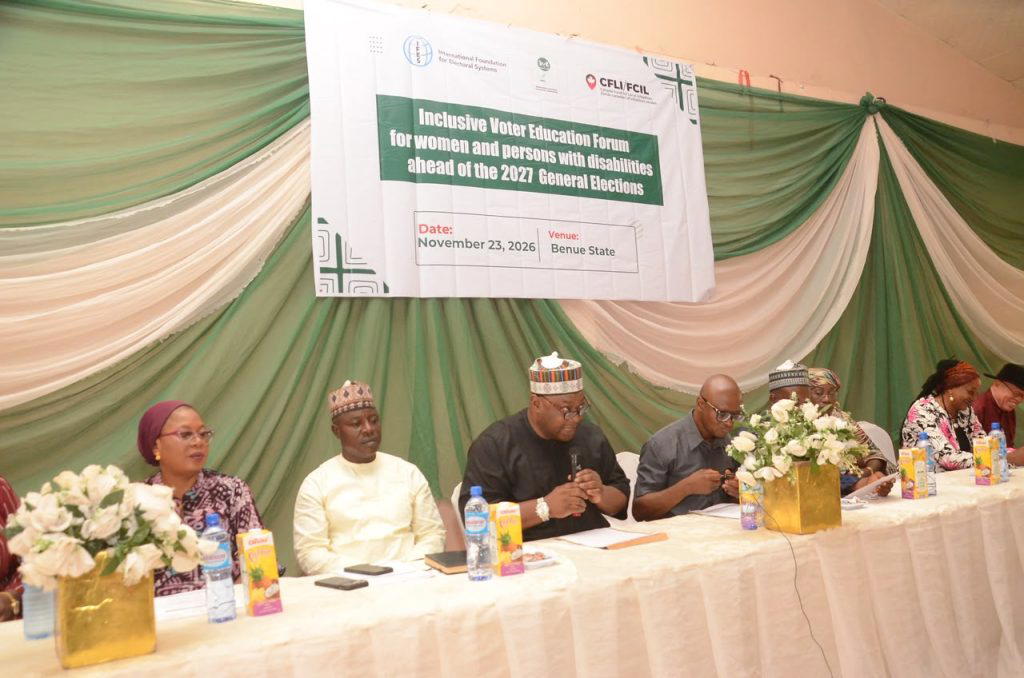
By Peter Duru, Makurdi Worried by barriers preventing women and Persons with Disabilities, PWDs, from fully participating in elections, the Independent National Electoral Commission, INEC, has intensified efforts to promote inclusive voting ahead of the 2027 general elections in Benue State. Speaking at the forum, the Benue State Resident Electoral Commissioner, REC, Mallam Aminu Idris, reaffirmed INEC’s commitment to ensuring that no eligible voter was disenfranchised on account of gender, disability or any other barrier capable of preventing participation in elections.
By Peter Duru, Makurdi Worried by barriers preventing women and Persons with Disabilities, PWDs, from fully participating in elections, the Independent National Electoral Commission, INEC, has intensified efforts to promote inclusive voting ahead of the 2027 general elections in Benue State. The Commission, in partnership with the International Foundation for Electoral Systems, IFES, on Monday organised an Inclusive Voter Education Forum for Women and Persons with Disabilities in Makurdi to deepen electoral awareness and address challenges confronting marginalised groups in the electoral process.
Speaking at the forum, the Benue State Resident Electoral Commissioner, REC, Mallam Aminu Idris, reaffirmed INEC’s commitment to ensuring that no eligible voter was disenfranchised on account of gender, disability or any other barrier capable of preventing participation in elections. Idris acknowledged that women and persons with disabilities continued to face challenges, including inadequate access to electoral information, communication difficulties, inaccessible voting materials, negative social attitudes and physical obstacles.
He said, “Inclusive participation remains a fundamental pillar of democratic governance, and INEC’s responsibility is to ensure that no eligible voter is disenfranchised on account of gender, disability or any other barrier capable of impeding participation in the electoral process. “We recognise that some women and persons with disabilities continue to face barriers in accessing electoral information and participating fully in elections.
These barriers may include inadequate access to information, communication challenges, inaccessible materials, social attitudes and physical obstacles. This workshop therefore provides an opportunity for us to identify some of these challenges and work out solutions to them,” he said. On the Commission’s preparedness for the 2027 elections, Idris disclosed that the distribution of non-sensitive election materials had commenced at the INEC state headquarters.
He also urged eligible voters to take advantage of the ongoing Permanent Voter Card, PVC, collection exercise, stressing that possession of the card was essential for participation in the elections. The Project Manager of IFES in Benue State, Judith Toryem, described the engagement as a significant platform for educating women and persons with disabilities on their electoral rights and responsibilities, insisting that elections could only be considered credible when all segments of society were accommodated.
She said, “An election is said to be credible when it is also inclusive. That is why it is important for us to have this engagement. The reason you are here is to get valuable information about the upcoming election. It is important for us to participate effectively and ask the questions that you have because you are in the right place.” Also speaking, the Personal Assistant to the Benue State Governor on People with Special Needs and Equal Opportunities, Ben Anshe, described the forum as timely, saying it had provided important information on the rights of persons with disabilities to vote and be voted for.
Anshe, who is visually impaired, recalled that during the 2023 general elections, when he served as an election observer, he visited about 27 polling units in Nyiev Council Ward of Guma Local Government Area but discovered that essential voting facilities for persons with disabilities were unavailable. He said, “There were no provisions like the Braille ballot and magnifying glasses for persons with disabilities.
But from what I heard today, at the time of registration for PVC, if these disability types were not captured, these provisions would not be made. Hence PWD must always make their status known and captured during registration.” He explained that some people acquired disabilities after registering as voters and appealed to INEC to establish a mechanism that would enable such individuals to update their disability status to ensure that appropriate voting facilities were provided at their polling units.
Similarly, the Chairman of the Joint National Association of Persons with Disabilities, JONAPWD, Benue State chapter, Onah Adeyi, commended INEC and IFES for providing an opportunity for members of the disability community to acquire relevant electoral knowledge. Adeyi urged persons with disabilities to collect their PVCs, participate in the elections and ensure their votes counted, stressing that they possessed the same constitutional voting rights as other Nigerians.
He said, “For politics, our PVC does not carry disability. It carries one vote. This mobilisation is to sensitise persons with disabilities that their cards, their PVC, matter. They should go and collect their PVC and ensure they vote.” He, however challenged INEC to provide an enabling environment for persons with disabilities to vote without difficulties, calling for clear directions for deaf voters, trusted assistance
- election
- benue
- disability
- voting
- barrier
- inec
- voter
- person