How did Lula beat Bolsonaro after losing Brazil’s first-round election?

Brazil's president secured a historic fourth term after overturning a first-round defeat.
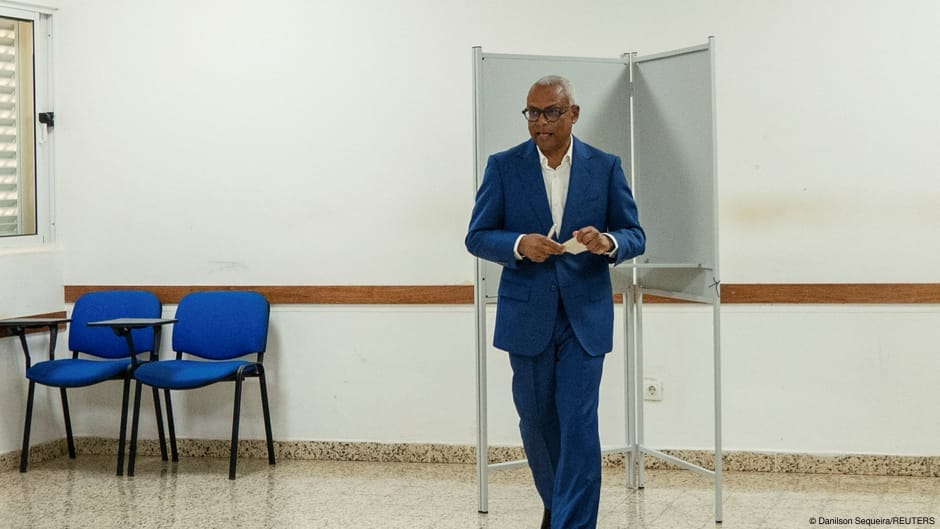
Brazilian President Luiz Inacio Lula da Silva has achieved a stunning election victory, defeating far-right rival Senator Flavio Bolsonaro, despite trailing him by more than two million votes in the first round held earlier in October.
The 80-year-old leftist secured an unprecedented fourth term on Sunday, becoming the first candidate since Brazil’s return to democracy in 1985 to win a presidential run-off after finishing second in the opening round.
“I just had to tell you that I love you. Tomorrow, the fight continues,” Lula told cheering fans at a victory parade in Sao Paulo. “No one is required to like the president-elect, but he must govern for everyone.”
Lula’s victory is a significant setback for the right-wing political movement that has gained ground across Latin America, often with the backing of United States President Donald Trump.
So how did Lula turn things around in just three weeks, and what challenges does he face?
Lula, who turns 81 on Tuesday, secured 51.79 percent of valid votes, or 64.26 million ballots, compared with Bolsonaro’s 48.21 percent, or 59.83 million votes, according to the final tally.
The result marked a dramatic reversal from the October 4 first round, when Bolsonaro won 47.03 percent against Lula’s 45.16 percent, a lead of approximately 2.2 million votes.
Turnout on Sunday was 80.8 percent, nearly 2 percent higher than the previous round, when 78.92 percent of the electorate cast their votes.
Bolsonaro refused to concede and called for the run-off result to be annulled after Supreme Court Justice Cristiano Zanin ordered voting to be extended by two hours. Both candidates had requested extensions, citing transport disruptions and severe weather.
The controversy echoes the aftermath of the 2022 election, when Flavio’s father, Jair Bolsonaro, refused to accept his defeat. He was subsequently convicted of plotting a coup and sentenced to 27 years in prison, which he is serving under house arrest.
However, experts say Flavio faces significant obstacles in overturning the result.
Vinicius G. Rodrigues Vieira, an economics and international relations professor at the Armando Alvares Penteado Foundation, told Al Jazeera that Bolsonaro’s legal arguments were weak, particularly because his own campaign had requested an extension.
“I don’t think that will resonate in the courts, but certainly will help Bolsonarismo, the far-right movement here in Brazil, to remain politically strong on the streets,” he said.
Lula’s comeback was driven by a revitalised grassroots campaign, youth mobilisation and a shift towards digital campaigning, analysts said.
Al Jazeera correspondent Monica Yanakiew, reporting from Sao Paulo, said young Brazilians spontaneously organised online after Bolsonaro’s first-round victory, creating what became known as “Lula’s army”.
“It was this army that went to the streets, millions of people across Brazil, and young people just mobilised themselves, energised the campaign, which frankly was not very energised at all before the first round,” she said.
Editor-in-chief of The Brazilian Report, Gustavo Ribeiro, told Al Jazeera that Lula’s campaign had initially appeared complacent.
“Lula’s campaign also got its act together after a first round in which it acted as if this election was in the bag and essentially running an anachronistic, mostly offline campaign,” he said.
“The campaign really pivoted towards a digital mentality and a grassroots effort,” Ribeiro said, adding that Lula had used “the power of incumbency very cleverly in his favour”.
“I would say this is more the merit of Lula, even if Bolsonaro just worked to run off the clock.”
Other experts agreed, saying Bolsonaro’s own mistakes were likely to have contributed to his defeat. Academic Vieira argued that the senator had become overconfident after winning the first round.
“In the first week, he was already behaving as if he were already the president-elect. He was appointing ministers,” the economics professor pointed out.
“If there is something Brazilian people don’t like [it’s] arrogance, so Mr. Flavio is paying a very high price for this,” he added.
The Brazilian Report’s Ribeiro also questioned Bolsonaro’s political appeal.
“He does not have his father’s charisma. He was essentially running on his father’s last name,” he said.
Higher turnout was another important factor.
An estimated 33.4 million Brazilians abstained in the first round, representing about 21 percent of the electorate. Abstention fell to approximately 19 percent in the run-off.
Fernando Brancoli, an international relations professor at the Federal University of Rio de Janeiro, said previously absent voters appeared to have participated in the second round.
“We already know that a large number of people who didn’t vote [in] the first round, they now showed up,” he told Al Jazeera.
Brancoli also suggested some first-round Bolsonaro voters may have switched to Lula, although detailed voting patterns remain unclear.
According to Vieira, the election was arguably one of the most consequential in Brazil’s history.
After the 21-year dictatorship ended in 1985, he said Brazil built a “constitutional setting” which provided social rights to the population more than at any time in the South American nation’s history.
“That’s so important for the Brazilian people because we still have high levels of inequality,” he said, noting that it was crucial to “keep a very high degree of political participation”.
In contrast, the far-right Bolsonarismo movement had tried to “curtail voting rights” by employing “voting suppression tactics”, Vieira said.
Despite his victory, Lula faces a conservative-dominated Congress that could severely restrict his legislative agenda.
Bolsonaro’s Liberal Party and its allies could control more than 280 seats out of 513 in the lower house, and up to 50 out of a total of 81 Senate seats, potentially giving the opposition majorities in both chambers.
Brancoli warned that Lula would have limited room to manoeuvre.
“We can definitely expect Lula’s government [is] not going to be able to push for a broad agenda. You’ll get small wins, and you’ll have to negotiate with those groups,” he said.
Economic pressures pose another considerable challenge. Brazil’s public debt has exceeded 82 percent of gross domestic product (GDP), according to the World Bank, while the government forecasts growth of just 2.3 percent next year.
Moreover, Brancoli asserted that Lula would also need to address security and household debt, two issues that helped make the election competitive.
The president’s age raises further questions about the future of his Workers’ Party (PT), and who would replace the longtime leader, Brancoli noted.
“There’s no one that could substitute him, and he’s older,” he said.
- brazil
- lula
- bolsonaro
- round
- election
- president
- term
- defeat