Europe’s big threat is not Trump and Putin redrawing the map. It’s our own learned helplessness
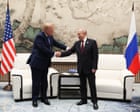
Europe’s big threat is not Trump and Putin redrawing the map. The US and Russia lack the power to impose their will on the continent – the Shenzhen summit was no Yalta 2.0 The first ever trilateral summit between Xi Jinping, Donald Trump and Vladimir Putin was rich in symbolism and empty of substance.
The US and Russia lack the power to impose their will on the continent – the Shenzhen summit was no Yalta 2.0
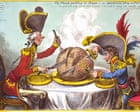
The first ever trilateral summit between Xi Jinping, Donald Trump and Vladimir Putin was rich in symbolism and empty of substance. Many Europeans, filled with anxiety about the Chinese, Russian and US presidents potentially colluding, saw chilling echoes of the Yalta conference in 1945, when Joseph Stalin, Winston Churchill and Franklin D Roosevelt redrew the map of Europe.
But those – particularly in eastern Europe – who are fretting about another historic betrayal should remember that when it comes to European security today, we are the ones who hold most of the cards. Far more meaningful last week than Shenzhen was a gathering in Berlin, held at exactly the same time.
True, the Shenzhen summit brought together three autocratic leaders who would like to see the world carved up into spheres of influence, but their meeting turned out to be no Yalta 2.0. The original Yalta took place as the second world war drew to a close, when international law and multilateral organisations were little more than a pipedream. The world was still living in an age of empire, with many colonies in the hands of European countries and the Soviet Union eager to consolidate its own in eastern Europe. It was hardly surprising, back then, that the war’s victors, the US, the UK and the USSR, held the keys to Europe’s future.
Nothing of the kind was ever going to happen in Shenzhen, nor will it at any future gathering of Xi, Trump and Putin alone. Two of the three – Putin and Trump – cannot win the wars they have launched against Ukraine and Iran respectively. The third, Xi, by far the strongest of the trio, is doing little more than bask in the colossal mistakes of his American and Russian friends.
This is not to say that the three are irrelevant to Europe’s security. Russia and the US hold the world’s largest nuclear arsenals. Had Trump, Putin and Xi committed to nuclear arms control, as Trump wanted, Europe (and the rest of the world) would have applauded. But the Russian and Chinese leaders were never going to indulge Trump on that score. Possessing nuclear weapons is the only reason Putin can still claim a seat at the top table; without them, Russia would be little more than a second-rate power. China, meanwhile, in its scramble for superpower status, is racing to expand its nuclear arsenal, and catch up with the US and Russia.
Russia, China and the US also matter in other dimensions of security. Putin’s Russia continues its military assault on Ukraine, which faces its hardest winter since Russia invaded. And Russia’s cyber-attacks, drone incursions, sabotage, attacks on critical infrastructure and disinformation campaigns across Europe have escalated to the point that it makes little sense to keep talking about “hybrid war”, or even “shadow war”. It would perhaps be more honest simply to call it what it is: Russia’s war against Europe.
Russia is hardly fighting this war alone. China is not a direct participant, but has provided economic and technological support that has been vital to Russia’s war machine. Yet for all their efforts, there is no sign that Ukraine, or indeed any other European country, will fold – and this despite the fact that Trump’s US has all but switched sides. Washington no longer provides economic or military support to Ukraine. And while it still cooperates on intelligence and satellite communications, it has sickeningly tried to pressure Kyiv into capitulating by temporarily cutting off or slowing down these services. The US still has the capacity to inflict real damage on Ukraine and Europe. But Trump has failed to subjugate Ukraine over the last two years, and given his Republican party’s bruising defeat in the US midterm elections, he is unlikely to succeed in the next two.
Trump, Putin and Xi may like a world in which, to borrow from Thucydides, the strong do what they can and the weak suffer what they must. Their agreement in Shenzhen to oppose the alleged overreach of international tribunals – established to disprove that might makes right – signals exactly this. But the three men are not as strong as they would like to believe, nor is today’s world the Hobbesian wasteland over which Roosevelt, Churchill and Stalin had the power to rule unchallenged. International law and multilateralism are under attack – but they are not dead. Middle powers in the global south are rising and making their voices heard.
And Europe, though facing serious security threats, has far more leverage than is often recognised. Last week’s meeting in Berlin – where representatives of 36 countries in the French- and British-led coalition of the willing gathered to shore up support for Ukraine – was a show of strength far more concrete than the empty words in Shenzhen.
The group agreed to close Ukraine’s funding gap for 2027: the EU has pledged an additional €45bn, with a further €25bn coming from non-EU coalition members such as the UK, Norway and Canada. And while the last time the EU agreed on a loan to Ukraine guaranteed by the EU budget, it allowed Hungary and Slovakia to opt out, today it is in no mood to tolerate dropouts. With negotiations on the next seven-year EU budget entering a critical phase, Germany, the largest net contributor, will oppose any budget deal unless all EU members agree to support Ukraine.
Europe’s main problem is not material but political and, above all, psychological. Learned helplessness, towards the US in particular, is what fuels fears of the ghosts of Yalta, and a new betrayal. And it is because Europe still takes the Trump-Putin peace-talks charade too seriously that it spends so much time squabbling over who should represent it at that table.
No peace plan pushed through by Putin and Trump will deliver Ukraine’s surrender, let alone a new security architecture for Europe. On their own, the two autocrats lack the power to impose their will. The more energy Europe devotes to delivering on the plans and pledges of the coalition of the willing, and the less it spends chasing the two failing leaders in Moscow and Washington, the more secure and peaceful tomorrow’s Europe will be.
Nathalie Tocci is a professor of practice at the Johns Hopkins School of Advanced International Studies, Europe, and a senior fellow at Bocconi University’s Institute for European Policymaking
- europe
- trump
- putin
- map
- threat
- helplessness
- shenzhen
- summit