Children of the revolution: how the north of England is defining modern men’s fashion
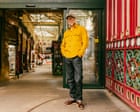
He is a loyal Clarks and Adidas wearer, whose Howick worker’s jacket hangs in Manchester’s People’s History Museum. That Burnham is the first born-and-bred northern male PM since Harold Wilson last swished his Gannex raincoat out of Downing Street goes some way to explaining his higher interest in clothing.
Once the historic centre of the textile industry, the north is now home to a host of a provenance-driven labels. But is there a specific northern menswear look? And what does it all mean for the mad-fer-it stereotypes?
In 2026, clothing has proved more important to Andy Burnham’s political identity than that of any British prime minister since Margaret Thatcher. He is a loyal Clarks and Adidas wearer, whose Howick worker’s jacket hangs in Manchester’s People’s History Museum. His ousting of Keir Starmer – launched shortly before being photographed jogging in a replica Everton shirt – has been memorialised as the “casual coup”. In one telling, the reason for this is simple: he’s a man from the north.
That Burnham is the first born-and-bred northern male PM since Harold Wilson last swished his Gannex raincoat out of Downing Street goes some way to explaining his higher interest in clothing. It’s not necessarily that all men in the south care less about clothing, or that all men in the north do – but that many men from the north express it in such a distinctive, even unified, way.
I’m from Lancashire, but have spent my adult life in either London or Greater Manchester. They are ideal vantage points from which to observe northern menswear – and northern men – from the outside looking in. My own style – slightly mod, slightly workwear, and as passionate about British-made clothes as my budget will broker – is undoubtedly shaped by my north-western identity. But I’ve long been disappointed by how it’s popularly understood: stuck in dated, mad-fer-it stereotypes beamed in from some parka wearing past. Is there, then, a specific northern menswear style? Where does it come from? And how, in the 2020s, might it be changing?
When I think about archetypal northern dressing in the 2020s, few exemplify it with more flair than Iain Trickett. He is the founder of cult Accrington brand Trickett, the sturdy-but-stylish spins on the classics of which come from his obsessions with Italian football and homegrown football terrace culture. Northern style might be “incredibly coded and strange”, says Trickett of its subtle markers and rules – around the right desert boots and the wrong brand of polo shirt – but its foundations are easy to define. “When I think of a bloke in the north of England, it’s Clarks Wallabees or rare and weird Adidas trainers. Selvedge denim. A wool jumper, never a cardigan. Always a button-down collar shirt. Over that? The wilder the better, with regards to a jacket.”
But the psychology underneath these preoccupations is harder to decode; a style flourishing from the very real limits of northern masculinity. “You can’t sit around in the pub and say: ‘Lads, I’m getting really into impressionist painting,’” says Trickett. But discuss the goggles and capacious pockets of a CP Company jacket? “They’re like: ‘Oh God, amazing.’”
For Ed Hoxley, of West Yorkshire’s premium workwear outfitters, HebTroCo, any specifically northern style comes out of its deep history. “Men around here,” he says – meaning his base of Hebden Bridge – “were renowned for being smart dressers because there was a clothing industry.” Menswear in the early 20th century skewed formal, with an emphasis on durability, and workers in the rag trade had the high level of skills and knowledge to make everyday items endure.
The Industrial Revolution positioned the north as the global centre of the textile industry. Generations of Lancastrians worked in cotton, Yorkshire men in wool. Bradford had the largest silk mill on the planet. Northern style’s ground zero was “working-class people in often hard, manual occupations who wanted to look good on the weekend”, says Oxley. “Clothes were a way of saying: we are something, that we’re of value, not just scum of the earth.” Some of that continues to this day.
In fact, like a lot of things in Britain, men’s style has always been sharply governed by work and class. “The City has quite a big influence on the way men dress in the south,” says The Great British Sewing Bee host Patrick Grant, who used to cut suits on Savile Row and now runs social enterprise label Community Clothing – whose heavyweight workwear trousers and British Millerain-fabric parkas reflect the staples of northern style. “You never saw Ralph Lauren doing massive business in the north-west,” he observes. “But it was killing it in the home counties. Clothes that are going to last are far more a part of the culture here.”
Though the trend for durability and functionality became baked into style through north-western pop-culture touchstones such as Oasis and Happy Mondays in the 1980s and 90s, there are parallels from the north-east. Barbour was founded in South Shields and Berghaus in Newcastle (before moving its HQ to Sunderland); while the military-inspired designer Nigel Cabourn, who died earlier this year aged 76, was based in the Newcastle suburb of Jesmond. You can see the influence in gorpcore, the now ubiquitous outdoor clothing style that had an early foothold in the north, possibly owing to the easy proximity of the Peak District. A time traveller from the early years of brands like The North Face or Montane may be surprised to find blokes togged out in activewear for nothing more adventurous than the trek to the bar at the Peveril of the Peak.
“The jacket is a major cultural signifier,” says Everton Campbell, whose 2nd Academic menswear store in Leeds is part of a lineage of pioneering Black-owned clothes shops that he has headed since the 1980s. “Northern guys demand unique, well-crafted pieces that stand out,” he says of the waxed cotton or weatherproof outerwear that forms the core of northern style. “But the real art is curating these functional items without looking like you’ve tried too hard.” A bit of haphazard informality has always helped the best of northern menswear really sing.
But some of the most exciting northern dressing avoids blokey cliches while still being completely rooted in place. Bradford-born playwright and actor Kamal Kaan describes himself as in “rebellion” from the laddish functionalism of northern style. “My dad worked in wool mills for 25 years,” says Kaan, informing a style that mixes Bradford’s silky past with south Asian decorative flair.
“I’ll wear a gorgeous wool jacket, a silk shirt, and a silk pussy bow. You wouldn’t expect that to be the northern aesthetic because it doesn’t have those reference points,” he says. But it’s coming directly from the north’s Industrial Revolution past, and the many immigrants who came to work in the mills. “If they were making gorgeous fabrics in the 1960s or 80s,” argues Kaan, “why have we lost that connection to our own heritage?”
In the 2020s, northern style has moved decisively to counter that question. The last decade has seen an explosion of innovative, made-in-England producers fashioning a northern aesthetic built on sustainability. “If there’s a similarity with a lot of northern brands,” says Jamie Webster of Saltaire-based small-batch trouser company Salt + West, “it’s that people appreciate hard-wearing clothes. People’s attitude to fast fashion is changing.” This year, Burnham was criticised for the supposed indulgence of wearing garb by Manchester label Private White VC. But this is in line with northern style in the 2020s – being focused on, as Webster terms it, a search for clothes made “as sustainably as possible, and as close to home as possible”, without the worker exploitation and air miles involved in convoluted global supply chains.
It’s part of the economy that’s increasingly exportable. “About half of our business comes from abroad,” says Sean Geaney of Wawwa clothing, a made-in-Manchester example of the north’s new wave of ethical producers. “The UK, but specifically Manchester, has become really culturally significant over the last few years. It used to make the world’s clothes, but people still look to Manchester to see what they’re wearing.” Visitors to the city may be surprised that the erstwhile Oi Polloi store is gone – the agenda setting menswear company shut its physical shop in 2023, but still exists online – but they’ll find stores for Wawwa and Lanx, whose excellent shoes and boots are mostly produced in the Lancashire village of Whalley.
The UK remains more socially unequal than any comparable northern European country. Few places are as wealthy as London, but nowhere is as deprived as its poorest regions, clustered heavily around the north-east and north-west. If northern male style has an oppositional bite through its rough, tough sartorial thrill seeking, it comes from the history of this inequality.
“In a society that tells you that you’re worth nothing,” says Trickett, or “that you’re poor because you sound like I do, or that you’re friendly because of your accent, clothes are a really easy way to go: look, I’ve got this taste, this talent, and I have researched this.” He pauses. “And I’m going to try twice as hard as you because you have access to all this stuff in London or Edinburgh that we don’t have.”
It’s to the credit of northern masculinity that it has been able to contain all of this within an evolving menswear tradition. Northern style is one of Britain’s most powerful and enduring sartorial statements, developing in some of the most exciting ways. And it came not from London catwalks or big name designers, but from the collective.
- north
- man
- clothing
- revolution
- england
- fashion
- burnham
- way