The line between sports hero and gambling shill is fast disappearing
For big stars, endorsing companies like Kalshi and Polymarket is just another day in the beautiful business of being – and staying – rich When Giannis Antetokounmpo announced he was taking an investment stake in prediction market Kalshi in February, the claim he made to accompany the announcement – “We all on Kalshi now” – sounded as absurd as the howls of outrage from sports lovers seemed universal. The prediction market machine now sponsors Jalen Brunson and Josh Hart’s Roommates Show, on which the recently crowned pair of NBA champions begin every episode dutifully informing us that their…
For big stars, endorsing companies like Kalshi and Polymarket is just another day in the beautiful business of being – and staying – rich
When Giannis Antetokounmpo announced he was taking an investment stake in prediction market Kalshi in February, the claim he made to accompany the announcement – “We all on Kalshi now” – sounded as absurd as the howls of outrage from sports lovers seemed universal. Nine months later, Kalshi’s grip on American fans appears murderously tight: notional monthly trading volume on the platform, the majority of which is taken up by wagers on sports, increased to nearly $100bn in October from $40bn in August, as the company gears up for yet another funding round at a rumored valuation of $65bn ahead of a potential IPO. Rival prediction market Polymarket, which relaunched in the US late last year after regulators shut it down in 2022, has seen similar growth over recent months. However righteous the disgust from fans on social media at the deepening incursion of these odious platforms into professional sport may be, their popularity seems only to grow.
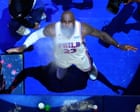
More perplexing is the widening circle of athletes like Giannis who’ve thrown off whatever shame might once have come from association with these businesses and given them their full-throated support. The line between role model and shill in professional sports is now essentially non-existent. Pete Sampras, a man so private in retirement it can often seem like his entire tennis career was a collective hallucination, released an ad for Kalshi during this year’s US Open after two decades largely out of the public eye. José Mourinho trousered a brick of Kalshi cash this summer in exchange for a gambling promo during the World Cup. The prediction market machine now sponsors Jalen Brunson and Josh Hart’s Roommates Show, on which the recently crowned pair of NBA champions begin every episode dutifully informing us that their amazingly dreary podcast is “presented by Polymarket, the top prediction market”. LeBron James will make more from his recently announced partnership with Polymarket – $15m a year – than he will from playing for the Philadelphia 76ers. Somehow we’ve arrived at the point where it’s bigger news if a professional athlete takes a firm stand against the prediction markets, as Victor Wembanyama recently did, rather than pockets the cash to endorse them.
Giannis, Sampras, Mourinho, LeBron: these are all wealthy individuals with giant reputations to protect. What exactly is going on here? Surely whatever money is on offer from these platforms is functionally immaterial to these men’s bank balances; surely the predicticoin is not worth the cultural damage that comes from being associated with an industry that’s seen as a symptom of professional sport’s moral rot. Or is it? Is the money really too good to refuse? Has the contest for attention in modern sport and culture become so furious that even famed recluses like Sampras are suddenly gripped by a desperation to be maximally visible and “relevant”? Is the whole infrastructure of sport now so thoroughly poisoned by gambling and speculation thatthe stain that might once have come from taking money off such businesses has been cleaned?
Perhaps it’s a bit of all three. Kalshi and Polymarket, ravenous for any shred of positive exposure and racing toward public offerings before the bottom falls out of the stock market, are deploying vast sums of money in a bewildering variety of directions to get on the American public’s good side. Every writer in US media today has heard stories of journalists being offered tens of thousands of dollars for even the most anodyne forms of engagement (replies, likes) with the online output of the prediction markets. Even for a billionaire like LeBron, a $15m annual pay packet is probably hard to resist. But it’s also important to put these grubby little partnerships between already-wealthy athletes and the prediction markets into their proper cultural context: the Kalshi dollars are raining down on the expensively polished heads of the sporting plutocrats at a time of collective obsession, not only in sports but across culture, with “getting this bread”. You only have to listen to Magic Johnson (estimated net worth: $1.6bn) ruefully reflect on the time he turned down stock in Nike (“Five billion dollars it would have been worth today”) to understand that for the already obscenely wealthy, there is no greater loss than a lost opportunity for more wealth. This is an axiom of American success: once you are rich, it is important to get richer.
In basketball, the rule of separation is paramount. Scoring is a game of space; to make room for a shot, a pass, a dribble, it’s critical that offensive players find ways to separate themselves from their defenders. In an increasingly unequal economy, especially one in which the AI doomers all assure us that there are only a few years of productive mass employment left before the machines swallow all the jobs, the need to find separation moves from a law of sport to a law of social self-preservation, and it’s hard not to detect the outlines of a basic instinct for financial survival in the otherwise unfathomable avarice guiding the decision of these wealthy sporting personalities to sell their souls to the prediction markets. If the economic apocalypse is nigh, hoarding wealth – from whatever quarter it comes – starts to look like common sense; it’s a way to guarantee a seat on the lifeboat, to stay an asset-owning winner in a society that will soon be awash with unsalaried and insolvent losers.
Meanwhile, for those outside the 1%, economic uncertainty means that the embrace of “risk-on” thinking – and its corollary; the distortion of prudent household economic management into a series of risky, venture capital-style bets – has come to seem like a financial necessity. Going big on Kalshi and Polymarket now takes its place alongside crypto investing, borrowing on margin, and meme stock trading as a favored hosanna of the American mark. The siren call of the prediction markets increasingly makes social and economic sense for both ends of the income distribution. Amid a cost of living crisis, the ongoing stagnation in wages and the insulting weakness of the US social safety net, high-risk speculation is a last resort for those stuck in the lower percentiles, while for those at the top, embracing the prediction dollar is a riskless win.
The sports themselves, of course, have done nothing to disincentive gambling’s well-heeled shills from pursuing their own greed and immorality to its logical ends. Only a few years after sports betting was legalized, professional sport in the US is now a full-time hostage of the gambling and prediction industries. Gambling odds and prediction percentages gum up the screen of every US sports broadcast, almost every league has a partnership with a prediction market (most recently the NBA announced a deal with both Kalshi and Polymarket), and the sheer density of branding in stadiums and sports media from the betting and prediction platforms has made it functionally impossible for fans to evade speculation’s cultural reach. The prediction markets have become normalized; they are now seen as an acceptable part of the furniture, a fact of everyday sporting life. In this environment, it’s no wonder the untroubled rich-guy endorsements have begun to flow.
The Democrats’ outperformance in the recent midterm elections has raised expectations of a stiffer approach to federal regulation of the prediction platforms after two years in which the Trump-led White House enabled and encouraged their worst excesses. That seems, in truth, like a forlorn hope: already Kalshi has cut ties with Donald Trump Jr and moved to distance itself from the Trump administration, repositioning for a Democratic-controlled Congress. Besides, there are now too many commercial interests invested in these companies’ success to expect any major shift in their occupation of sport’s middle ground. The money and momentum are too great. These are the rapidly growing businesses that rapidly growing sports need (or feel they need) to stay on top of the culture – ethics be damned.
In Portland, Maine recently I stumbled across a small but powerful symbol of how speculation is eating sport, and how a speculation-driven sporting culture is eating the world. In the city’s quaint cobblestoned downtown – nestled between oyster bars, restaurants serving “elevated” Cambodian small plates and stores filled with scented candles and overpriced bedding – stood a place called Oddfellahs, “Maine’s only sportsbook and sports bar”. A massive wall of screens displaying live odds and prediction market trackers, rising to form a kind of tower, greeted me as I entered; in the main nave, banks of high tables for paper and digital betting gradually gave way to a vast bar, framed by an iconostasis of TVs screening live sports from across the globe. There was not a single spare seat at the bar; the crowd was a mixture of freshly-showered dads, couples enjoying a night out, and happy families attacking plates of tenders and nachos. On the drinks menu there was a deep selection of small batch local beers and “Portland’s finest craft cocktails”. This was not a degenerate betting saloon; Oddfellahs made the business of watching and wagering on sports respectable, aspirational, almost fancy.
This is the world we live in today: in the space of a few years gambling has so completely permeated American society that there’s no escape from its wormy clutches. Playing the prediction markets is just another thing that normal Americans do – like drinking craft beer or enjoying a meal at a nice restaurant. And it’s now as natural for fans to put money into these companies as it is for sport’s biggest celebrities to take money out of them. For Giannis, LeBron, Pistol Pete, and all the other first-name wonders of the sporting-cultural firmament, endorsing companies like Kalshi and Polymarket is just another day in the beautiful business of being – and staying – rich.
- kalshi
- sport
- prediction
- market
- line
- gambling
- shill
- polymarket