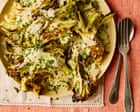
Crunch time: Niki Segnit’s five rules for winter salads
Plus five fantastic recipes, from seared tuna and potato to spicy butternut and lentil, to show how it’s done Approach a winter salad as you would your winter wardrobe – with clever layering. With the greatest respect to Coco Chanel, and her famous rule about taking one item off when you think you’re done, in this instance I favour assembling a salad and then adding an ingredient.
Plus five fantastic recipes, from seared tuna and potato to spicy butternut and lentil, to show how it’s done
Approach a winter salad as you would your winter wardrobe – with clever layering. With the greatest respect to Coco Chanel, and her famous rule about taking one item off when you think you’re done, in this instance I favour assembling a salad and then adding an ingredient. Unlike in baking, where departing from a recipe can have its risks, improvisation rewards the salad maker. Still, if you’re planning a winter salad, especially if it’s a main meal, you might want to use a checklist to avoid some common pitfalls.
The most egregious of these is cosy dullness. It’s all too easy to throw together some fresh winter produce and end up with a dish that’s more like a cold risotto or yesterday’s traybake. This often comes down to the combination of roasted root vegetables and “interesting” grains. What makes a salad a salad is its invigorating qualities, but root veg and cereals are sweet, with earthy, nutty flavours and soft textures; the pairing might be a modern classic but it’s about as invigorating as a warm bath. Not that you should avoid the combination; you just want to balance it with ingredients that offset its soporific qualities. It’s a good stress test for our guidelines, in fact: if you can turn a root-and-grain combination into a bright and balanced salad, you’re on to a winner.
With this in mind, what follows is a five-point checklist that draws inspiration from the truly great salads, and allows for all the contrasts in taste and texture you need for a vibrant, satisfying main course. Dressings are key, and to return to the wardrobe analogy, a classic vinaigrette is as essential a staple as a little black dress. In a lidded jar, shake six tablespoons of oil – I use a 50:50 mix of sunflower and extra-virgin olive oil – with two tablespoons of vinegar or lemon juice, a smashed garlic clove, two teaspoons of dijon mustard and a few pinches of sugar.
All salads need at least one ingredient with a high water content. In summer, cucumber and tomatoes make this easy, but in winter, the role inevitably falls to leaves: kale, watercress, red cabbage, savoy cabbage, chicory or chard. You’re going to need plenty of them, but there’s no need to stick to one type. Other watery ingredients include fennel bulbs, celery and fruit, but leaves are the indispensable ingredient.
Pick two ingredients that will give your salad the substantiality of a main course: chicken, potatoes, cheese, grains, chunky croutons, pulses, tofu. If your dressing is rich enough – made with peanuts or cream, for instance – it could be included in this list. The criterion here is whether or not you’ll be satiated after eating it.
Make sure you have at least three crunchy ingredients; this will ensure it feels and sounds like a salad in your mouth. If they’re crunchy enough, leaves can count as one crunch. Do consider more raw produce, though, as they will make the dish more filling. Apples and crisper varieties of pears work with almost everything, as does pomegranate. And the snack aisle in the supermarket can be a source of inspiration here – not just for nuts and seeds, but prawn crackers and chickpea flour sticks.
Now assess your ingredients. Do you have the four basic tastes covered – salt, bitter, sweet, sour? (Apologies to umami: we’re going to keep things simple.) Salads are salty to their etymological roots; the word derives from herba salata (salted herbs), as it was common practice to brine vegetables in Roman times. The addition of salt or brine can dial up the brightness of your salad. Leaves have the bitterness covered, as do olives, olive oil and some raw ingredients such as globe artichokes or walnuts. The vinaigrette contributes acidity, of course, but don’t be afraid to layer in some extra sour notes from orange or grapefruit slices and pickles. Sweetness largely takes care of itself, as most of your ingredients will be sweet to some degree – although a grace note of super-sweetness can be a lovely addition, with dried fruit being the obvious choice.
Finally, aim to include at least five plants. If you’re short, add an ingredient that’s neither earthy, nutty or grassy (your salad will already be rich in these qualities). It might just be a flourish, like dried oregano on a Greek salad, or a shake of sumac or allspice. Have a nose around the half-forgotten jars in your fridge door: pickled ginger, capers, preserved lemon and those funny little red peppers that pop in the mouth can all be vivid winter additions. And check that you’ve used enough leaves … Maybe just one more handful?
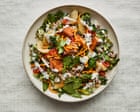
Toss 400g diced butternut squash with olive oil on a baking tray and roast at 220C (200C fan)/425F/gas 7 for 20 minutes. Remove, sprinkle the squash with smoked paprika, toss, and return to the oven for 10 minutes, or until cooked through. Meanwhile, in a small saucepan, cook one crushed garlic clove in olive oil until golden, then add a pinch of fennel seeds and a tablespoon of tomato puree. After one minute, add a tin of drained green lentils, and check the seasoning. Once the moisture has cooked out, mix in a teaspoon of balsamic vinegar and a good squeeze of lemon juice; set aside.
Halve and thinly slice a small red onion. Pick a few tablespoons of mint leaves from their stalks, tearing any larger leaves into small pieces. Cut two large, peeled oranges into segments and each segment into three pieces. Stir these three ingredients, plus some croutons and a handful of tamari-flavoured pumpkin seeds, into the lentils, holding back a little of the mint and onion to garnish. When you’re ready to eat, dress a bag of mixed seasonal leaves with vinaigrette (see my recipe in the introduction), and arrange them between four plates. Spoon the lentil mix on to the leaves, scatter the cooled butternut over the top, followed by the reserved mint and onions.
Mix 80g Greek yoghurt, one and a half tablespoons of Tandoori spice blend, one tablespoon of lemon juice and a quarter of a teaspoon of salt. Stir in 250g diced paneer and set aside for at least an hour, before distributing the pieces on an oiled baking tray and putting in a 200C (180C fan)/390F/gas 6 oven for 20 minutes, turning halfway.
Meanwhile, in a bowl, mix 150g shredded spinach leaves with a few sliced, pickled green chillies. Make a dressing of five tablespoons of Greek yoghurt, two tablespoons of mayonnaise, one tablespoon of lemon juice, a tablespoon of water, and two tablespoons of chopped coriander leaves (or mint). Mix this through a 250g pouch of cooked quinoa – enough to loosen the grains. Slice the very top off the florets from a 300g crown of broccoli (use the rest for soup), then stir this into the quinoa along with one peeled and diced golden kiwi. Add more salt and lemon juice to taste.
Dress the spinach with vinaigrette (see recipe in introduction) and divide between four bowls. Divide the dressed quinoa mix between them, followed by the cooked tandoori paneer. Garnish with Bombay mix, coriander leaves, slices of fresh red chilli and any remaining dressing.
Simmer 500g small potatoes in salted water until cooked through, then strain. Meanwhile, cut six sun-dried tomatoes into thin slices, and cut 12 cornichons into three slices. Thinly slice half a white onion.
Slice 400g fresh tuna into bite-size pieces, then season and sear them in olive oil over a medium heat, until just cooked through and bit golden on the outside – about five minutes.
Toss 140g robust green leaves and 10g dill fronds picked from their thick stems in vinaigrette (see recipe in introduction) and divide between four plates. Scatter over the tomatoes, cornichons and onion slices, before tossing in the warm potatoes and tuna. Season and divide between the plates, then garnish with toasted sesame seeds.
Core one unpeeled pear and chop it into matchsticks. Finely shred half a large red cabbage. Trim then halve a fennel bulb, and slice into very thin arcs. Toss all three with some lemon juice and salt.
Put one garlic clove into a lidded jar along with a teaspoon of finely chopped ginger, two tablespoons each of soy sauce, sesame oil, rice or apple cider vinegar, one teaspoon of dijon mustard, one teaspoon of runny honey, and a few pinches of salt. Put the lid on and shake.
Mix the cabbage, pear and fennel with three to four handfuls of shredded cold roast chicken and two handfuls of cooked and cooled edamame beans. Dress with the sesame-soy dressing, then garnish with pomegranate seeds, spring onion curls and a cluster of prawn crackers.
Prick eight medium/large floury potatoes, brush them with oil and bake in a 200C (180C fan)/390F/gas 6 oven for one hour.
Meanwhile, in a large bowl, pick over 200g chopped kale, removing any thick ribs. Sprinkle with a little sea salt and a few drops of oil, and massage until the kale softens a little. Add two handfuls of coarsely chopped toasted hazelnuts, two cored, diced, unpeeled apples, one handful of dried cranberries and two tablespoons snipped chives.
Once the potatoes are cool enough to handle, cut them in half and scoop out some of the middle, leaving about 1cm of flesh inside the skins. (Reserve the scooped-out flesh for fishcakes or bubble and squeak.) Put the potato skins on oiled baking trays, slightly flatten them, then brush with oil and sprinkle over about 250-300g grated mature cheddar. Return to the oven for 15 minutes.
A few minutes before the cheesy potatoes are ready, dress the kale salad with vinaigrette (see recipe in introduction) and divide among four plates. Put three potato skins on each one and top with a dollop of sour cream and a generous sprinkle of snipped chives. There will be a few potato skins leftover, which is a either a good or a bad thing, depending on your daily carb allowance: they are irresistible.
The Flavour Thesaurus: More Flavours, by Niki Segnit is published by Bloomsbury at £20. To order a copy, go guardianbookshop.com
- winter
- salad
- combination
- root
- crunch
- time
- niki
- segnit