We have not been bought, Ethekon tells critics

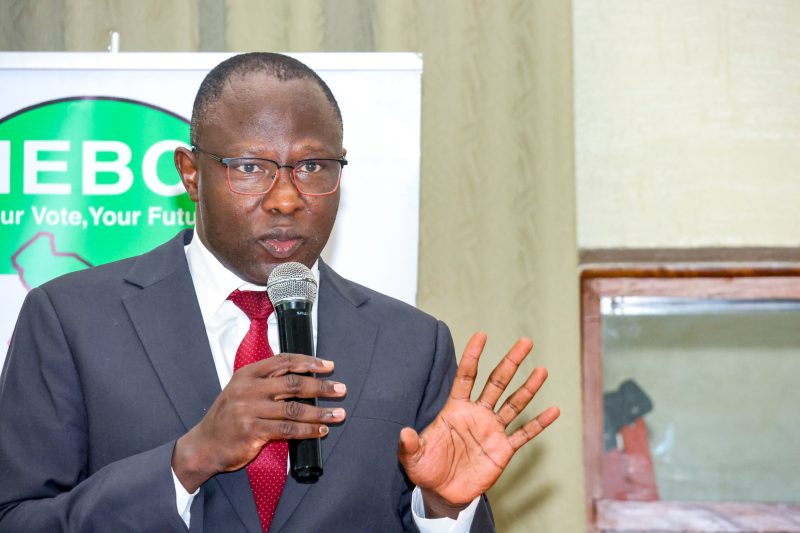
NAIROBI, Kenya, Nov 24- Independent Electoral and Boundaries Commission (IEBC) chairman Erastus Ethekon has dismissed claims that the commission has been compromised or bought ahead of the 2027 General Election, insisting that it will discharge its constitutional mandate independently and transparently. On November 20, 2026, Gachagua accused Ethekon of being President Ruto’s man, alleging that politicians had bought him a house in Karen to influence his handling of the 2027 General Election.
NAIROBI, Kenya, Nov 24- Independent Electoral and Boundaries Commission (IEBC) chairman Erastus Ethekon has dismissed claims that the commission has been compromised or bought ahead of the 2027 General Election, insisting that it will discharge its constitutional mandate independently and transparently.
Ethekon said allegations of bribery, electoral manipulation and rigging were part of propaganda intended to undermine public confidence in the electoral process, warning that unverified claims could discourage Kenyans from participating in the elections.
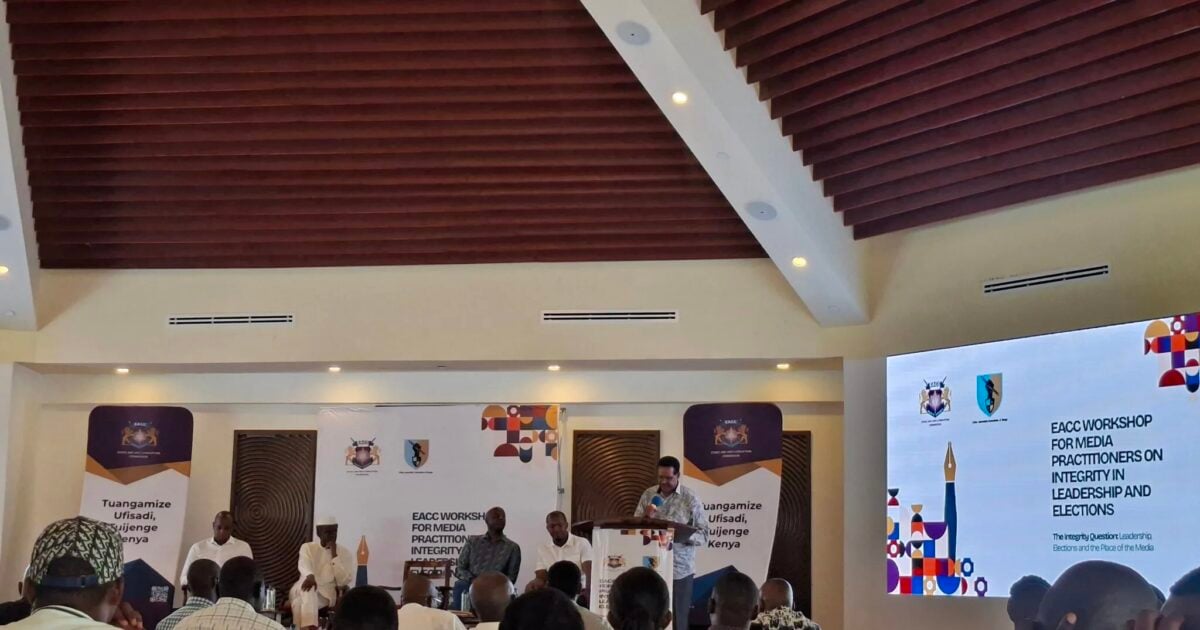
Speaking during a consultative breakfast meeting with political reporters in Nairobi on Tuesday, the IEBC chairman urged journalists to scrutinise claims made by politicians and other political actors rather than amplify narratives that could erode confidence in the commission.
He said the commission was not hiding anything about its preparations or the management of election results, insisting that journalists, political party agents, observers and other stakeholders would be allowed to monitor the process from polling stations to the national tallying centre.
“There is nothing to hide, contrary to what some of the politicians are trying to make ordinary citizens believe. IEBC is not hiding anything because the results belong to the people and we will all be there,” Ethekon said.
He challenged journalists to confront politicians spreading claims about the finality of presidential election results at the national tallying centre, arguing that the matter had already been settled by the courts.
Ethekon maintained that results declared at polling stations are final and that subsequent processes at constituency and national tallying centres involve the collection, verification and announcement of results in accordance with the law.
“Results at the polling stations are final. The rest is secretarial work, something that all of us can do. But as IEBC, we have the constitutional mandate to make sure those results are collected, tallied and verified,” he said.
On November 20, 2026, Gachagua accused Ethekon of being President Ruto’s man, alleging that politicians had bought him a house in Karen to influence his handling of the 2027 General Election.
“Ethekon is Ruto’s man; they even bought him a house in Karen. He is planning to steal the elections, but we want to tell him that it is not possible,” Gachagua said.
The allegation was not new. In August 2026, Gachagua had claimed that politicians had purchased a house worth Sh200 million for Ethekon as part of an alleged scheme to compromise the commission.
He reportedly attributed the disclosure to National Assembly Majority Leader Kimani Ichung’wah, claiming that the house had been bought for the chairman, who had previously lived in a rented apartment.
Gachagua’s earlier allegation had put the property’s value at Sh80 million before the figure rose to Sh200 million.
He added that the commission would verify whether a presidential candidate had met the constitutional threshold of more than 50 per cent of votes cast and at least 25 per cent in more than half of the counties before declaring the winner.
The chairman said journalists would be present during the final stages of verification and announcement of results, alongside political party agents, international observers and other stakeholders.
Ethekon’s remarks come amid renewed political debate over the transmission and verification of presidential election results ahead of the August 2027 polls, with questions raised by political actors over the role of the national tallying centre.
He urged journalists to interrogate politicians making claims about the electoral process, instead of giving them platforms to repeat allegations without evidence.
“You should be able to confront them and ask them the right questions, not just putting their cameras on their faces and allowing them to spew anything under the sun, some things that even don’t make sense, and repeating lies,” he said.
The IEBC chairman also called for responsible election reporting, warning that sensational coverage and political propaganda could inflame tensions and undermine national cohesion.
He recalled the 2007-2008 post-election violence, in which more than 1,000 people were killed, saying irresponsible political communication and media coverage had contributed to the country’s descent into violence.
Ethekon, who said he was working with the United Nations Development Programme (UNDP) at the time, also recounted his personal experience during the 1992 election-related violence when he was a Form One student.
He said he was pulled out of a vehicle between Kitale and another destination and questioned about his ethnic identity by armed youths.
The experience, he said, reinforced the dangers of political incitement and the responsibility of institutions, politicians and the media to protect the country from another cycle of election-related violence.
“Sometimes in some cases elections have become a matter of life and death. So it’s a very, very sensitive issue that we all must understand,” he said.
The chairman warned that the growing spread of misinformation, disinformation, hate speech and propaganda on digital platforms posed a significant threat to the credibility of the 2027 elections.
He said some of the false narratives were being manufactured by individuals and groups within and outside the country with the intention of influencing political discourse and destabilising Kenya.
Ethekon urged media houses to invest in fact-checking and verification, particularly when reporting claims about election technology, voter registration and results transmission.
He cautioned against sensationalising sensitive electoral issues in pursuit of newspaper sales and online traffic, saying the consequences of irresponsible reporting could extend beyond media organisations to families and the country at large.
“While rumours may sell better, truth buys you credibility,” he said.
The chairman further called on journalists to shift their coverage from political personalities to issues affecting voters, arguing that excessive focus on individual politicians could distract the public from interrogating electoral policies, processes and accountability.
He said the commission was committed to maintaining regular engagement with media houses through a memorandum of understanding signed with the wider Kenya media sector working group.
The agreement provides for regular consultations, information sharing and training of journalists on electoral processes, including results transmission.
Ethekon said the commission would also establish a communications hub as the election approaches, where journalists would have an opportunity to observe electoral operations and access information directly.
He announced that the commission was preparing for an enhanced mass voter registration exercise expected to begin in January 2027, with exact dates to be communicated later.
He appealed to media houses to support voter education and mobilisation to encourage more Kenyans to register and participate in the elections.
The chairman reaffirmed the commission’s commitment to open communication, timely briefings and continuous engagement with stakeholders, saying journalists would remain critical partners in delivering peaceful, free, fair, credible and inclusive elections.
“Inform responsibly, question courageously. Don’t fret, question users, but be factual. Verify what we are telling you and what other actors are telling you,” he said.
- ethekon
- result
- election
- commission
- politician
- claim
- journalist
- iebc