Asiedu Nketiah calls for electoral reforms to protect polling station results

National Democratic Congress (NDC) Chairman Johnson Asiedu Nketiah has called for stronger electoral reforms to protect the integrity of election results, warning that unexplained changes to polling station figures during collation could undermine public confidence in democracy. Citing the African Union’s observation mission to Ghana during the December 2024 elections, he said credible election observation should recognise achievements while identifying weaknesses that require reform.
National Democratic Congress (NDC) Chairman Johnson Asiedu Nketiah has called for stronger electoral reforms to protect the integrity of election results, warning that unexplained changes to polling station figures during collation could undermine public confidence in democracy.
He identified the process between declaring results at polling stations and the final national declaration as a major vulnerability, arguing that discrepancies must be properly documented, explained, and resolved.
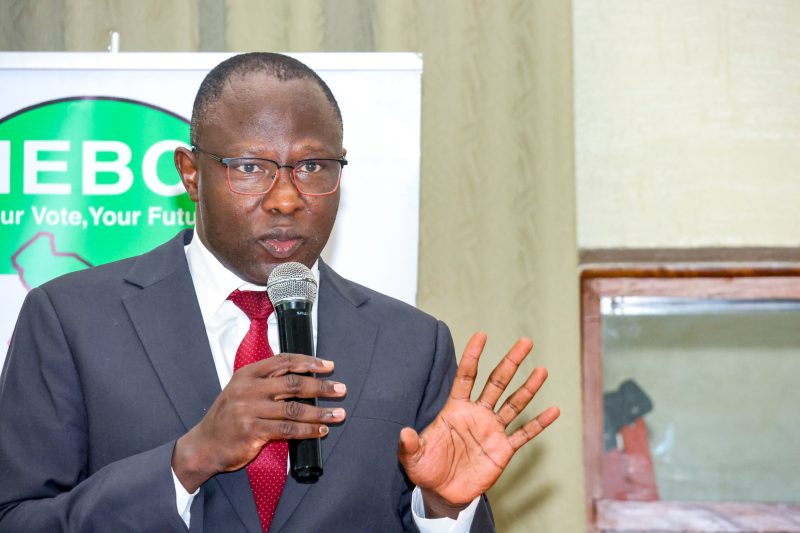
Speaking at a political leaders’ forum on electoral neocolonialism, Mr Asiedu Nketiah said safeguarding elections required more than protecting countries against foreign interference. He said weaknesses within domestic electoral systems must also be addressed.
Drawing on his experience in party organisation and as a key witness in Ghana’s presidential election petitions arising from the 2012 and 2020 elections, he stressed that electoral disputes should be based on verifiable evidence rather than political grievances.
“Much of the danger lies between the polling station and the national declaration. A party agent may possess a signed result, while a different figure appears during collation,” he said.
He explained that discrepancies could arise from clerical errors, poor administrative procedures or more serious irregularities.
He called for the preservation of original electoral documents, proper reconciliation of figures, documentation of corrections and opportunities for political parties to challenge disputed results.
He warned that failing to explain discrepancies could cause greater damage to public confidence than the errors themselves.
According to him, electoral systems must ensure that the choices made by citizens at polling stations are preserved throughout every stage of the process.
“Electoral sovereignty belongs first to the voter. It is not a special right of the government of the day,” he stated.
While acknowledging the dangers of foreign interference in national elections, Mr Asiedu Nketia cautioned against using external influence as an excuse to overlook domestic electoral misconduct.
He identified voter intimidation, the mishandling of ballots, the abuse of state resources by governing parties and the dissemination of false election results by opposition parties as threats to electoral integrity.
He maintained that national sovereignty should not shield governments, political parties or electoral officials from legitimate scrutiny.
“None of these practices become acceptable because the country is independent,” he said.
Referencing Ghana’s presidential election petitions and the peaceful transfer of power following the December 2024 elections, the NDC Chairman said democratic institutions must be robust enough to withstand the pressures of fiercely contested polls.
Mr Asiedu Nketia also called for greater transparency and consistency in the work of international election observers.
He argued that the credibility of election observation missions should be determined by the quality of their methodology rather than their nationality or international prestige.
He questioned whether observer missions adequately examine electoral laws, campaign financing, the use of public resources and the collation of results before issuing assessments.
Citing the African Union’s observation mission to Ghana during the December 2024 elections, he said credible election observation should recognise achievements while identifying weaknesses that require reform.
He called for consistent standards, regardless of the diplomatic relationship between the country holding elections and the countries represented by observers.
The NDC Chairman further expressed concern about emerging threats to democracy, including anonymous digital political advertising, concealed political financing and fabricated audio and video recordings.
He said technological advances had made it easier for misleading political content and external influence to spread rapidly across national borders.
He called on electoral commissions and political parties to develop systems to trace political advertising expenditure, preserve reliable records and promptly correct false information.
However, he cautioned governments against using efforts to combat electoral interference as a justification for censorship or the suppression of legitimate criticism.
Mr Asiedu Nketia urged the African Union and other regional bodies to pursue practical reforms, including stronger political financing disclosure requirements, transparent collation procedures, the prompt publication of polling station results and improved training for domestic election observers.
He also called for electoral dispute resolution mechanisms that deliver timely decisions and provide effective remedies where irregularities are established.
The NDC Chairman cautioned against international arrangements in which politically aligned governments endorse one another’s elections without adequately examining the evidence.
He maintained that the strongest defence against foreign electoral interference was the establishment of transparent and accountable domestic electoral institutions.
“A country protects its elections from outsiders most convincingly when it has first made them answerable to its own people,” he concluded.
- election
- asiedu
- polling
- station
- result
- nketiah
- party
- country