Backward steps for police on participation in Pride marches and anti-racism
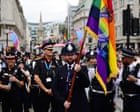
Shabana Mahmood’s ‘new impartiality standard’ for police is not non-political, argues Chris Sinha. Plus a letter from Dr Peter Purton The home secretary, Shabana Mahmood, says police in uniform should not participate in LGBTQ+ pride events, saying that “at those marches, you will often have campaigners, on gender identity … and those issues are now contested … the marching alongside looks like a political act” (Shabana Mahmood backs ban on police marching in pride events in uniform, 18 November).
Shabana Mahmood’s ‘new impartiality standard’ for police is not non-political, argues Chris Sinha. Plus a letter from Dr Peter Purton
The home secretary, Shabana Mahmood, says police in uniform should not participate in LGBTQ+ pride events, saying that “at those marches, you will often have campaigners, on gender identity … and those issues are now contested … the marching alongside looks like a political act” (Shabana Mahmood backs ban on police marching in pride events in uniform, 18 November).
She also said that it is wrong for the police not to be colour-blind in policing, as in the previous anti-racism commitment – a commitment that reflected the recognition of the history of systemic racism, and of the perceptions of the police by communities who are policed – and that the police should not engage with “activist groups and campaigners”. Instead, they should adhere to “a new impartiality standard”.
In effect, Mahmood is saying that the police should not adhere to anti-racism and anti-homophobia in its policies, practices and culture. This “new” standard is not non-political. In reality, it represents a return to a past policy of treating those who oppose bigotry and violence against racialised and marginalised communities as being the problem.
It panders to the far right’s attempt to portray racists as victims. It equates anti-racists with racists and is reminiscent of Donald Trump’s notorious remarks about neo-Nazis and those opposing them that “there were very fine people on both sides”. Official neutrality between racism and anti-racism is institutionally racist. Chris Sinha Cringleford, Norfolk
I am one of those gay men whose early years of campaigning for our equality were at a time when the police were ruthlessly persecuting, and the law prosecuting, our community. After decades of struggle, we achieved, in the 2010 Equality Act, recognition of LGBTQ+ people as equal citizens, and police officers – like other services from which we had previously been banned – were able to take part in our Pride parades, celebrating our community’s history and diversity.
Now Shabana Mahmood’s decision to end this sends the signal that our equality is not recognised by a (Labour) home secretary. Your editorial (The Guardian view on ‘two-tier policing’: tackle the myth, don’t pander to it, 18 November) is spot-on: you don’t defeat bigoted mythology by appeasing it. Dr Peter Purton Southall, London
- police
- pride
- shabana
- mahmood
- participation
- marche
- racism
- impartiality