Broadcasting, an industry in search of peace and little details, by Okoh Aihe
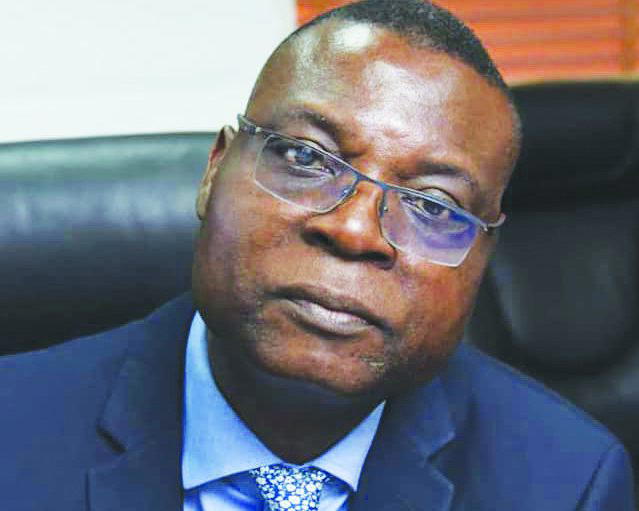
I am sure that Section 6 of the National Broadcasting Commission Act was created for Ministers like Mohammed Idris who will not take advantage of the overwhelming power at their disposal but, at all times, manage such power to meet stakeholder and public expectations from the broadcast industry. Receiving a delegation of the Broadcasting Organisation of Nigeria (BON), which visited him in his office in Abuja recently, Idris directed that all talks about increasing broadcast license fees be suspended following fears raised by broadcast operators that the escalating cost of operations is almost…
I am sure that Section 6 of the National Broadcasting Commission Act was created for Ministers like Mohammed Idris who will not take advantage of the overwhelming power at their disposal but, at all times, manage such power to meet stakeholder and public expectations from the broadcast industry. Section 6 states that “Subject to the provisions of this Act, the Minister may give the Commission directives of a general character relating generally to particular matters with regard to the exercise by the Commission of its functions under this Act and it shall be the duty of the Commission to comply with such directives.” Looking at it closely, the Section gives the Minister the yam and the knife, leaving at his discretion whoever may get a piece of the yam.
More like the sword of Damocles, it can come down anytime, dear friend. I have been against that Section of the Act and have actively canvassed for it to be amended. Reason being that it has been abused serially and is responsible for most of the failures in the broadcast ecosystem, including a number of cases in the court whose outcomes may continue to invalidate the authority of the National Broadcasting Commission (NBC), who is the regulator of the broadcast industry.
But life is full of contradictions. It doesn’t mean however that such contradiction, which could be arbitrary, should be accepted as reality irrespective of brilliant intention and outcome. Idris has managed all the arbitrariness of Section 6 quite different from the reality visited upon us not too long ago, and he continues to bear the elements of a good man who has control over his environment.
Receiving a delegation of the Broadcasting Organisation of Nigeria (BON), which visited him in his office in Abuja recently, Idris directed that all talks about increasing broadcast license fees be suspended following fears raised by broadcast operators that the escalating cost of operations is almost running them out of business. It means there were simmering discontents and disagreements in the broadcast ecosystem threatening to burst into the open which the public never noticed but the minister has moved swiftly to nip those issues in the bud, as they say.
“Any increase in license fees is hereby put on hold. All reviews relating to licenses are suspended until further notice. I am directing the NBC to ensure strict compliance while we review the situation,” Idris was quoted to have said. He called the suspension part of the effort of the Nigerian government to create a more conducive environment for broadcasters.
Only if for selfish reasons, Idris needs the broadcast operators to be at the top of their game especially as we approach the 2027 elections. Unfortunately for Nigerian broadcasters, they are hardly prepared for such challenging undertaking, not because of capacity and competence in the profession, but more because of the business environment that has been shrinking.
This point was registered vehemently by BON Chairman, Tony Akiotu, when he painted a dreary picture of the industry, saying that “today, it is difficult if not impossible to count stations that operate up to 12 hours daily. This portends danger as information is the lifeblood of a functioning democracy acting as the foundation for civic participation, transparency and accountability.” Akiotu made an appeal for the government to grant access to affordable financing to save broadcasting, beside another major concern, for the minister to encourage political parties to present their candidates for Political Debate which is traditionally put together by the gathering of broadcasters before the Presidential Election.
It is possible to see the razzle dazzle of a few flagship programmes on television and get to the erroneous conclusion that the broadcast industry is having a good ride. No. The sector is more like the metaphor of the monkey which sweats profusely but for the hair on its back. There were two other directives also given by the minister. One. The NBC to expedite the review of the Nigeria Broadcasting Code to ensure that its provisions reflect current developments and emerging realities in the industry; and Two: the Advertising Regulatory Council of Nigeria (ARCON) to ensure full enforcement of the 45-day payment period for advertising services.
However, there is a third issue which remains troubling, but the minister has promised to handle it by himself – to convene a stakeholders’ meeting to address outstanding concerns on the Digital Switch-Over (DSO). Although Nigeria opted for the satellite option to launch a concluding variant version of the DSO on June 17, there remains a number of sensitive issues awaiting urgent attention of stakeholders, including NBC and BON members, among others.
This writer gathered that the minister was very unhappy with the regulator after receiving complaints from BON that 147 days after his personal intervention pre-DSO launch, it was yet to be involved in any process or meeting to ensur
- broadcasting
- industry
- broadcast
- section
- commission
- idris
- act
- minister