Frustrated Bowen says geopolitical tensions hurt COP consensus
Minister for Energy and Climate Change Chris Bowen breaks his silence on just what went wrong at the UN Climate Summit.
Minister for Climate Change and Energy Chris Bowen has laid bare his frustrations over the outcome of COP31.
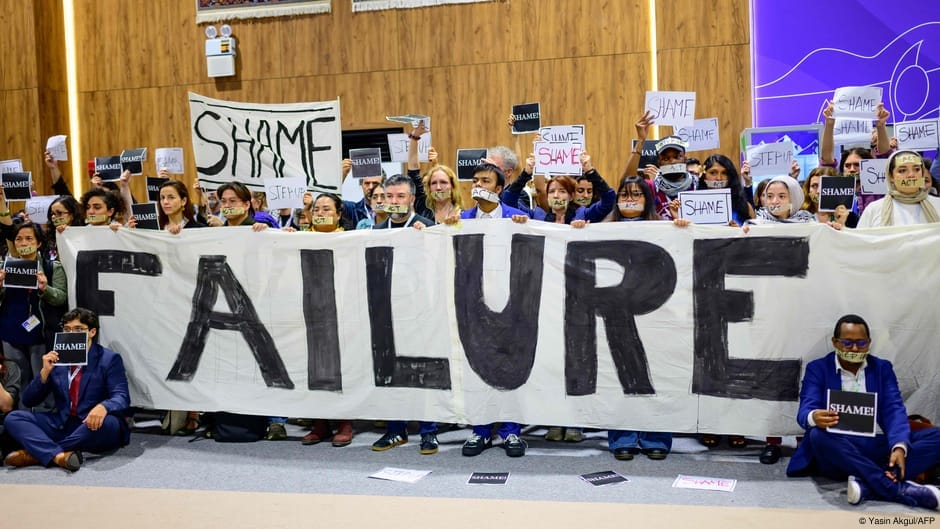
The climate negotiations in Türkiye broke down and ended without a deal after several countries and the 27-nation European Union said they could not accept a final proposal that did not mention fossil fuels.
The deal was rejected on Sunday afternoon at the summit at which Australia and Türkiye shared leadership.
In the aftermath Mr Bowen has been under attack from political rivals and Opposition Leader Angus Taylor called for Mr Bowen to resign.
Mr Bowen, speaking in his first interview since the conference, told 7.30 that the outcome of COP31 left him frustrated after Australia had spruiked plans for its own targets, including electrification.
"The COP negotiations were going quite well, then got caught up in the use of the words 'fossil fuels'," Mr Bowen told 7.30.
"Frustration [was the feeling] at that point ... and a strong degree of disappointment that we were so close, had done so much work, and an issue then arose.
"Countries dug into positions and it was very, very hard to move because of the consensus model at COP."
That consensus model means that all nations attending the climate summit have to agree on the resolution.
At COP28 that included a final deal with "historic" references to "transition away from fossil fuels", a pledge to triple renewable energy and a commitment to stop adding carbon dioxide to the atmosphere by mid-century.
At COP31 that language was dropped as Mr Bowen blamed the consensus system and existing geopolitical tensions for stopping a final proposal that mentioned fossil fuels.
"In our first draft decision, we did have language about transition away from fossil fuels, and a number of countries indicated we then consult with every country," Mr Bowen said.
He also said Australia wanted that language in the final agreement but existing tensions soon kicked in.
"There were some countries, EU and others who said, 'these words must be in' and Saudi Arabia said 'these words must be out'," Mr Bowen added.
"And both parties were saying, 'we will veto it if they're in or veto it if they're out'.
"That's not unusual at a COP [but] the difference this year was that countries were a lot harder to budge from their position.
"I felt a lot of geopolitical tension in the room on other issues infecting the conversation and making it so much harder to negotiate.
"The views were more dug in and dislike between parties much stronger this year than I've seen previously. "
This COP was held amid tensions in the Middle East and Russia's ongoing war in Ukraine.
Mr Bowen confirmed Russia played a role and was making "conservative" arguments on the issues at hand but that the negotiations went down to the wire.
At home, the government is set to release its annual climate change statement on Thursday.
Mr Bowen said Australia is meeting its carbon reduction targets for 2030, but that meeting its target of reducing emissions to 62-70 per cent below 2005 levels by 2035 remains an issue.
"[The report] will show 6.2 million tonnes of carbon reduction in the last year. Which is about 1.5 times higher than the average over the last 10 years," Mr Bowen said.
"It'll show we've also got more work to do.
"The Climate Change Authority Advice will say Australia's doing well, but needs to do better on emissions reduction.
Watch 7.30, Mondays to Thursdays 7:30pm on ABC iview and ABC TV
- bowen
- frustrated
- cop
- consensus
- climate
- tension
- minister
- energy