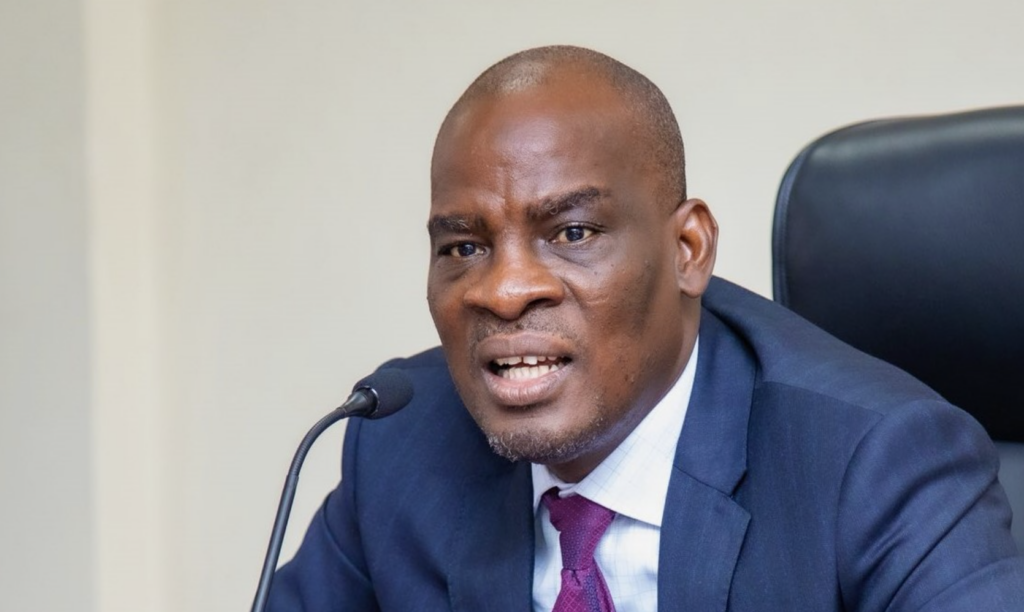
AI cannot fix Ghana’s weather forecasting gaps without reliable data – SIGA boss

Ghana’s growing reliance on artificial intelligence (AI) in weather forecasting will not deliver accurate predictions without reliable observation systems and quality data, Director-General of the State Interests and Governance Authority (SIGA), Professor Kpessa-Whyte, has warned. Speaking at the first Annual General Meeting and official inauguration of the Ghana Meteorological Agency’s (GMet) new operational facility, Professor Kpessa-Whyte called for sustained investment in ground observation stations, modern equipment and skilled scientific personnel.
Ghana's growing reliance on artificial intelligence (AI) in weather forecasting will not deliver accurate predictions without reliable observation systems and quality data, Director-General of the State Interests and Governance Authority (SIGA), Professor Kpessa-Whyte, has warned.
He says although AI and machine learning are transforming weather forecasting globally, Ghana must address weaknesses in its meteorological infrastructure to fully benefit from the emerging technologies.
Speaking at the first Annual General Meeting and official inauguration of the Ghana Meteorological Agency's (GMet) new operational facility, Professor Kpessa-Whyte called for sustained investment in ground observation stations, modern equipment and skilled scientific personnel.
He acknowledged GMet's efforts to develop AI-driven sub-seasonal and seasonal forecasting systems but cautioned that sophisticated technology cannot compensate for inadequate weather observations.
“Artificial intelligence can sharpen a forecast, but it cannot invent an observation. The most advanced algorithm in the world is only as good as the data fed into it,” he said.
Professor Kpessa-Whyte noted that Africa operates one of the smallest weather observation networks globally, making the expansion and modernisation of ground-based monitoring systems critical to improving forecasting accuracy.
He welcomed support from development partners, including automated weather stations recently handed over through UNESCO, and collaborations with the Danish Meteorological Institute and the UK Met Office on the Ghana Climate Atlas.
However, he urged Ghana to develop the institutional and technical capacity to maintain its own meteorological infrastructure rather than depend indefinitely on external assistance.
“The eyes of a nation on its own skies cannot always depend on the generosity of others,” he added.
Beyond the technological gaps, the SIGA Director-General expressed concern about GMet's financial position, warning that rising operational costs could undermine the agency's ability to invest in critical infrastructure.
He disclosed that GMet recorded total revenue of approximately GH¢77.42 million in 2025, with internally generated funds accounting for GH¢50.88 million.
The agency's recurrent expenditure stood at GH¢53.32 million, while capital expenditure amounted to GH¢9.84 million, representing approximately 15.57 per cent of total expenditure.
GMet also recorded a negative operating cash flow of GH¢3.87 million.
Professor Kpessa-Whyte said although the internally generated revenue reflected the agency's commercial efforts, a significant proportion of its resources was being absorbed by operational expenses, leaving limited funds for long-term investments.
“Too much of the resources of the agency is absorbed by the cost of keeping the lights on, and too little remains for the investment that will keep tomorrow's forecast accurate,” he observed.
He urged management to strengthen revenue mobilisation, improve cash flow management and prioritise expenditure to ensure that investments in meteorological infrastructure are not delayed.
He also encouraged GMet to expand its engagement with institutional clients in aviation, energy, agriculture, insurance, mining, construction and telecommunications to grow its revenue base.
However, he stressed that commercial expansion must not compromise public access to essential weather information.
“Warnings that protect life must remain a public good,” he said.
Professor Kpessa-Whyte also called for the effective implementation of revenue provisions under the Ghana Meteorological Agency Amendment Act, 2019 (Act 1002).
The legislation provides for GMet to receive 10 per cent of landing charges, 10 per cent of overflight charges and five per cent of airport tax collected by relevant aviation institutions and aerodrome operators.
He said the provisions were intended to ensure that the aviation industry contributes to sustaining meteorological services essential to flight safety.
“Every safe landing in Ghana carries the quiet signature of a meteorologist,” he said.
He called for improved information-sharing arrangements, clear remittance timelines and transparent reporting systems to reconcile outstanding balances and address possible discrepancies.
He stressed that the objective was not to create institutional tensions but to strengthen collaboration and accountability among the relevant institutions.
The SIGA Director-General further welcomed consultations on the proposed Ghana Meteorological Authority Bill, which seeks to elevate GMet into an authority with regulatory oversight responsibilities.
The proposed legislation is expected to position the agency as the country's single official source of severe weather warnings.
Professor Kpessa-Whyte said the growing circulation of unverified weather alerts on social media makes a trusted national source of meteorological information increasingly important, particularly during emergencies.
“In an emergency, a nation needs one trusted voice, not 100 competing voices,” he said.
However, he cautioned that the proposed expanded mandate must be supported by clear governance structures, transparent licensing arrangements and effective oversight.
He also urged careful consideration of concerns surrounding the potential dual role of GMet as both a provider of meteorological services and a regulator.
Professor Kpessa-Whyte outlined five priorities he believes should guide the agency's next phase of development.
They include financial discipline and revenue mobilisation, infrastructure modernisation, stronger governance and accountability, improved human and technical capacity, and effective performance management.
He said GMet must attract, train and retain the scientists, forecasters and data specialists needed to support a modern meteorological service.
He also acknowledged improvements in the agency's performance over the past five years, noting that it had moved from the middle of the performance rankings towards the top.
Despite the progress, he said GMet must consolidate its gains while addressing its financial, infrastructural and institutional challenges.
“As our climate grows more volatile, the meteorologist has become more than a scientist. The meteorologist is a first responder who arrives before the disaster,” he said.
He reaffirmed SIGA's commitment to supporting GMet through performance oversight, constructive engagement and the promotion of sound corporate governance.
With extreme weather events becoming an increasing concern amid climate change, strengthening Ghana's meteorological systems will be important for protecting lives, supporting economic activities and preparing communities for climate-related disasters.
Professor Kpessa-Whyte maintained that while AI presents new opportunities for improving weather predictions, investment in reliable weather data, modern observation infrastructure and skilled personnel must remain central to GMet's development.
- ghana
- weather
- forecasting
- gmet
- siga
- agency
- revenue
- observation