politics

Young people cannot uphold integrity when powerful individuals escape accountability – CDD-Ghana
Young people cannot uphold integrity when powerful individuals escape accountability – CDD-Ghana

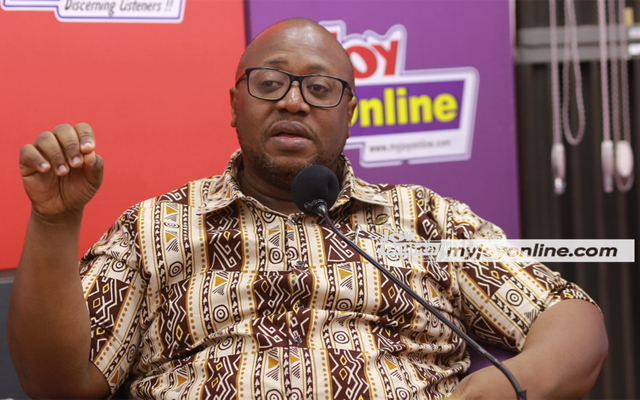
The Ghana Centre for Democratic Development (CDD-Ghana) has called for stronger accountability institutions, effective law enforcement and greater transparency in public financial management as part of efforts to tackle corruption. Its Executive Director, Dr Kojo Pumpuni Asante, says young people cannot be expected to uphold integrity when existing systems allow powerful individuals to escape accountability for wrongdoing.

The Ghana Centre for Democratic Development (CDD-Ghana) has called for stronger accountability institutions, effective law enforcement and greater transparency in public financial management as part of efforts to tackle corruption.

Its Executive Director, Dr Kojo Pumpuni Asante, says young people cannot be expected to uphold integrity when existing systems allow powerful individuals to escape accountability for wrongdoing.

Speaking at the 2026 Youth Against Corruption event on the need to strengthen the fight against corruption, he argued that efforts to instil ethical values in the younger generation must be supported by institutions that enforce the law without fear or favour.

Dr Asante said the fight against corruption required strong and independent accountability institutions, effective enforcement of laws, transparent public financial management systems and adequate protection for whistleblowers.

He also called for credible sanctions against those involved in wrongdoing and political commitment at the highest level.

“We cannot ask young people to embrace integrity while maintaining systems that reward dishonesty, celebrate unexplained wealth, punish whistleblowers, and allow powerful individuals to escape accountability,” he said.

He stressed that building a generation of ethical leaders must go beyond educating young people on the importance of honesty and integrity.

According to him, "building a generation of ethical leaders must go hand in hand with building institutions that reward integrity and make corruption costly and unattractive."

  • integrity
  • accountability
  • people
  • corruption
  • institution
  • individual
  • ghana
  • law

Summaries and tags are generated automatically. Stay informed with VidiaNews.

Related news

Kissi Agyebeng urges youth to reject ill-gotten wealth, uphold integrity
business

Kissi Agyebeng urges youth to reject ill-gotten wealth, uphold integrity

Special Prosecutor Kissi Agyebeng has urged Ghanaian youth to reject the growing acceptance of ill-gotten wealth and make integrity a personal responsibility in the fight against corruption. His comments come amid public criticism of the OSP over the pace of some high-profile cases, including the investigation involving former Finance Minister Ken Ofori-Atta.

Read →
Corruption diverts resources meant for schools, hospitals and jobs – Special Prosecutor
health

Corruption diverts resources meant for schools, hospitals and jobs – Special Prosecutor

Special Prosecutor Kissi Agyebeng says corruption undermines national development by diverting resources meant for essential public services, worsening inequality and denying young people opportunities. He explained that the Office of the Special Prosecutor (OSP) had a four-fold mandate: taking preventive measures against corruption, investigating specific cases of corruption and corruption-related offences, prosecuting offenders and recovering proceeds of corruption.

Read →
Years of investment at risk as GTEC freezes PhD programme accreditation – UTAG-UG
education

Years of investment at risk as GTEC freezes PhD programme accreditation – UTAG-UG

The President of the University of Ghana branch of the University Teachers Association of Ghana (UTAG-UG) has warned that years of investment in developing new doctoral programmes could go to waste after the Ghana Tertiary Education Commission (GTEC) issued a directive. Speaking on Joy News’ PM Express on Tuesday, Dr Harrison described the decision as the wrong way to address concerns about the quality of doctoral education in the country.

Read →
‘GTEC has every power’ to withdraw PhD accreditation – UTAG-UG questions blanket freeze
education

‘GTEC has every power’ to withdraw PhD accreditation – UTAG-UG questions blanket freeze

The University of Ghana branch of the University Teachers Association of Ghana (UTAG-UG) has questioned the Ghana Tertiary Education Commission’s (GTEC) decision to suspend accreditation for new PhD programmes, arguing that the regulator should sanction institutions that violate its standards instead. UTAG-UG President Dr Jerry Joe Harrison said GTEC already has the regulatory power to withdraw accreditation from offending institutions and does not need to impose a blanket restriction that penalises compliant universities.

Read →
PhD accreditation freeze: Punish offending universities, not everyone – UTAG-UG challenges GTEC
education

PhD accreditation freeze: Punish offending universities, not everyone – UTAG-UG challenges GTEC

The University of Ghana branch of the University Teachers Association of Ghana (UTAG-UG) has challenged the Ghana Tertiary Education Commission (GTEC) over its decision to suspend the accreditation of new PhD programmes, calling it the wrong way to address regulatory breaches. Speaking on Joy News’ PM Express on Tuesday, he argued that GTEC already has the regulatory powers to deal with institutions that fail to comply with its standards.

Read →
GTEC’s PhD accreditation freeze threatens Ghana’s drive to build local expertise – UTAG-UG
education

GTEC’s PhD accreditation freeze threatens Ghana’s drive to build local expertise – UTAG-UG

The President of the University of Ghana branch of the University Teachers Association of Ghana (UTAG-UG) warned that suspending accreditation for new PhD programmes could undermine Ghana’s efforts to build local expertise in critical sectors. Dr Jerry Joe Harrison said the Ghana Tertiary Education Commission (GTEC) directive risks disrupting years of university investment in building the country’s capacity and reducing its dependence on foreign institutions for advanced academic training.

Read →