Trump unveils suite of new tariffs on major trading partners
Goods from China, Brazil, the EU and Vietnam are all set to be taxed higher as Donald Trump doubles down on his tariff policies after a midterms drubbing.
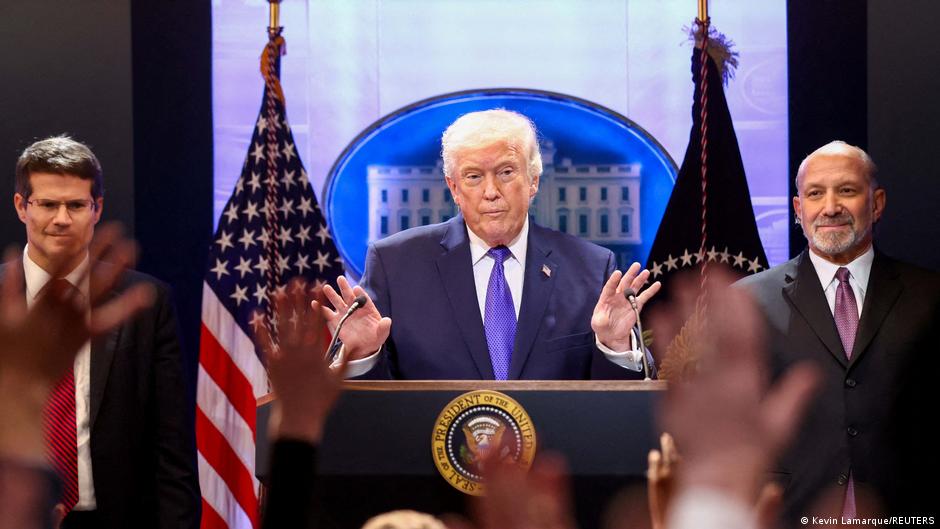
US President Donald Trump's trade representative has announced a fresh suite of tariffs targeting more than a dozen major trading partners.
The taxes, Mr Trump says, are based on a probe into excess industrial capacity.
The tariffs are sweeping, hitting 14 of America's close trading partners.
A US official has briefed that tariffs would apply to goods from China, Bangladesh, Cambodia, the European Union, India, Indonesia, Japan, South Korea, Malaysia, Singapore, Switzerland, Taiwan, Thailand and Vietnam.
Australia is not among the countries that will be impacted.
The new duties will stack on top of some previous tariffs already imposed during Mr Trump's second term.
However, many of those rates will be capped at lower rates because of deals already struck between the Trump administration and individual countries.
For some Chinese goods, the new 20 per cent tariff will be stacked on top of other import taxes for a total rate of 45 per cent, while Vietnam faces a 20 per cent tariff.
The tariffs for other trading partners range from 10 to 18 per cent.
Brazil has also been singled out after trade talks stalled, with a new 10 per cent tariff on aircraft exports from the country, affecting Brazil's largest aircraft maker Embraer, as well as increased duties on raw and refined sugar.
Under the US Constitution, Congress has power over the purse, meaning it has sole responsibility for taxes — including tariffs.
Mr Trump tried to find a way to give himself authority by declaring two national emergencies, which he argued allowed him to introduce "emergency tariffs".
The Supreme Court of the United States (SCOTUS) struck that move down in February, but other tariffs, which Mr Trump implemented under different legislation, stayed in place.
The president vowed to find ways to resurrect the tariffs SCOTUS blocked.
In July, he slugged Australian products with a 12.5 per cent tariff based on an that found the US's major trading partners had failed to adequately prevent forced labour.
They stem from an investigation by the Office of the US Trade Representative (USTR) into excess industrial capacity under Section 301 of the Trade Act of 1974.
According to the USTR, excess industrial capacity is when a market can produce more goods than there is demand for, which leads to "overproduction and large or persistent trade surpluses".
While trading partners' excess industrial capacity can lead to cheaper prices for consumers, it can also undercut smaller, local businesses that can't compete.
The Trump administration previously singled out China as the biggest source of excess industrial capacity, which it said was flooding global markets with steel, aluminium, electric vehicles, appliances, solar products and other goods.
China rejected the accusations, saying its exports reflected competitive advantages.
The Republican Party was shellacked in the recent midterm elections, and a good portion of that loss came down to tariffs driving up the cost of living.
A Reuters/Ipsos opinion poll in the wake of the elections showed 62 per cent of respondents would support efforts to repeal the tariffs.
- trump
- suite
- tariff
- trading
- unveil
- partner
- good
- china