How 'Lula's Army' WhatsApp chat helped turn Brazil election around

WhatsApp chat helped turn Brazil election around. As polls pointed to defeat, millions joined a 'Lula's Army' channel that is credited with helping transform online enthusiasm into real-world mobilisation.
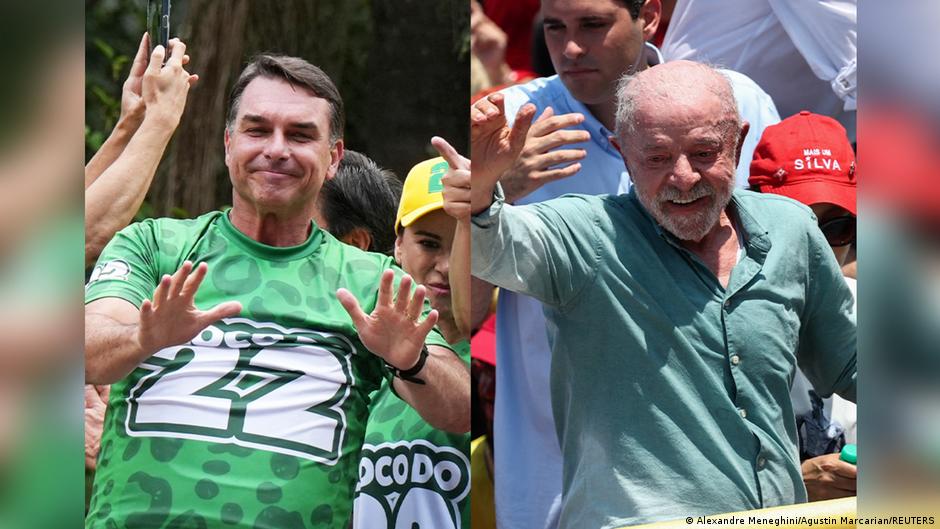
Brazil's left-wing president had been trailing right-wing challenger Flávio Bolsonaro, but managed to turn the race around in just three weeks.
Led by Congressman André Janones, the operation encouraged supporters to share videos, promote hashtags and recruit new voters.
Its dramatic growth between the two rounds was particularly notable because it appeared to reverse a long-standing imbalance in Brazilian politics.
For years, conservatives aligned with former President Jair Bolsonaro had been widely seen as dominating online political mobilisation, especially on platforms such as WhatsApp and Telegram.
The emergence of Lula's Army convinced many supporters that Brazil's left had finally found a way to compete in a digital arena. The shift was particularly significant because social media has played a central role in Brazilian politics since Jair Bolsonaro's 2018 election victory, when WhatsApp networks became a defining feature of political campaigning.
Lula's Army messages often included ready-made templates for followers to share with friends and family. Each one assigned supporters a specific task aimed at boosting Lula's visibility on social media.
Janones frequently instructed his "troops" to "blow up" the latest campaign video or help a new hashtag "take off".
"Guys, urgent!", "Don't go to sleep yet", "No food before the mission!", and "I have one more task before you're dismissed", were some of the instructions.
On the eve of the election, the congressman also hosted a 24-hour live event - dubbed the "turnaround livestream" - even as polls continued to suggest a victory for Bolsonaro.
The tactic worked, despite worries by some members of the Workers' Party that Janones's often-confrontational style on social media could undermine the more moderate image they hoped to project for Lula.
In his victory speech, Lula referred to Janones as "our General" and thanked him for "raising the morale of our troops every day".
Measuring the electoral impact of online mobilisation, however, is notoriously difficult.
While Lula's allies credit Lula's Army with helping fuel the comeback, political scientists caution that it is impossible to determine how many votes, if any, were directly influenced by the WhatsApp operation.
Political scientist Denilde Holzhacker argues that a shift in Lula's campaign strategy was key to his comeback.
Rather than relying solely on online engagement, she says the Workers' Party candidate succeeded in connecting digital campaigning with grassroots mobilisation on the ground.
According to Holzhacker, the campaign intensified local efforts and adapted its messaging - linking a Bolsonaro victory with concerns about potential changes to social programmes and the loss of rights.
"It was to Lula's credit that he recognised his own weakness and completely changed his style," she says. "And Janones managed to do something that had seemed unthinkable for Brazil's left - dominate social media."
By contrast, Holzhacker argues that Flávio Bolsonaro entered the run-off overly confident of victory and failed to communicate his message to his supporters as effectively.
Sociologist and political scientist Mayra Goulart, a professor at the Federal University of Rio de Janeiro, also cautions against attributing Lula's comeback solely to social media.
"It was a combination of social media and street-level mobilisation," she says. "The physical world enabled a form of mobilisation capable of reducing abstention and persuading undecided voters."
In her view, Lula's supporters succeeded in turning online enthusiasm into real-world political engagement.
"Those committed to Lula's victory worked to bring people together and persuade them to vote," Goulart says.
She argues that the effort not only helped increase turnout but could also prove valuable for Lula's next administration.
"I believe this collective effort was an important learning experience and will prove valuable for a government that still faces many battles ahead. It not only helped reduce abstention, but also converted a significant number of undecided voters."
Lula himself suggested that the mobilisation behind his comeback could shape the way he governs in the years ahead.
In his victory speech, he said the election had taught him many lessons and pledged to change the way Brazil is governed.
"We are going to give people a greater say in decision-making, and digital communication will play a much bigger role in my government."
Lula wins fourth term in dramatic Brazil election comeback
Lula faces hostile congress and divided country after Brazil election win
Who is Lula? From ex-worker and prisoner to Brazil's president again
- lula
- army
- chat
- brazil
- election
- poll
- million