They belong to Jerusalem’s past and present: meet the African Palestinians
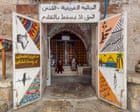
There are about 450 African Palestinian people in occupied East Jerusalem, mostly living in the historical buildings of the Old City, near al-Aqsa mosque. While Christians make up a small part of the African Palestinian population, most African Palestinians descended from Muslim pilgrims who came to East Jerusalem in the early 20th century (before Israeli occupation), and stayed either to tend to the mosque, or to continue Islamic practice and devotion within the city’s religious ecosystem.
Despite militarisation, occupation and marginalisation, African culture prevails in the Old City, something I discovered first-hand when I visited
Don’t get The Long Wave delivered to your inbox? Sign up here
In occupied East Jerusalem, I met an often overlooked community: African Palestinians. This week, I explore their unique history, and how they are, in a classic diaspora fashion, integrated and marginalised in equal measure.
There are about 450 African Palestinian people in occupied East Jerusalem, mostly living in the historical buildings of the Old City, near al-Aqsa mosque. That mosque, the third holiest site in Islam after those in Mecca and Medina, is the reason they are there. While Christians make up a small part of the African Palestinian population, most African Palestinians descended from Muslim pilgrims who came to East Jerusalem in the early 20th century (before Israeli occupation), and stayed either to tend to the mosque, or to continue Islamic practice and devotion within the city’s religious ecosystem.
A member of the community walked me through the Old City, telling me about their rituals and food. Every Friday, he said, they would gather in a courtyard under the shade of an ancient tree and have a group meal. I was surprised to hear the names of exactly the same dishes that would be gathered around after prayer in Sudan. Aseeda and weika, a thick dough and okra stew, scarcely exist anywhere outside Saharan Africa. But, as is the case with all African diasporans, culture survives.
The pilgrims became guards, groundskeepers and arborists at the mosque, and were leased two compounds close to the mosque, in which many remain today. As Jerusalem and all of Mandatory Palestine fell under occupation and annexation by what later became the Israeli state in the mid-20th century, African Palestinians became involved in the decades of violence and resistance across the region. My companion led me to the locations of the small historic homes of activists now long passed yet still remembered, through alleys and courtyards that snaked through the Old City.
This community describes itself as African Palestinian rather than “Black” Palestinian. They emphasise origin rather than race. They are strongly connected to their ancestors’ route from Africa into Palestine, driven by a particular cultural and religious pull. Their historical presence reflects a vast Islamic civilisation long defined not by nation states and capitals, but by religious and cultural hubs.
But there have been challenges. African Palestinians have reckoned with racism and marginalisation from Arab Palestinians. Those I spoke to described this as resulting from “ignorance”, and something that has receded over time. This small community has cemented itself as an enduring population in the city, its members are well known in its neighbourhoods, and their role within the broader Palestinian resistance is recognised.
Like all Palestinians, the African community is labouring under the pressures of occupation, economic suffocation, heavy-handed policing, and bureaucratic chicanery. Most are effectively stateless, occupying a liminal space as the descendants of peoples who came to Jerusalem at a time when passports and citizenship as such did not exist. They were classed as “foreign” during Jordan’s rule of Jerusalem between 1948 and 1967. Now, like all Palestinians from Jerusalem, harsh policies mean that permanent residency in the Old City can be revoked if they legally reside in or become citizens of another country (affecting those who may otherwise want to obtain citizenship in African countries). They face the same risks if they leave the city for an extended period of time.
As I walked and chatted with my companion on the streets of the Old City, I realised that, to the observer, we resembled a father and daughter. We looked so similar in that particular Sudanese and central African mien. But we were joined by something more than our genealogical extraction: the reason we were on those streets. That sense of Jerusalem, and al-Aqsa, as places that, despite occupation, annexation, and militarisation, remain an integral part of our religion, culture and history. A repository of heritage and ancestry, and a site that will keep calling to our descendants in an unbroken chain – eternally claimed, eternally unrelinquished.
To receive the complete version of The Long Wave in your inbox every Wednesday, please subscribe here.
Did you know about the African Palestinian community? What other overlooked African diaspora communities should the Long Wave be covering? Tell us your thoughts by replying to this newsletter, or emailing us at thelongwave@theguardian.com and we may include your response in a future issue.
- jerusalem
- palestinians
- african
- city
- east
- mosque
- past
- occupation