Makinde, Falola challenge Nigerian youths to drive national renewal
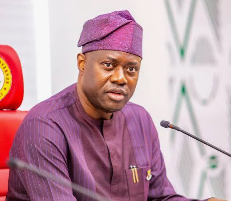
By Adeola Badru IBADAN — Oyo State Governor, ‘Seyi Makinde, and renowned historian, Professor Toyin Falola, have challenged Nigerian youths to reject despair, embrace innovation and take responsibility for national development, saying the future of Nigeria and Africa depends largely on the choices and contributions of their young populations. “I said in an interview yesterday that if there is one policy I would retain from this administration, it is the student loan scheme, particularly the Nigeria Education Loan Fund (NELFUND).
By Adeola Badru IBADAN — Oyo State Governor, ‘Seyi Makinde, and renowned historian, Professor Toyin Falola, have challenged Nigerian youths to reject despair, embrace innovation and take responsibility for national development, saying the future of Nigeria and Africa depends largely on the choices and contributions of their young populations. They made the call on Wednesday during the commemoration of this year’s International Students’ Day at the International Conference Centre, University of Ibadan, where they urged students to translate their education into practical solutions to the country’s challenges and demand accountable leadership.
In his remarks, Makinde advocated a national reset that would create an environment where education translates into employment, enterprise and meaningful opportunities, while citizens enjoy security and freedom from discrimination. He described Nigeria’s youthful population as a major opportunity for national development but noted that many young people were seeking education and employment opportunities abroad because of prevailing conditions at home.
The governor said his ambition was to build a country where migration would be a matter of personal choice rather than a decision driven by hopelessness. “I understand why Nigeria means so much to some of us. Some people may even be surprised or angry when I speak nostalgically about the country. But the Nigeria I remember is one that many young people today may not recognise because they have never experienced it.
“That is why my agenda is to reset Nigeria and make it work for every Nigerian, especially you,” he said. Makinde said he did not begrudge Nigerians who chose to live and work abroad but wanted the country to create conditions that would encourage them to return and build meaningful lives. He illustrated the challenges facing young Nigerians with the experience of his daughter, who returned to the country to explore opportunities but eventually went back to the United States after spending about a year trying different ventures.
According to him, although he offered her advice and support, he declined to use his position to secure an unfair advantage for her over other young Nigerians. The governor said the experience reflected the frustrations of young people seeking an environment where they could build their futures and enjoy opportunities alongside their peers. On education, Makinde said his proposed reset would focus on making the entire system functional rather than relying solely on financial assistance to students.
He identified the Nigeria Education Loan Fund (NELFUND) as one of the policies of the present administration he would retain, but cautioned against making student loans a substitute for a functional economy and an education system that prepares graduates for employment. “I said in an interview yesterday that if there is one policy I would retain from this administration, it is the student loan scheme, particularly the Nigeria Education Loan Fund (NELFUND).
“However, it should not simply be about distributing loans. It should be about making the entire system work so that not every student has to depend on a loan,” he said. He argued that students who did not need financial assistance should not take loans, so that available resources could benefit those who genuinely required them. Makinde said the country needed an economy where parents could earn enough to finance their children’s education and graduates could secure jobs to repay loans obtained to fund their studies.
He also advocated stronger links between education, employment and enterprise, saying graduates should acquire practical and industry-relevant skills before leaving school. The governor recounted an experience involving ExxonMobil in the United States, which had approached him over a project in another African country and requested engineers. He said he offered to provide two Nigerian engineers, Omotayo Giwa and Samuel Edelman, but the company explained that they would require about three months of training before becoming productive on the project.
According to Makinde, he sent the two engineers to the United States for the training, after which the company confirmed that they had become productive and could contribute meaningfully to the project. He said the experience demonstrated the importance of involving employers and industry practitioners in designing educational curricula. “Imagine a country where entrepreneurs and employers are involved in determining the skills required at every level, and educational curricula are designed to equip students with those skills before they graduate.
“Imagine graduates leaving school ready to work, without being told that they need four years of experience to qualify for an entry-level position. That is the Nigeria we intend to build,” he said. Makinde added that young people should be prepared to become entrepreneurs not merely because they lacked other options but because they posse
- makinde
- education
- loan
- nigeria
- country
- student
- opportunity
- falola