Risk of retaining fuel subsidy outweighed political consequences – Idris
• President misrepresented on electricity supply promise – Onanuga •FG defends power sector reforms, increased revenue to states By Juliet Umeh MINISTER of Information and National Orientation, Mohammed Idris, has defended President Bola Tinubu’s economic reforms, saying the removal of fuel subsidy and unification of exchange rates saved Nigeria from imminent economic collapse. Tinubu misrepresented on electricity promise — Onanuga Responding to concerns over electricity supply, Special Adviser to the President on Information and Strategy, Bayo Onanuga, said Tinubu’s campaign promise on…
• President misrepresented on electricity supply promise – Onanuga •FG defends power sector reforms, increased revenue to states By Juliet Umeh MINISTER of Information and National Orientation, Mohammed Idris, has defended President Bola Tinubu’s economic reforms, saying the removal of fuel subsidy and unification of exchange rates saved Nigeria from imminent economic collapse.
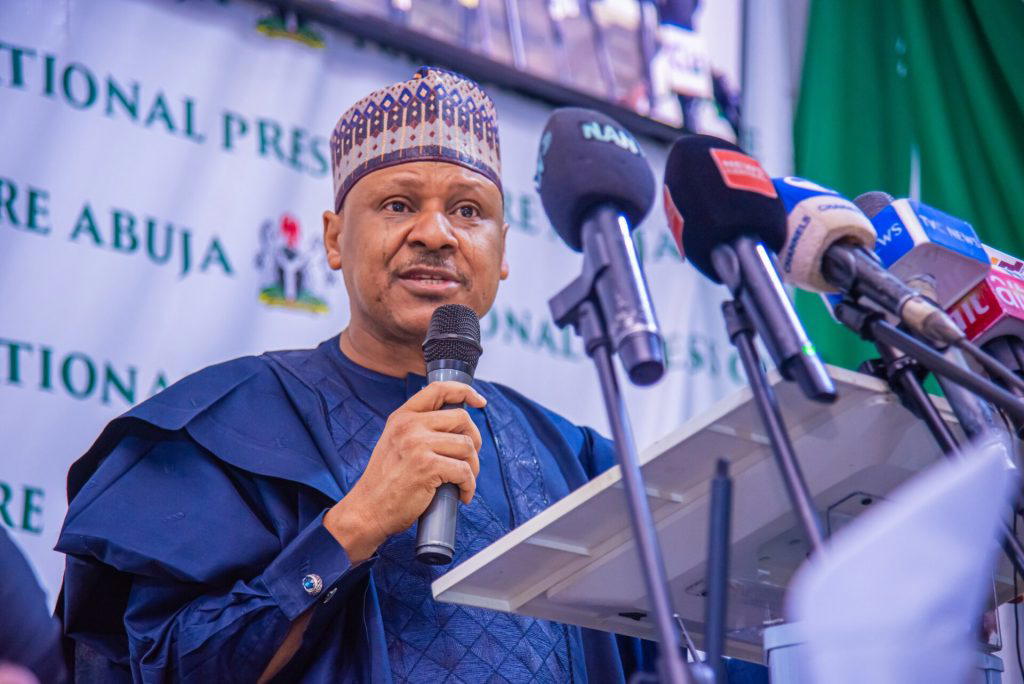
Idris, who spoke at an interactive session with journalists organised by the All Progressives Congress, APC, Presidential Campaign Council Media and Strategic Communications team in Lagos, Monday, said the President took politically risky decisions in the overriding interest of the country. He maintained that the reforms had improved government revenues at all levels, strengthened the economy and positioned the country for sustainable growth.
He said: “When the President took office in May 2023, there were two major policy decisions. One was doing away with this monster called fuel subsidy. The second was ensuring that the multiple exchange rate regimes that we had in this country were also done away with. “Presidents after presidents, everyone knew that fuel subsidy was a big problem and a big drain on the economy of this country.
But no one was able to achieve its removal until President Bola Tinubu came. “It was not a convenient decision for Mr President. In fact, it was politically risky for him, for someone who had just won an election, who had just been sworn in and who had another election staring him in the face.” Idris explained that the administration considered the consequences of retaining the subsidy and concluded that delaying the reforms would have been more damaging to the country.
“The risk of waiting any longer far outweighed whatever political risk he, as a person, as a president or as a politician, should take. “This created enough fiscal headroom, not just for the Federal Government but also for the sub-nationals. Federal Government has made a lot more money. Sub-nationals have made a lot more money,” he said. Economy on path to recovery The minister also said international financial institutions and rating agencies had acknowledged improvements in Nigeria’s economic outlook.
He said: “The IMF, the World Bank, everybody is saying, yes, we have some challenges as a nation, but our economy is on the path that will lead us to prosperity. “Our GDP is on the rise. Inflation that was becoming a big problem has been curtailed. Headline inflation, food inflation, all are down.” However, journalists at the meeting raised concerns over persistent insecurity, high petrol prices, inadequate electricity supply, distribution of Compressed Natural Gas, CNG, buses and the impact of increased allocations to state governments on citizens’ welfare.
Tinubu misrepresented on electricity promise — Onanuga Responding to concerns over electricity supply, Special Adviser to the President on Information and Strategy, Bayo Onanuga, said Tinubu’s campaign promise on electricity had been misrepresented by the opposition. Onanuga maintained that those circulating the President’s campaign video deliberately omitted a crucial part of his statement.
He said: “I think the President has been misrepresented on this power issue. I was there the day he spoke about power. “He said, ‘Whichever way, by all means necessary, you will have electricity; you will not pay for estimated bills anymore.’ “Then he went further: ‘A promise made will be a promise kept. If I don’t keep the promise and I come for a second time, don’t vote for me.’ “Then he went on and added a caveat.
He said, ‘Unless I give you adequate reasons why I couldn’t deliver.’ “If you watch the video, they will never show you the ‘unless’. They yanked it off.” Onanuga identified ageing electricity infrastructure and existing contractual obligations with private electricity operators as some of the challenges confronting the administration. He said the signing of the Electricity Act by Tinubu demonstrated the President’s commitment to decentralising the power sector and empowering states to generate and distribute electricity.
“To show you the seriousness of this President, the first thing he did in office was to sign the Electricity Act. “The government is making efforts. The Rural Electrification Agency has been doing a lot to ensure that power goes to people, installing mini-grids in hospitals, tertiary institutions, markets, towns and villages,” he said. Onanuga also said the Presidential Metering Initiative was addressing estimated billing, expressing confidence that Tinubu would fulfil his electricity supply promise by 2031.
Meanwhile, Idris pledged sustained engagement with the media ahead of the 2027 general elections, saying the administration was willing to receive constructive criticism.”
- president
- subsidy
- fuel
- idris
- electricity
- risk
- promise
- country