Blood in Delta and the politics of “All is fair in politics”
The campaign convoy of Ovie Omo-Agege, former Deputy Senate President and senatorial candidate for Delta Central under the National Democratic Congress (NDC), was fired upon at close range by armed men led by a local government chairman in Delta State who has never denied it. There is a clear line between what happened in Delta State and in other states potentially ruled by the APC today and what happened in Lagos twenty years ago.
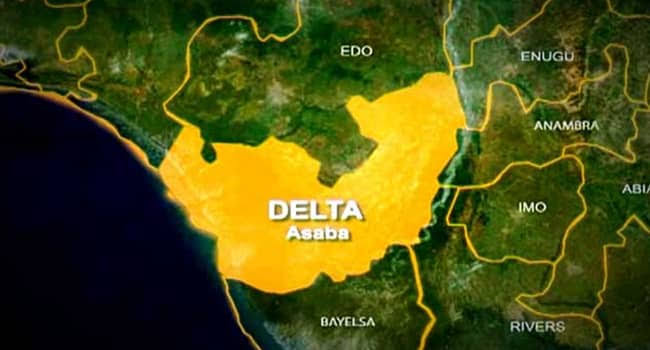
By Moshood Oshunfurewa On November 23, 2026, gunshots rang out at a campaign event in Uduere community, Ughelli North Local Government Area, Delta State. The campaign convoy of Ovie Omo-Agege, former Deputy Senate President and senatorial candidate for Delta Central under the National Democratic Congress (NDC), was fired upon at close range by armed men led by a local government chairman in Delta State who has never denied it.
Four people died on the spot; several others sustained gunshot wounds. Among the dead were two of Omo-Agege’s aides, Moses Anaughe and Akima Efemena Umokoro. As they opened fire, the gunmen reportedly shouted repeatedly, “It is Omo-Agege we want to kill!” one account said. This was not a “misunderstanding.” This was not a “political disagreement.” It was the third major episode of political violence in Delta State in less than three months: the Warri-Effurun clash of September 18, the killing of one person during an Asaba procession on November 7, and the massacre at Uduere on November 23.
And the 2027 general election is still less than 50 days away. Rewind to twenty years ago. On July 27, 2006, in Lagos, Funsho Williams was strangled in his home at Dolphin Estate. He had been the main challenger to Bola Ahmed Tinubu in the 2003 Lagos governorship election, and at the time of his death he was widely regarded as the strongest contender for the Peoples Democratic Party (PDP) governorship ticket in 2007.
The then-governor, Tinubu, announced a ten-million-naira reward for information leading to the arrest of the killers and maintained his innocence. Six suspects were charged; forensic testimony at trial confirmed that Williams died of asphyxiation from manual strangulation and bore defensive wounds. Twenty years later, no one has been convicted. At the twentieth-anniversary memorial, former Deputy National Chairman Bode George put it pointedly: “The President then invited Scotland Yard to participate in the investigation.
It was all messed up.” Williams’s death was never “solved.” It was simply forgotten. And forgetting, in Nigeria’s political ecosystem, is a carefully maintained technology of governance. There is a clear line between what happened in Delta State and in other states potentially ruled by the APC today and what happened in Lagos twenty years ago. That line is not a conspiracy theory; it is a pattern: deaths around opposition candidates, official investigations that lead nowhere, and a pervasive indifference, from the top down, to the consequences of political violence.
That indifference found its most naked expression in the President’s own words. In July 2026, Tinubu told the Catholic Bishops’ Conference at the Presidential Villa: “Those who want to take it from me will try. They will try. All is fair in politics, and equal opportunity.” “All is fair in politics.” When a president uses that phrase to describe political competition, the message to governors, party chairmen, local government chairmen, and street thugs is unambiguous: there are no red lines.
Paul Ibe, spokesman for the Atiku Abubakar campaign, demanded after the Delta killings that the President retract the statement, saying: “Murder is not fair. Intimidation is not fair. Silencing political opponents with violence is not fair.” He is right—but the intervention came too late and landed too lightly. A retraction cannot undo an ecosystem that the statement has already fed.
The data paint a colder picture than any speech. According to the Centre for African Security, Governance and Development (CentreSGD), between January 1 and October 27, 2026, 70 election-related physical attacks were recorded across 19 states and the Federal Capital Territory, resulting in 27 deaths, with 20 of those incidents involving fatalities.
And this is only the opening phase of the 2027 campaign cycle. The same report cited a September 2026 national voter-intention survey by Yiaga Africa: 61% of Nigerians fear that violence will prevent them from voting; in the North-East, that figure rises to 78%. In Osun State, the police themselves confirmed 30 suspected politically motivated killings in July.
When a police public relations officer says on television that “we cannot rule out the involvement of some politicians in these killings,” what he is actually saying is: we know who did it, but we will not tell you. The Delta State episode deserves to be treated as a specimen of this era because it exposes the new grammar through which violence operates.
Omo-Agege’s campaign team accused Jaro Egbo, chairman of Ughelli North Local Government, of leading the attackers, and claimed that Egbo acted on the orders of Delta State Governor Sheriff Oborevwori. Egbo denied it, offered a version about a dispute over a community hall booking, and counter-accused Omo-Agege’s side of firing first. The truth blurs amid the mutual accusations, but one fact cannot be blurred: four people died while the police were present—the campaign team says six truckload
- delta
- state
- president
- politic
- campaign
- chairman
- death
- november