War and drought threaten livelihoods of Sudan’s farmers

Attacks on electricity infrastructure and drought are threatening Sudan's harvests and leaving millions without water.
Haider Mohamed has worked as a farmer in Sudan’s Northern State for more than 40 years, growing fava beans, wheat, and a variety of seasonal crops.
But Sudan’s water crisis – a combination of lower-than-average rainfall and war-induced devastation to infrastructure – has severely affected his harvest and his income.
It’s a situation Mohamed describes as unprecedented in his 40 years of farming.
Mohamed owns a small farm covering about four hectares (about 10 acres) in al-Saleem, near the city of Dongola. He keeps part of his harvest to feed his family, and then sells the rest at local markets to cover essential living expenses, including healthcare and his children’s education.
“Our crops were destroyed last year, and this year it is difficult to generate any income because we are still facing electricity and irrigation problems,” Mohamed told Al Jazeera, referring to drone attacks on power stations that disrupted electricity supplies, and regularly stopped him from using electricity-dependent irrigation systems. “We have accumulated a lot of debt, and we fear that we will not harvest enough to feed our children, let alone have any surplus to sell in the market.”
Mohamed’s experience is far from unique. Across Northern State and other parts of Sudan, water shortages caused by declining rainfall or disruptions to irrigation are increasingly threatening agricultural production and the livelihoods of farming communities.
“Those who rely on diesel-powered pumps [for irrigation] cannot find fuel, and when it is available, it is extremely expensive,” Mohamed explained. “We also cannot afford the cost of installing solar-powered irrigation systems. At this rate, no one will be able to continue farming in this country.”
The ongoing war between the Sudanese Armed Forces (SAF) and the paramilitary Rapid Support Forces (RSF), which began in 2023, has severely disrupted fuel supplies in the country. Attacks on Sudan’s largest oil refinery, as well as fuel depots and petrol stations, have exacerbated shortages.
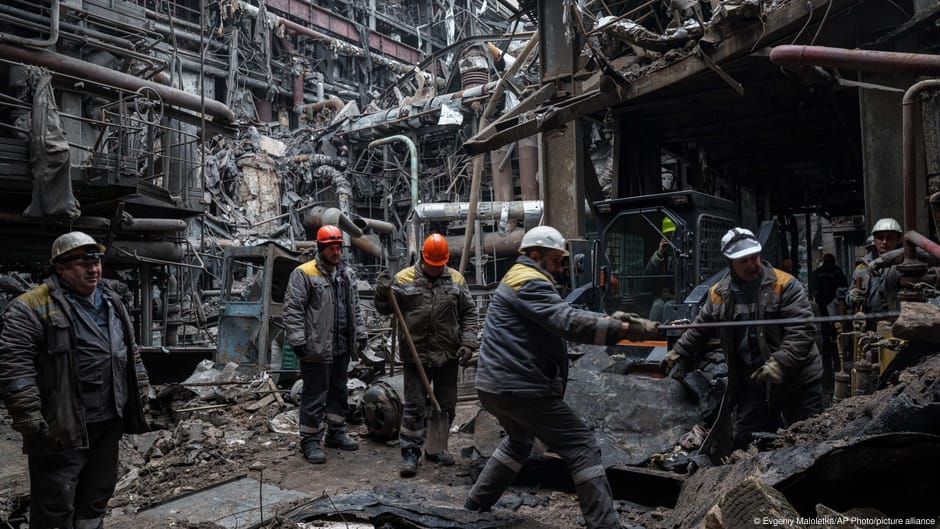
In just October, attacks blamed on the RSF damaged critical infrastructure across 11 states, disrupting electricity and water services and disabling several water supply sources.
Rising global energy prices have also made imports more expensive, with the United Nations reporting that the price of diesel nearly doubled between March and August this year.
In Sudan’s rain-fed agricultural regions, drought has compounded the problems facing farmers.
Rainfall during this year’s June-to-September rainy season declined across most of Sudan’s agricultural areas, believed to be linked to the ongoing global El Nino phenomenon. In the southeastern states of Gedaref and Sennar, rainfall was approximately 30 percent and 20 percent compared with normal levels, respectively, according to the United Nations Food and Agriculture Organization (FAO).
The two states normally account for about a quarter of Sudan’s sorghum production – the country’s main staple cereal.
The impact of the water crisis extends beyond the agricultural sector, affecting millions of people struggling to access drinking water and meet their basic household needs.
The International Committee of the Red Cross (ICRC) says damage to water and electricity systems and other civilian infrastructure has deprived millions of people of essential services, while disruptions to water supplies have increased the risk of cholera and other waterborne diseases.
The UN children’s agency, UNICEF, estimates that more than 27 million people in Sudan are in need of water, sanitation, and hygiene assistance.
Between January and June of this year, UNICEF and its partners provided 6.6 million people with access to safe water, with approximately two-thirds of those receiving emergency assistance, including displaced people, those who had returned home and communities affected by conflict and cholera.
In the capital Khartoum, residents are still forced to stand in long queues for water, sometimes waiting for hours. Widespread disruptions to water supply networks and the shutdown of several water stations due to damage sustained during the war have left many households without a reliable water supply.
Saleh Zaki, who lives in Khartoum State’s East Nile district, said the area has suffered from water supply problems for many years, even before the outbreak of the war.
“Before the war, we repeatedly sought help from the authorities, only to be told there was no budget to address the problem,” Zaki said. “We therefore raised funds ourselves and hired a specialist to drill two wells, providing residents with limited water supply.”
“Since the conflict damaged the water networks … we urgently need more wells, repairs to the supply networks and solar-powered systems to support our neighbourhood and nearby communities,” he added.
In August, the Sudanese government announced a series of measures designed to ease the water crisis and encourage families displaced by war to return home.
These measures include exempting solar panels imported for personal use from customs duties, taxes, and other government fees, and waiving residential water fees nationwide until the end of 2026.
However, these measures remain limited in their impact unless accompanied by broader economic policies.
“These measures should be expanded to include greater government support for the agricultural sector, incentives for farmers, and easier access to financing for solar energy systems for agricultural use,” said Mohamed Elnayer, an economist at the Sudan University of Science and Technology. “More comprehensive reforms are also needed in the housing and agricultural sectors, particularly to rehabilitate and improve water stations, expand access to reliable water supplies, and reduce the costs of essential infrastructure.”
- drought
- sudan
- war
- livelihood
- farmer
- attack
- electricity
- infrastructure