2027 Polls: We’re working with security agencies to prosecute offenders – INEC
…Moneybags hijacking our elections, ex-NBA president Osigwe laments By Ikechukwu Nnochiri ABUJA – Ahead of the 2027 general elections, the Independent National Electoral Commission (INEC) said on Thursday that it is working closely with the Nigeria Police Force and allied security agencies to prosecute electoral offenders. Meanwhile, in his presentation, the immediate past President of the Nigerian Bar Association (NBA), Mr. Afam Osigwe, SAN, who was the lead speaker at the conference, said he was worried that moneybags were hijacking elections in the country.
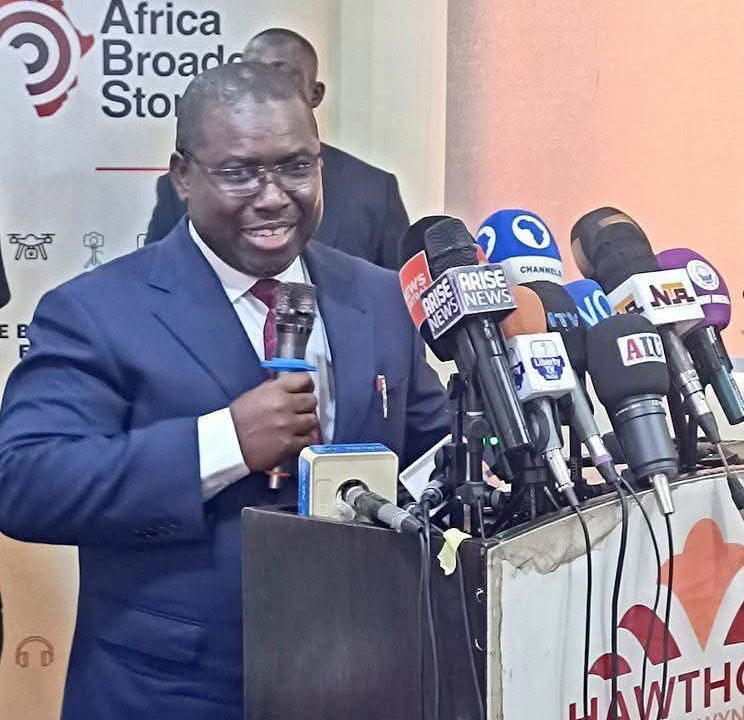
…Moneybags hijacking our elections, ex-NBA president Osigwe laments By Ikechukwu Nnochiri ABUJA – Ahead of the 2027 general elections, the Independent National Electoral Commission (INEC) said on Thursday that it is working closely with the Nigeria Police Force and allied security agencies to prosecute electoral offenders. INEC Chairman, Prof. Joash Amupitan, SAN, spoke at the opening session of the 2026 Annual Conference of the National Association of Judiciary Correspondents (NAJUC).
He said the Commission would initiate action against identified offenders upon receipt of investigative case files from the relevant security agencies. According to Amupitan, the collaboration is based on a decentralised framework known as ICCES Tentacles, which is also aimed at curbing campaign impunity. He added that the prosecutions would be guided by the Regulations and Guidelines for Political Parties 2026 and the enhanced deterrence provisions of Sections 95, 96, 97 and 148 of the Electoral Act 2026.
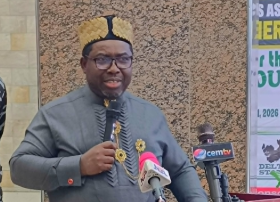
In a goodwill message presented by his Chief Press Secretary (CPS), Mr. Adedayo Oketola, the INEC Chairman said the theme of the conference, “Deepening Nigeria’s Electoral Integrity: The Ballot Versus The Verdict,” captured one of the most consequential questions in the nation’s constitutional democracy. He insisted that the integrity of Nigeria’s democratic process depends on seamless institutional synergy between those who conduct elections and those who adjudicate electoral disputes.
“When the polling unit produces credible records and the tribunal applies the law with dispatch and consistency, public trust in both the ballot and the verdict is reinforced. “Public confidence in democracy erodes whenever citizens perceive that elections are won in the courtroom rather than at the polling unit—or, conversely, when judicial processes are weaponised through frivolous pre-election and post-election litigation.
“Equally damaging is the distortion of judicial pronouncements in public discourse, where nuanced rulings are stripped of legal context and weaponised to inflame political tension. “Strengthening electoral jurisprudence therefore requires shared discipline across all actors. “We need an electoral commission that conducts transparent, verifiable polls; political parties that respect internal democracy and the rule of law; courts that dispense predictable, substantial justice; and a judiciary press corps committed to precision and fairness.
“For INEC, the best way to ease the litigation burden on our courts ahead of the Presidential and National Assembly elections on Saturday, 16th January 2027, and the Governorship and State Houses of Assembly polls on Saturday, 6th February 2027—starting with our nationwide mock accreditation and result transmission exercise this Saturday, 28th November 2026—is to eliminate administrative ambiguity at the source.
“Guided by the Electoral Act 2026 and lessons drawn from recent off-cycle elections, the Commission has anchored its preparation on four evidentiary and operational safeguards,” he added. Meanwhile, in his presentation, the immediate past President of the Nigerian Bar Association (NBA), Mr. Afam Osigwe, SAN, who was the lead speaker at the conference, said he was worried that moneybags were hijacking elections in the country.
“The type of electoral process we have is making it difficult for honest persons to contest elections. Moneybags are hijacking the elections. “Wrong persons who have no business seeking leadership positions are the ones fighting for elective offices, and it should not be that way,” Osigwe stated. He argued that courts should not be involved in determining who represents a political party at an election.
“If a political party chooses to field a villain as their candidate for a constituency, the voters should decide. “But because people know that their votes would not count, they want the courts to take decisions for them, and in Nigeria today, people are not only forum shopping; they are also judge shopping. “They are shopping for judges to determine cases.
The truth must be told,” the former NBA President added, even as he accused the courts of becoming too technical. Attributing growing voter apathy to the perception that votes do not count, Osigwe argued that where the votes counted and announced fail to reflect the will of the people, it exposes a fundamental weakness in the system. He warned that the day Nigerians completely lose interest in democracy, the country may face consequences it will not be comfortable with.
The NBA President, Mrs. Oyinkansola Badejo-Okusanya, SAN, who was represented by Dr. Prince Azubuike, said electoral credibility depends not only on free, fair and transparent elections but also on the integrity of the judicial processes through which disputes are determined. She said the judiciary must remain independent and impartial, with decisions grounded in law, supported by sound reasoning and delivered without fear or favour.
Whil
- election
- inec
- security
- electoral
- commission
- court
- poll
- agency