FG targets stronger local capacity for energy security
By Daniel Abia PORT HARCOURT — The Federal Government has expressed its readiness to strengthen local industrial capacity, infrastructure and investment as part of efforts to achieve energy security and accelerate Nigeria’s economic transformation. Akume spoke in Port Harcourt at the 10th Africa Energy Summit, organised by the Solewant Energy Training Institute, a subsidiary of Solewant Group, with the theme, “Scaling Innovative Industrial Capacity for Africa’s Energy Security.”
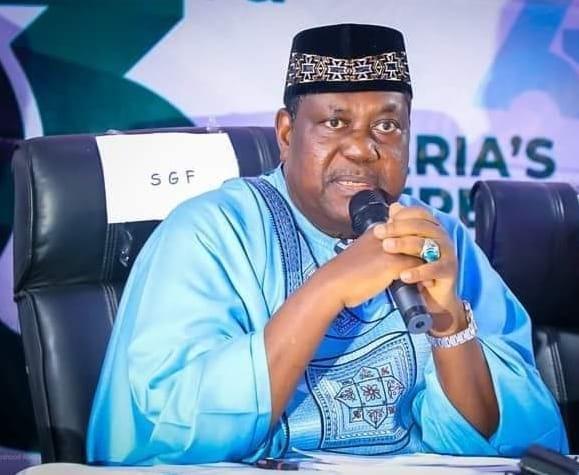
By Daniel Abia PORT HARCOURT — The Federal Government has expressed its readiness to strengthen local industrial capacity, infrastructure and investment as part of efforts to achieve energy security and accelerate Nigeria’s economic transformation. The Secretary to the Government of the Federation, Senator George Akume, said energy security went beyond the availability of natural resources to include the capacity to produce, process, transport and distribute energy reliably and affordably for the benefit of citizens.
Akume spoke in Port Harcourt at the 10th Africa Energy Summit, organised by the Solewant Energy Training Institute, a subsidiary of Solewant Group, with the theme, “Scaling Innovative Industrial Capacity for Africa’s Energy Security.” Represented by his Special Assistant on Technical Matters, Prof. Babatunde Benerd, the SGF said Nigeria’s ambition for economic growth, industrialisation and job creation depended on an energy system capable of meeting the needs of households, businesses and industries.
He said the administration of President Bola Tinubu considered reforms in the energy sector, investment and industrial development critical to the country’s economic transformation. “The current administration is pursuing reforms aimed at improving the investment climate, strengthening domestic production and creating conditions for productive activities,” he said.
Akume said the implementation of the Petroleum Industry Act had provided a framework for improved governance, clearer institutional responsibilities and increased investment across the oil and gas value chain. He added that the government was promoting domestic gas utilisation, compressed natural gas development, investment in energy infrastructure and reforms in the electricity sector.
The SGF stressed that local content should go beyond Nigerian participation in petroleum projects to building competitive enterprises capable of manufacturing products, providing specialised services, creating jobs and competing internationally. Also speaking, the Special Adviser to the President on Energy, Olu Verheijen, represented by Dr Olusegun Amoda, said recent reforms in the sector had helped restore investor confidence and attract fresh investments.
Verheijen said the administration had introduced executive orders and policy directives to provide fiscal incentives for investors, reduce contracting timelines and costs, and strengthen local content in the petroleum industry. She said the reforms had contributed to investment decisions worth more than $8 billion in oil and gas projects, adding that improved regulatory stability and security in the Niger Delta had helped create a more favourable investment climate.
According to her, oil and gas projects require fabrication, engineering, drilling services, equipment, logistics and maintenance, creating opportunities for local businesses across the value chain. She, however, cautioned against treating local content as protection from competition, saying it should instead be used to develop Nigerian companies capable of competing globally on cost, quality and reliability.
Verheijen said energy security also depended on skilled manpower, urging stakeholders to invest in training welders, inspectors, process safety engineers, project managers and other technical professionals. Earlier, the Group Chief Executive Officer of Solewant Group, Solomon Ewanehi, said Africa must move beyond discussions about its natural resources to making deliberate investments that would translate its resource wealth into industrial growth and prosperity.
He said the summit, which had served as a platform for ideas over the past decade, should increasingly become a forum for decisions, partnerships and practical solutions to the continent’s energy challenges. Ewanehi said Africa had enormous energy resources, including oil, gas, wind and hydro, as well as human capital, but noted that the availability of resources alone could not guarantee prosperity.
He linked industrial development to a change in mindset, citing his books, Unlocking Africa’s Energy Future: Strategies to Sustainable Growth and Development and The Power of Mindset Transformation for Success, which he said highlighted the connection between individual growth and continental development. He said Africa’s energy future required collaboration, investment, innovation, skills development and a deliberate commitment to building local industries.
The summit attracted stakeholders, policymakers, investors, professionals and delegates from various African countries, with panel discussions focusing on collaboration, industrial capacity and strategies to strengthen energy security across the continent.
- energy
- security
- investment
- capacity
- gas
- reform
- resource
- africa