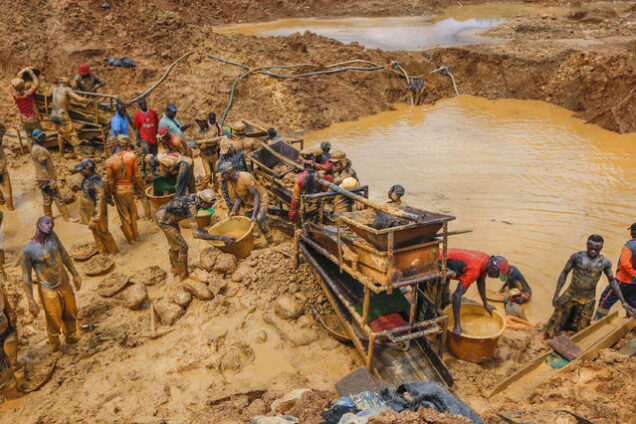
No economic gains can justify destruction of water bodies – Zanetor

Minister for Environment, Science and Technology, Dr Zanetor Agyeman-Rawlings, has warned that the economic gains from mining and other activities cannot justify the destruction of Ghana’s water bodies. She stressed that restoration efforts must be guided by scientific evidence, with the EPA working closely with the Council for Scientific and Industrial Research, particularly the Water Research Institute, the Ghana Atomic Energy Commission and universities to determine the contaminants affecting water bodies and their implications for human and environmental health.
Minister for Environment, Science and Technology, Dr Zanetor Agyeman-Rawlings, has warned that the economic gains from mining and other activities cannot justify the destruction of Ghana’s water bodies.
She said the country’s mineral resources were finite and that no amount of gold or money could compensate for the loss of clean water and other basic necessities of life.
Speaking at the launch of the National Water Restoration and Rehabilitation Framework in Ho on Thursday, she questioned the economic value of activities that leave behind environmental damage requiring substantial public resources to address.
“What is the economic benefit of an activity if it proceeds with destruction to the extent that all proceeds from it now have to be used in the treatment of disease, in water treatment, in environmental rehabilitation, and the restoration of lost livelihoods that are secondary to that same activity?” she asked.
Dr Agyeman-Rawlings said the pollution of rivers was not merely an environmental concern but a threat to food security, public health, economic stability and national security.
She identified illegal mining, excessive siltation and indiscriminate waste disposal as some of the activities that had severely compromised rivers which previously supported agriculture, fisheries and domestic and industrial water supply.
The Minister also warned against allowing the continued pollution of water bodies to become normalised.
“We must never allow the abnormal to become acceptable simply because it has become familiar,” she said.
She further directed the Environmental Protection Authority (EPA) to work with the Water Resources Commission, relevant ministries, security agencies, Metropolitan, Municipal and District Assemblies (MMDAs) and traditional authorities to map and protect water bodies and their designated riparian buffer zones.
Dr Agyeman-Rawlings said the first principle of any restoration programme must be to prevent further destruction.
“It doesn't make sense to commit scarce public resources to restoring a river downstream while allowing its destruction to continue upstream,” she said.
She cautioned that activities presented as dredging, reclamation or restoration must comply with environmental regulations and must not be used as cover for unauthorised mining or further pollution.
The Minister said the EPA would also be required to "identify priority water bodies, establish reliable baseline water quality data, assess pollution sources and set measurable restoration targets."
She stressed that restoration efforts must be guided by scientific evidence, with the EPA working closely with the Council for Scientific and Industrial Research, particularly the Water Research Institute, the Ghana Atomic Energy Commission and universities to determine the contaminants affecting water bodies and their implications for human and environmental health.
- water
- destruction
- body
- activity
- restoration
- zanetor
- pollution
- minister