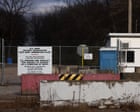
Wind-monitoring mast removed as local pilots raise safety concerns
Neighbouring farmer Kieran Cook says he has had several "frightening near misses" with the tower while flying his plane for agricultural work.
Danish renewables company Vestas has removed one of its two wind-monitoring towers at a proposed wind farm in the Western Downs.
Federal member for Maranoa David Littleproud accused the company of putting lives at risk after local agricultural pilots complained about visibility.
The Australian Transport Safety Bureau is investigating and will return a report in the coming weeks.
A Danish renewables company has taken down one of two wind-monitoring masts at a proposed wind farm site in Queensland, which local agricultural pilots said was "nearly impossible to see".
Grain grower Kieran Cook, who lives near the site south of Tara in the Western Downs, said he had experienced several "frightening near misses" with the 120-metre masts while flying his aircraft for crop spraying and fertilising.
Mr Cook said a collision with a tower could be fatal.
"If you hold a bit of fishing line up, whirl around in a room and try to see it against different backgrounds, that's what the pilot's got to look at," Mr Cook said.
The Australian Transport Safety Bureau (ATSB) confirmed it had received multiple reports of safety concerns about the Tara wind-monitoring towers.
The ATSB said it was in the final stages of consulting with the regulator and would publish a report in the coming weeks.
Renewables company Vestas installed the two wind-monitoring towers in December 2023.
Wind-monitoring masts are temporary structures that measure weather and atmospheric conditions at proposed wind farm sites.
While it is standard industry practice, landholders said they were not consulted about the towers' locations.
There are strict rules about tall structures near airports, but it is looser around the small airstrips that farmers and firefighters use on rural properties.
Mr Cook said when they first went up, the towers were not lit or marked properly.
"They were actually in conflict with a couple of our firebombing strips and ag strips," he said.
In a previous statement, a Vestas spokesperson said the company had addressed visibility issues of the masts more than 12 months ago.
It repainted the masts, marked the foundation, added marker balls on the guy ropes and installed 24-hour flashing lighting.
"Vestas is confident that the monitoring masts are lit and marked to industry best practice and comply with the relevant approvals," the spokesperson had said.
But Mr Cook said the changes were "too small to make a difference".
"A Telstra tower you can see a few miles away, you scan the horizon, and you pick it up straight away," he said.
"But you can't see the wind-monitoring tower."
Last Friday, Vestas workers removed one of the two masts.
A spokesperson said its wind specialist advised enough data had been gathered and that one wind-monitoring tower would be sufficient going forward.
The federal member for Maranoa, David Littleproud, said Vestas removing the tower was an "admission of guilt" that it was unsafe.
"Someone should have to pay a penalty for it because otherwise we would have heard about this through the coroner," he said.
Mr Littleproud said there was a legislative "grey area" around regulating agricultural aviation.
The local planning authority, the Western Downs Regional Council, approved the Vestas application for the towers in 2023.
The Civil Aviation Safety Authority (CASA) was notified because the towers were more than 100 metres tall, but a spokesperson said the body had no authority over enforcing compliance.
CASA updated its guidelines in October and noted that wind-monitoring masts were a "recognised hazard" that needed mitigating.
"They are narrow, are frequently guyed, are often unlit and unmarked … and in several jurisdictions are exempt from planning approval because of their height or their temporary nature," the report read.
Mr Littleproud said there were constitutional issues around whether it was the state or federal government that could take action against non-compliant companies.
He said there had been a failure at all levels to protect agricultural aviators.
"The onus of responsibility should go to the wind companies to actually do the on-ground consultation, identify all the aircraft-landing areas and have them registered with CASA," he said.
- mast
- safety
- wind
- monitoring
- pilot
- concern
- neighbouring
- farmer