What are Taiwan's 'nine-in-one' elections and why should we care?
Analysts say the elections will be watched closely by Beijing, while Taiwan has warned against possible Chinese interference.
More than 11,000 local government positions are up for grabs in Taiwan's "nine-in-one" elections, which some believe could shape the 2028 presidential race.
Politicians have been focusing their campaigns on everyday issues such as housing affordability, public transport and job opportunities rather than cross-strait relations.
The election results are expected to be announced on Saturday evening after polls close.
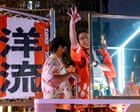
Campaign trucks carrying loudspeakers drive through crowded streets as supporters wave colourful banners and chant slogans.
Candidates weave through the crowds, trying to shake every hand they can.
Today, Taiwan heads to the polls for the "nine-in-one" elections.
More than 11,000 positions are up for grabs, from the mayors who run the largest cities to the village chiefs who look after small communities.
The results would be a gauge of how well the Democratic Progressive Party (DPP) is performing under President Lai Ching-te, and could shape the presidential race in 2028.
Analysts say the elections will be watched closely by Beijing, while Taiwan has warned against possible Chinese interference.
As the name suggests, nine different types of elections are being held simultaneously today, allowing voters to choose their representatives at different levels of government.
These range from the mayors and councillors of Taiwan's six major municipalities to county magistrates, township chiefs and village chiefs.
Nearly 19.6 million people are eligible to vote, with more than 18,000 polling stations set up across Taiwan. But voting is not compulsory.
Unlike presidential elections, which are often dominated by cross-strait relations, local election campaigns tend to focus on everyday issues such as housing affordability, public transport, job opportunities and local services.
"People are worried about the cost of living, youth employment opportunities, transport, infrastructure and especially housing costs, just like here in Australia," said Roger Huang, a politics and international relations expert from Macquarie University.
"[The housing crisis is] a major issue driving complaints, particularly among young people who can't afford housing with current prices and interest rates," said Dr Huang, who formerly worked as an associate researcher at DPP's Department of International Affairs.
Taiwan's local elections are held every four years, halfway between presidential elections, and some see them as a "mid-term exam" for the governing and opposition camps.
In the last nine-in-one elections in 2022, the main opposition Kuomintang (KMT), which favours closer ties with China, won control of 14 of Taiwan's 22 cities and counties.
It was widely seen as a major political setback for then-president Tsai Ing-wen and the ruling DPP.
One of the most closely watched races is in Taiwan's capital, Taipei.
Two high-profile politicians are competing for the mayor's seat: the KMT's Chiang Wan-an, who is seeking a second term, and the ruling DPP's candidate, Puma Shen.
With a background in law and criminology, Mr Shen is a prominent lawmaker in Taiwan's Legislative Yuan.
He also co-founded Kuma Academy, a Taipei-based organisation that provides civil defence training to the public.
This reportedly includes preparing people for an air raid and providing basic medical training.Mr Shen said in a radio interview on FM103 in Taipei in September that the courses could apply not only in the event of an invasion by China, but also during natural disasters, according to an Associated Press (AP) report.
China's Taiwan Affairs Office has called Mr Shen a "diehard Taiwan separatist" and he has also been sanctioned by Beijing, which sees Taiwan as a renegade province.
Last month, Taiwanese TV host Kevin Tsai faced a backlash in China after attending one of Mr Shen's campaign rallies.
Mr Shen's rival, Mr Chiang, became Taipei's youngest-ever mayor when he took office in 2022.
He is also the great-grandson of Chiang Kai-shek, who ruled China before the Communist Party took power in 1949 and led the retreat of the KMT government to Taiwan.
"Many contemporary presidents have either run for the office or served as mayor."Former KMT adviser Albert Tzeng told the AFP the two candidates had contrasting political styles, describing Mr Chiang as a "decent politician" but "very conservative in articulating his view".
Liu Jia-wei, a professor of public administration and policy at National Taipei University, told the AP that a victory for Mr Shen could reshape the DPP's political direction.
"He'll become a very important political figure in the DPP, and he'd push the party's position more towards independence," she said.
The DPP has only won a Taipei mayoral election once since direct mayoral elections were introduced in 1994, when Chen Shui-bian, who later became Taiwan's president, won the seat.
Dr Huang said Chinese interference had not been a "main driving force" in this year's local elections, despite some evidence of Chinese meddling as there had been in the past.
Taiwan's top China policymaker, Chiu Chui-cheng, told Reuters that pre-election interference was "inevitable" because the CCP had for years tied its Taiwan policy to the outcome to Taiwan's elections.
Such interference "will only backfire and deepen resentment among the people of Taiwan toward the Chinese Communist regime," said Mr Chiu, who heads the Mainland Affairs Council.
The KMT has also voiced opposition to external interference, with Mr Chiang's campaign team telling Reuters "no outside force should exert political pressure on Taiwan's democratic elections".
A spokesperson for China's Taiwan Affairs Office said earlier this month that "such claims are entirely fabricated to stir up confrontation".
Taiwan's election results will also be watched by the international community.
Dr Huang said shifts in Taiwan's political landscape could have wider implications for the global economy.
"Taiwan is a critical link in the supply chain for the whole global political economy, especially for AI and other smart devices," he said.
For Australia, the interest goes beyond the island's domestic politics.
Australia supplies almost half of Taiwan's coal and 38 per cent of the island's LNG, according to data from the Department of Foreign Affairs and Trade.
That makes Taiwan's energy policy particularly relevant to Australia.
Alongside the local elections, Taiwanese voters will have their say in a referendum today on nuclear power, reopening a debate over how the island meets its growing energy needs.
"There's been a shift in the current president's position, and he [Lai Ching-te] is looking at reactivating one of the recently closed plants," Dr Huang said.
- taiwan
- election
- analyst
- beijing
- interference