Sly, subversive and surprisingly modern: why Agatha Christie is still making a killing
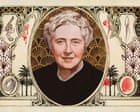
She placed an ad in the Times: “Friends and relatives of Teresa Neele, late of South Africa, please communicate. She wasn’t Teresa Neele – she was Agatha Christie the crime writer, missing for 11 days from her Surrey home.
A century after her mysterious 11-day disappearance, the Queen of Crime is everywhere. With an exhibition at the British Library, a new Miss Marple novel and a hot young Poirot hitting the screen, how did the novelist become such big business?
On the evening of 4 December 1926, Teresa Neele checked into the Swan Hydropathic hotel in Harrogate. A tall, attractive woman in her mid-30s with reddish hair and grey eyes, she had travelled from South Africa and carried just cash, a comb, a hot-water bottle and a photograph of a boy, the name Teddy written on the back. At dinner she told a guest that her daughter had died, and later danced the Charleston – “not very well”, according to those who were there.
Neele spent the next 10 days shopping, going to the library, playing billiards and visiting the thermal baths. She placed an ad in the Times: “Friends and relatives of Teresa Neele, late of South Africa, please communicate. Write Box R 702.” And then, on 14 December, journalists and police poured into the hotel with news. She wasn’t Teresa Neele – she was Agatha Christie the crime writer, missing for 11 days from her Surrey home.
It’s now a century since Christie published her masterpiece, The Murder of Roger Ackroyd, halfway through the worst year of her life. Her husband Archie was in love with a younger woman, Nancy Neele (Agatha borrowed the surname), and wanted a divorce. The night she disappeared they were together at a place called Hurtmore Cottage, the sort of nominative determinism Christie couldn’t have improved on. Her beloved mother Clara had died, and she was stuck with a book she was growing to hate, The Mystery of the Blue Train. Now the press rounded on her, asking what kind of mother would abandon her daughter (Rosalind, then seven) and speculating that – far from a breakdown, Christie’s explanation – it had been a publicity stunt.
But Christie never needed publicity – not for her accomplished first book, The Mysterious Affair at Styles, in 1920, nor for her last, Sleeping Murder, in 1976. In between, she published 66 detective novels, 14 collections of short stories and 20 original plays, a prolific run that has made her the world’s bestselling novelist. She is also the most translated: there is a Japanese TV Hercule Poirot (Suguro Takeru) and a Korean Miss Marple (Ms Ma). Her Icelandic translator Ragnar Jónasson has mastered the intricacies of steak and kidney pies and french windows to become a crime writer in his own right.
In recent months, Christie’s staying power has been marked by a British Library exhibition, a new Miss Marple mystery – Murder at the Grand Alpine Hotel by Lucy Foley, the first to be authorised in 50 years – and a memoir, The Agatha Christie Cure by Cathy Rentzenbrink, among other books. A film about her flit to Harrogate, Eleven Missing Days, starring Felicity Jones, finished shooting this summer, and an adaptation of her Tommy & Tuppence series debuted on Britbox. The BBC is filming a young, hot Poirot series – Hercule, with Edward Bluemel – and queen of Christie adaptations Sarah Phelps (The ABC Murders) is grappling with the late, dark Endless Night. Meanwhile Christie’s inky fingerprints are all over popular culture, from The Traitors to The White Lotus to Ludwig.
Why? Her prose can be workaday, Poirot insufferable (in a 1960 notebook Christie called him “an egocentric little creep”) and the characters a repetitious cast of types: ravishing women rising from cane chairs on dappled lawns, beady spinsters, war veterans, dashing cads, rich Americans and useful idiots like Arthur Hastings, an early foil to Poirot. “We must be so intelligent that he does not suspect us of being intelligent at all,” Poirot tells him in The Mysterious Affair at Styles. “There, mon ami, you will be of great assistance.”
Christie could be very funny, but also clunky and rushed. Her denouements sometimes come in such a hurry, multiple suspects bumped off in a paragraph, that you feel her itching to get on with the next book. She preferred dialogue to description and was not above heavy signposting of the “If only I’d known then what I know now” kind. But somehow it works: at the plot level, Christie is mercilessly compelling. Her plainness is her poison.
For Rentzenbrink, that simplicity is deceptive. “She likes the reader. She’ll say, ‘The clever reader will think this, but they’d be wrong’, so it feels like a game you’re both playing.” She started rereading Christie’s books in chronological order one unhappy Christmas, wanting to trace her evolution, and found solace in them when her own marriage ended. “Don’t look for me in real life,” Rentzenbrink writes in her resulting memoir. “I’m hiding out in the 20th century.”
Christie was once seen in the tradition of convalescent literature, soothing readers traumatised by two world wars. She had been a volunteer nurse and then a pharmacy dispenser (where she learned about poison) during the first world war, carrying amputated limbs to the incinerator, but put little of that horror into her work: instead she offered puzzles, resolution, decency triumphing over evil. That will never not appeal, says Rentzenbrink. “Literary types are snooty about the idea that reading can be escapist, but why not? I read for lots of reasons and one is comfort.”
Richard Osman writes proudly in the Christie tradition: it’s no accident that the initial success of The Thursday Murder Club coincided with the peak of the Covid pandemic. Just don’t call either of them writers of “cosy crime”. “I don’t know who invented that,” he sighs. “Christie is classic crime, telling stories about the times she lived in. Certainly if she is cosy crime, you can call me that all day long.”
Osman credits Christie with his international sales, more than 17m books worldwide. “Everywhere I go, she is an incredible calling card. You can be certain that everyone loves British humour and British crime fiction, and the humour is down to lots of people. But the love of crime is really Christie, and that’s why my books sell abroad.” She is “the Beatles of 20th-century writing”, he says, in terms of her dominance. “If you’d said 100 years ago that this is the writer of her generation who’ll endure, a lot of newspapers would have doubted that. But she did, in the same way that Motown endured where some prog rock didn’t. There’s something about doing mainstream stuff incredibly well that is the absolute catnip of popular culture.”
Christie remains a great British export partly because of her adaptability for TV and film, with her lush locations and intergenerational casts, allowing a sex bomb actor for every age. Some of these adaptations play up the humour (Hugh Laurie’s rollicking 2022 Why Didn’t They Ask Evans?), some dwell in the long shadows, which is where Sarah Phelps prefers to work. When she was asked to adapt And Then There Were None for the BBC’s 2015 production, she had never read Christie. By the end of the novel, in which 10 strangers are summoned to an island and slowly killed off: “I was astonished, because it is as remorseless as a Greek tragedy. It’s got that rhythm: action begets action. You can whine and beg forgiveness, but you, on this bleached rock, are held in the white eye of God and you are going to die.” Phelps had confused Christie with the heritage industry that surrounds her, she says. “Like Austen, she gets lost in tea towels and fudge. I could feel her writer’s blood pulsing and I thought, ‘You sly, subversive bitch.’”
She is now working on Endless Night, about a chauffeur who marries an American heiress – a murder mystery that reads like a ghost story, with a side of folk horror. “It was her riposte to Patricia Highsmith,” Phelps says of the Ripley author, who dismissed whodunnits as “a silly way of teasing people”. Highsmith’s world was thrillingly amoral where Christie’s was not, but here she tries it out along with a 60s sensibility. “She wants to shock a bit. But she can’t sustain the narrator’s voice – working class, young, masculine, talking about ‘birds’ and sex: you can feel her slightly straining.”
The best Christies have subtext, Phelps says, telling a story about the 20th century, from fascism to feminism and new technology. “She’s asking, ‘Who are we when the lights go out? How did we get here?’” In 1943, Christie was asked to write a happy ending for the stage version of And Then There Were None. After that, Phelps says, you can feel a tension between the book she wants to write and the one her audience expects. “It’s that tension I play on. The story will bowl along in that parlour game rhythm and then there will be something off-key, a different note. That’s what I follow. What’s this really about?”
Christie’s biographer Lucy Worsley agrees. “The Murder of Roger Ackroyd is a war novel in the sense that the first world war had just happened, and all these people were supposed to be in charge. She gradually chips away at all the bosses, which I find very subversive.” Christie was socially but not politically engaged, she says, having had no vote until she was 30. “One message that gave her was that she wasn’t a citizen, that she’d no right to an opinion. But in her books, authority is very often bad. Doctors are especially bad.”
After the national womanhunt of 1926 – in which even her hero Arthur Conan Doyle participated, sharing Christie’s glove with a psychic – she gave few interviews and revealed little even in her autobiography. But she smuggled plenty of herself into the novels, including a strong line in terrible, faithless husbands. “You get an insight into what it was like to divorce,” says Worsley. “And to experience a mental health crisis.”
She also shared some of the prejudices of her time: the original title of And Then There Were None was not used in America even in 1940. In 2023 HarperCollins removed racist language from several novels. “Every book published before yesterday contains attitudes which may cause offence,” says Worsley. “You will encounter antisemitism. What you’re really seeing reflected are the mainstream views of people with the time and money to read detective fiction in Britain and America in the mid-20th century.” Nor should we conflate Christie with her characters, Worsley adds. Poirot, a Belgian refugee, often exploits people’s xenophobia, and she does the same with her readers. “It’s an integral part of the work, toying with your prejudices.”
Last year Agatha Christie Limited made an annual pre-tax profit of £20m, up from £13.7m in 2024. The author’s great-grandson James Prichard, who manages her literary estate, won’t say how much HarperCollins paid for the rights to Miss Marple, though this may have something to do with it – along with the raft of recent screen projects. His goal is to avoid “brand slap”, Prichard says, or bunging the Christie name on anything unworthy. Lucy Foley was his choice to write the Marple book (“we have editorial input into pretty much everything … she has done an amazing job”). Kenneth Branagh’s Poirot trilogy was “brilliant”, even if fans preferred David Suchet.
Prichard was five when his great-grandmother died, aged 85, in 1976. “So I never sat down and discussed her work with her. What I do remember is being told not to run around and knock her over.” She doted on his father, Mathew. “I always tease him that he was the most spoilt grandchild of the 20th century, and not purely in financial terms. His father had been killed in the war and [Christie’s] daughter leant heavily on her, so he spent a lot of time with her. She took him to the opera, the theatre. She was the best listener he ever met.”
When the copyright expires in 2047, there will still be a role for Christie’s family, Prichard says, “as the experts on the brand”. Given the sums fetched by other authors – a reported $500m (£370m) from Netflix for Roald Dahl rights, an estimated $1bn from Amazon for Ian Fleming film rights – should the estate be earning even more? Osman doesn’t think so. “She’s in very safe hands. They exploit her legacy as they should, because they want to keep her name alive. But I don’t think they want to drive it into the ground, because why would they? It’s like a great pop song. If you have a great book, you just keep bringing it back.”
Osman chose Hercule Poirot: the Complete Short Stories as his Desert Island book. Would he write a new Poirot mystery? “We did talk about an adaptation, but I just didn’t have the headspace. Maybe one day. For now, I’m not going to do it better than Christie or Sarah Phelps, so I’ll leave it to the experts.”
Christie’s plots may have creaked sometimes, but she was modern in a hundred other ways: she surfed, saw a psychiatrist and had a happy second marriage to a man 14 years her junior, the archaeologist Max Mallowan (Christie joked that the older she got, the more interested he was). She had a looser grasp on money than her descendants, though, one reason she was so prolific and said yes to adaptations she hated. “There’s a fabulous letter from MGM,” says Worsley. “‘Mrs Christie, you’ve taken our money. You’ve really got to stop trashing our films.’”
In the end she didn’t care about critics, or being an artist with a capital A: in her fiction both types tend to meet a nasty end. Roland Barthes may have admired her structural brilliance (The Murder of Roger Ackroyd) and Michel Houellebecq her occasional bleakness (The Hollow), but her goal was to entertain. She worked hard at it: the British Library exhibition features dozens of notebooks with plots and maps scribbled alongside shopping lists and bridge scores, a line drawn through any idea she used. Should Miss Marple be the star of Death on the Nile, or Poirot? What was the best way to open Witness for the Prosecution? A letter to PG Wodehouse complains of the difficulty of dictating her later books against the noise of the telephone and her dog.
Harrogate and its aftermath were a turning point, Rentzenbrink says. “It was truly horrendous and she never got over it. But one of the things it gave her, because she’d been so violently trashed, was a trajectory. She had to opt out of what other people thought, and survive.” Surviving meant writing, even when she didn’t want to, even when she was misunderstood. And so what if Patricia Highsmith thought she was shallow? She would have killed for that audience.
- agatha
- christie
- neele
- teresa
- sly
- killing
- crime
- library