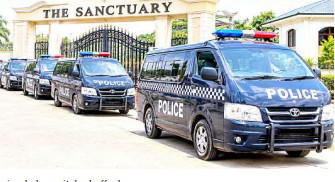
10 Police vans at the Sanctuary Gate, by Stephanie Shaakaa
On Sunday morning, worshippers arriving at The Fountain of Life Church in Ilupeju, Lagos, were greeted not merely by smiling ushers and anniversary banners, but by ten police vans stationed outside the sanctuary. A faction of the Board of Trustees has announced the withdrawal of Jimmy Odukoya’s recognition as Senior Pastor and named Pastor Rotimi Okpaise interim leader, pointing to a December 2021 recording allegedly withheld from the board until late December 2025, in which the late founder reportedly named Pastor Kunle Areogun as his preferred successor, with Jimmy serving as administrative…
On Sunday morning, worshippers arriving at The Fountain of Life Church in Ilupeju, Lagos, were greeted not merely by smiling ushers and anniversary banners, but by ten police vans stationed outside the sanctuary. It was an unsettling sight for people who had come to worship, give thanks and celebrate their church, only to find themselves walking into an atmosphere of tension and uncertainty.
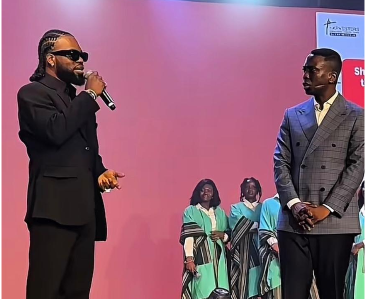
Inside, Bishop Mike Okonkwo, the elder statesman who helped install Pastor Taiwo Odukoya more than three decades ago, stood before the congregation pleading with members not to take sides, reminding them bluntly that church is not a political party. Beside him stood Senior Pastor Jimmy Odukoya, telling worshippers he had heard there was an injunction against him but had not been formally served.
By Monday, a Lagos State High Court had ordered substituted service of Form 48 and directed him to appear on Thursday, November 26, to show cause in contempt proceedings. For a church that has carried more public grief than almost any other congregation in Nigeria, the sight was genuinely heartbreaking. The police presence was not merely a security arrangement outside a building.
It was a visible reminder that a dispute over leadership had spilled into a place where people expected peace, prayer and fellowship. Few ministries in this country have walked through darker valleys alongside their members. This is the flock that wept uncontrollably in December 2005 when Pastor Bimbo Odukoya perished in the Sosoliso plane crash. This is the church that prayed through tears in November 2021 when Pastor Nomthi Zulu succumbed to cancer, and stood broken-hearted in August 2023 when Pastor Taiwo Odukoya himself was laid to rest.
For twenty years, ordinary men and women held that family up in prayer, gave their resources, and treated the Odukoya children as their own. The relationship between a congregation and its spiritual leadership is not always easy to quantify, but years of shared sorrow, worship and sacrifice create bonds that cannot simply be switched off when disagreements arise.
Now, barely three years after the founder’s burial, his son Jimmy and his daughter Tolu sit on opposite sides of Federal High Court filings. A faction of the Board of Trustees has announced the withdrawal of Jimmy Odukoya’s recognition as Senior Pastor and named Pastor Rotimi Okpaise interim leader, pointing to a December 2021 recording allegedly withheld from the board until late December 2025, in which the late founder reportedly named Pastor Kunle Areogun as his preferred successor, with Jimmy serving as administrative assistant and youth church lead.
Trustees have also raised concerns over how Jimmy’s September 2023 appointment was handled and unease surrounding his recent remarriage, while Jimmy’s camp has pushed back, arguing that those trustees had previously been asked to step down over constitutional breaches and warning in court filings that public scandal inflicts irreparable harm on a ministry looked up to by young people across the world.
Nobody outside the bench can yet pronounce on which side holds the superior legal document. But you do not need a law degree to see what happens to a Nigerian household, or a Nigerian church, when grief goes unhealed and succession is left to ambiguity. The problem is not simply that people disagree. It is that disagreements which should have been resolved through clear institutional procedures have now become public battles, leaving members to absorb the consequences of decisions they neither made nor controlled.
Every Nigerian family knows this script by heart. While the patriarch is alive, everyone speaks softly, deference keeps peace in the compound, and difficult questions about inheritance, authority, and remarriage are tucked neatly into drawers. The moment the father dies, however, old recordings surface, trustees remember rules they never enforced in peacetime, and siblings who once shared the same table begin speaking to one another through Senior Advocates.
What was postponed in the name of family peace suddenly becomes an expensive contest over who has the right to speak, decide and inherit. What makes the Ilupeju spectacle particularly jarring is the collision between sacred language and courtroom technicality. For years, independent charismatic churches resisted corporate-style accountability on the ground that spiritual houses are governed by divine order rather than secular bureaucracy.
Anointing was treated as a substitute for transparent governance, and family sentiment stood in for a clear succession plan. Yet the moment trouble arrives, divine order is promptly set aside for ex parte orders, counter-affidavits, and debates over whether bailiffs have delivered the papers into the right hands. The courts are there to resolve disputes, and nobody should be faulted for seeking lawful remedies.
But when a church’s leadership crisis becomes so visible that police vans stand outside the sanctuary
- pastor
- church
- police
- odukoya
- jimmy
- sanctuary
- people
- congregation