Bargain hunting at 4.30am and hiding post from my family: am I addicted to Vinted?
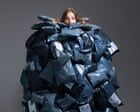
But fixing the problem isn’t as simple as just deleting the apps One Monday morning, eight days before I got married, I sat on my bathroom floor staring at my phone, convinced that the success of the wedding depended on whether I bought the Prada patent peep-toes or the Miu Miu wedges with small, triangular crystals. In the end, I bought the Pradas for £80 simply so I could go back to sleep.
The experts who treat gambling and substance misuse are increasingly seeing online shopping addicts, too. But fixing the problem isn’t as simple as just deleting the apps
One Monday morning, eight days before I got married, I sat on my bathroom floor staring at my phone, convinced that the success of the wedding depended on whether I bought the Prada patent peep-toes or the Miu Miu wedges with small, triangular crystals. It was 4.30am.
Both pairs were secondhand, cost less than £100 and had been stalking me on Vinted, the online marketplace, for more than a fortnight. But as any secondhand shopping pro will tell you, Sunday is the best day for fresh drops, because people are often online. My thumb flicked between the two listings. In the end, I bought the Pradas for £80 simply so I could go back to sleep.
When I say I shop “on the apps” a lot, I mean a lot, though it is only recently that I’ve realised this. I’ll scroll within an hour of waking, and it’s among the last things I do before putting my phone away at night. Like most people I know, I save things (the equivalent of window shopping) because, like most people I know, I’m also incredibly worried about money. But I’ll still buy one or two things a week. This can add up. Until I started to write this – that is, until I confronted the idea that I might be addicted to secondhand shopping – I’d never thought about cataloguing what I actually bought, so here goes. The following are from my preferred shopping platforms, Vinted, eBay and Vestiaire Collective, over a six-month period:
One 42L Eastpak travel bag, four Jurassic World dinosaurs, three pairs of Bobux boots, a pair of Crocs, a GHD straightener, two floral dresses allegedly “from the 90s”, Pokémon basketball shorts, a Quiksilver sweatshirt, a blue Cos skirt, a vintage tie-dye T-shirt, some Ray-Bans which turned out to be fake, some more Ray-Bans which weren’t, Smafolk pyjamas, two Bunny vs Monkey books, three blue school sweatshirts, Adidas tracksuit bottoms, a 1960s choker, a Karrimor running T-shirt, a Roland Mouret off-shoulder top, an Akyn jumper, a silk shirt by 16Arlington, a Calvin Klein slip dress, Wella hair dye, a Dolce & Gabbana wiggle dress, Olaplex No 3 hair treatment, two Alice Munro books, a Norma Kamali gown (returned), more Bobux shoes, an eye pencil in “ground coffee”, a swimsuit, Levi’s low-waisted jeans, Raey jeans, Charlotte Tilbury setting spray, Paula’s Choice 2% BHA liquid exfoliant, two Solawave face wands, three CeraVe retinols, Oway shampoo, Olaplex shampoo, some scrunchies, a Sezane cardigan in tomato red, those Prada shoes – and a frothy pink Alessandra Rich dress from SS13, which I won on eBay for £200, then waited a month for it to arrive from Illinois and wore for our first dance.
It sounds like a lot. I guess it is! Including the wedding dress, it came to a total of £714, or just over £100 a month, which isn’t actually that much given my bedroom has come to resemble that of Big Edie’s in Grey Gardens. Each morning, as I dress from what I call my “living chair” – the one covered in the clothes I actually wear – I am confronted by three sets of things: everything I own, everything I want, but more often everything I own but don’t want. And on some level, I also believe that everything I need is still waiting for me on an app.
Now would be a good time to mention that I used to be the fashion editor of this paper. My business was clothes, but my personal shtick was that I was really into secondhand clothing and didn’t spend a lot on it. I have always believed the simplest way an individual can mitigate fashion’s impact on the planet is to keep clothes in circulation – to buy them secondhand, not new. I don’t like the elitism represented by some of the high-end fashion houses but more than that I hate that the supposed alternative is the so-called elevated high street. You can buy a Zara coat for £200 but you can also buy a used one from Max Mara for less.
I’ve also been buying other people’s stuff for more than 20 years. It began not online but in the real world, in Turin where I lived when I was 21. I would spend every Saturday combing the local market for army fatigues and lace slips, and I continued this behaviour when I returned to the UK, buying tea dresses from Brick Lane and denim jackets from Oxfam. The appeal of thrifting was partly financial, but it also became about the hunt.
During the pandemic, my thrifting moved online. From March to June 2020, I was stuck at my in-laws’ with a baby and a week’s worth of clothes, so I bought everything that seemed genuinely necessary on eBay. Then the days got stranger and hotter and more tedious. The parcels became a link to the outside world, but also something to look forward to.
Finally the apps landed, and with them came my unwavering belief that buying umpteen old clothes was both socially acceptable and sustainable, helped along by saved searches, notifications and, eventually, scrolling-as-procrastination.
These days, I scroll when I feel flat or stressed, hoping the endless teal interface of Vinted will pull me out of a funk. It used to, anyway. Now, if I were to ask myself: what do I need … well, what I need is less. And so my hope is that this confession will result in a remission, and maybe help others of similar impulse.
This is close to the response I get from Pamela Roberts, a psychotherapist who specialises in addiction. Interest in shopping addiction tends to spike around “Black Friday and Christmas, but mainly when someone writes something like this”, she tells me, almost giddily. “Then, my inbox spikes. This is how it works.” In fact, it was only after a friend sent me a New Statesman article naming this as “Vinted brain” that I began to consider my own position in all this.
Roberts is a warm, inquisitive presence with kind eyes and long, silver hair.
I tell her my history – and about the 4.30am shoes – and ask if she thinks I have a problem. “There’s something, isn’t there?” she says diplomatically. Roberts then sends me a questionnaire about how I shop, how it makes me feel, and the things we tell ourselves. By the end, I’m told I sit somewhere between “problem” and “addiction”. “Look, if you’re doing something you wouldn’t do in front of a partner, if you’re starting to question your value system, it’s worth looking into.”
Shopping addiction goes by many terms, including compulsive buying, overspending and oniomania, which comes from the Greek “onios”, meaning “for sale”, and “mania”, which I probably don’t need to translate. It was coined in 1915 by the German psychiatrist Emil Kraepelin. There are many words because it comes in many forms, and often with conflicting data. UK Addiction Treatment Centres (Ukat) suggests between 200,000 and 350,000 people suffer from an extreme version of this. The Priory thinks that figure sits much higher – between 8% and 16% of the UK population. Either way, since the pandemic, the number of clients whose shopping addiction was diagnosed while in treatment for something else at a Ukat clinic rose by 40%. Other figures suggest 90% of those experiencing shopping disorders are women.
Within this, a very 2026 neologism has emerged: doomscroll spending, which combines the habit of browsing online, sometimes at antisocial hours, with an anxiety or perceived need for something (anything). Much of this happens on apps. With approximately 18 million users in the UK alone, Vinted is used by one in four of us; eBay has 134 million users, though most are in the US. I don’t know anyone my age, in possession of a smartphone, who hasn’t used one of the two. The algorithm doesn’t sleep, so why should we?
But secondhand clothes don’t just haunt me during the wee hours. The hunt for the right wedding outfit came at the tail-end of a slow creep of unsustainable shopping that left me wanting more and better, now. And with Christmas approaching, I can feel my thumbs getting itchy again.
Consumerism is tricky to unpack, because like food, shelter and water, clothing can feel like ordinary, vital stuff. It’s also complicated by the fact that in my case “the sums of money are seldom ruinous”, says Roberts. But consumerism isn’t about need. It’s about attaching ourselves to new things in the hope that we can feel sated, perhaps whole, she says. “It’s quiet and private and yet like binge eating, there’s something disgusting about it.”
For the most part, we have always associated excessive shopping with the shopping part: footballers’ wives in Liverpool’s Cricket boutique, glittering malls, walk-in wardrobes. Think about the 800 handbags they found at Imelda Marcos’s Malacañang Palace, or Carrie Bradshaw unable to buy her apartment because she had spent all her earnings on shoes. Poring over wishlists on eBay feels a world away from this decadence – or that’s what we tell ourselves.
Roberts thinks we are beginning to understand the complexities of my preferred variety of online bargain-hunting, “because we’re more aware of gaming, which is sort of what this is”, she says. Indeed, these resale platforms offer the same reward/dopamine hit as a game: eBay is about competition through bidding and auctions; Vestiaire Collective is more expensive and slower, but still hinges on negotiating and bargain-hunting; Vinted is probably the most addictive, a mix of frictionless browsing and habit-building, and terrifically easy. It is also a hotbed of algorithmic slop, but that’s why you scroll, looking for gems among the crap.
Loss aversion is the strongest pull for me. Scrolling in the bath last week, I found some JW Anderson trousers on Vinted. By the morning, they had sold and I’ve been thinking about them since. This is part of the trick of these apps, says Peter Branney, head of psychology at the University of Bradford. “There is the potential for buyer’s regret” – getting something you don’t like – “but there is also the potential for buyer’s grief, and frankly, which is stronger?”
“And yet, it’s all seen as light, or a joke – comfort shopping, retail therapy,” says Roberts. Confessions of a Shopaholic is a romcom about a journalist with a severe, compulsive shopping addiction and huge debts, and came out a year after the 2008 financial crash. In Roberts’ questionnaire, she outlines just how pervasive some of today’s language around shopping – girl math; little treat culture – has become.
The timing of the shift online is interesting, “coming at a point when we’re actually, ironically, quite fatigued by shopping”, says Branney, pointing towards the well-known ills of fast fashion. “These apps give us a moral justification for buying more stuff.” But that in turn, surely, increases how much is produced in the first place.
The underlying patterns and triggers for this are far from new. “Problems with shopping are rarely the explicit reason someone enters therapy. It often emerges as part of a broader addiction problem, or perhaps along with ADHD,” Roberts says. “But it can also go hand-in-hand with things like work addiction. It’s [often] justified by people around you, which allows things to escalate.”
The thing is, I genuinely believe clothes can be a visual language that communicates identity, and are worth taking seriously. I also think I understand fashion, so I can buy things with the idea that I’ll sell them later (this is known as speculative thrifting). Oh, and I have growing kids. I buy most of my skincare from eBay because it’s cheaper, and stuff for our home (under my bed I have two used kilim rugs from Vinterior, another marketplace for used furnishings, both beautiful, both I’m afraid to say unrolled). I could list more excuses, including buying things for this article. It isn’t like drinking, I remember saying to my partner once. If I buy something, I get to reuse it.
Roberts nods, and asks me if I also enjoy shopping in person. Truth is, I’ve always found it rather unpleasant. The time. The proliferation of stuff. Maybe the experience – the travel, the trying on, what we might now call “friction” – reminded me of what the Irish writer Mark O’Connell calls “the delirium of commerce”. I find it harder to part with money in person. And herein lies the danger of buying something through an app: the less tangible payment is, the less a purchase registers.
I had a sense that something was off long before the Prada shoes. Although my partner is on a need-to-know basis over what I buy, the Evri driver had begun to give me away. Whenever the doorbell rang, I began to feel a low-level dread. Did I stop? I did not. I simply began sending purchases to the lockers down the road, picking them up on my way home, decanting the contents into my bag and flattening the cardboard directly into the bin outside our house. If it was after pickup, I embroiled the kids into playing a game of “guess the locker”.
I refer to this game as another of my “rock bottom” moments. Roberts looks at me with concern. “I’m curious about this phrase because it can mean death. This is not to say that people don’t go that far over these things, but I find people tend to come to me with a cloud of shame,” she says.
She recalls one family who went to see her about one member’s serious alcohol problem. It took several sessions before it transpired that they had waited until they reached breaking point before seeking help, because doing so would also mean tackling another family member’s shopping problem, which was somehow even harder to confront.
Such is the shameful cloud surrounding shopping addiction that patients often ask her not to send an invoice. “And in fact, when they will readily agree to receive an invoice, I think: right, we are making progress.”
In some ways it’s impossible to know whether the issue is actually more prevalent now or whether we’re just beginning to talk about it. When I tell female friends I’m writing about my relationship with eBay and Vinted, they usually begin proudly patting down their own clothes. If I use the word addiction, however, something changes.
But if I tell any men, they look baffled. It’s true, shopping is culturally coded as a “feminine activity” – but women are also more likely to seek help than men. I find a support group online where one woman tells me she used to go shopping with a very full cup of coffee in the hope that it would stop her browsing (she would have to find somewhere to put it down before picking something up). I used to do the same with rolling cigarettes – it gives you pause. The problem, she says, is that online you can shop while you’re drinking coffee.
My friend Chloe, a writer and self-confessed secondhand nut like myself, isn’t wholly comfortable with calling herself an addict, though she admits past behaviour tracks as such. “Put it this way,” she says. “Addiction is never about how much you’re consuming – it’s about how it makes you feel. If it’s making you feel gross or intruding on your life, I have definitely had that, along with feelings of shame and guilt.” Her saving grace is that she still prefers charity shops.
One evening over the summer, I came home to a parcel. I knew what it was – shoes for my son – but this time I simply didn’t open it. In his paper The Romantic Ethic and the Spirit of Modern Consumerism, sociology professor Colin Campbell argues that modern consumers take more pleasure in wanting – or even imagining – than possessing. Roberts calls this “the parcel paradox – it promises that having will feel the way wanting feels, and it rarely keeps that promise”.
In postal vernacular, these are known as dead parcels. You usually find them abandoned in corner shops (and are usually returned after a few weeks), but occasionally they make it inside your house – a pretty good indicator you probably didn’t need whatever was in it.
Dead parcels? At this point I can almost hear your head falling into your hands. Surely, the most sensible thing to do is abstain – delete the bloody apps, Morwenna! But I want to find out just how serious my problem is, so I head to Banbury Lodge in Oxfordshire, a Ukat centre, and one of the most well-known for treating this addiction, to meet its manager, Nick Dunkley.
It’s fish and chip day and the rehab cafeteria is buzzing after group therapy, so Dunkley and I head to a private room. The lodge is one of 10 residential centres, and accommodates 23 people – men, women and teenagers – on voluntary stays ranging from one to three months, funded through a mix of private payments and local authority referrals. It is homely yet clinical, with modest perks including a small gym.
These clinics treat substance misuse, gambling and eating disorders but, increasingly, shopping addiction, too. “It mostly presents as a secondary issue with substance abuse or over-sexualised behaviour,” Dunkley says, but since the advent of the apps and the pandemic, the number of shopping addiction clients who check in directly has risen by about 10% – and one in five clients present symptoms. In his experience, it is usually middle-aged women, he says, citing the wife of a prominent business owner who has been in and out. “And the minute she comes in, the parcels come in, too.”
Dunkley unlocks a staff room near his office to show me a large pile of unopened packages. Clients must surrender their phones for 22 hours a day, but can retrieve them for a few hours each evening, which is when the shopping happens. Some, he says, have been known to smuggle in a second phone. “I’ve no idea what’s in them,” he says of the parcels, “but I’ve often thought about doing a tombola.”
Ultimately, Banbury Lodge is a voluntary space “so we can’t take away phones completely”, he continues. As for the parcels, “some of them don’t even remember buying the thing and have long left, and some don’t like to open them because they’ll have to confront what they’ve done”.
Dunkley speaks with a warm, switched-on authority that suggests nothing gets past him. I tell him that when I’ve tried to stay off Vinted in the past, I start searching for fantasy holiday homes on Airbnb instead. Dunkley smiles. “I like to compare it to Whac-A-Mole. You deal with one thing and another one pops up.” Still, Dunkley doesn’t differentiate between addictions. “Doing that minimises the problem.”
Before I leave, I ask if he thinks I have a problem. “If you’re asking the question, you probably know the answer. Ask yourself this – can I take a week off?”
Hmm. In the past when I have felt the pull too strong, I’ve tried searching for unlikely things I don’t want – Niwaki secateurs, Halloween claws – just to take back control of the algorithm. But I’ve never deleted the apps. On my way back to the station, I remove Vinted and eBay from my phone.
Roberts isn’t convinced this is enough. Abstinence has its place, “so delete the apps, yes”, she says. “But ask yourself what is the need in that moment that is being met by shopping, or indeed being online or external validation?”
It’s true. I enjoyed the shopping-as-game aspect in Turin just as I enjoy it on my phone, but also the dissonance of working in a world – fashion – built on consumption in which I felt I played no part. Sitting front row at a Saint Laurent show in an outfit that cost you £50 is a rush. “I can see how validating that would have been,” says Roberts.
My driving force was probably wanting to be different, or unpredictable – in life, but also at my wedding, where assembling the perfect outfit for £200 felt oddly important. But it’s also about how I was brought up. Growing up, money (or lack of it) was fretted about at great length, and nice clothes became our white whale. When my late mother was in her final months, she began buying clothes online. It was mainly summer tops from Toast, and when they arrived, we’d hang them in her room like still lifes on a wall. But these were more than just clothes. They were signifiers of someone with taste, plans and hope for a future.
- vinted
- bargain
- hunting
- hiding
- post
- family
- shopping
- miu