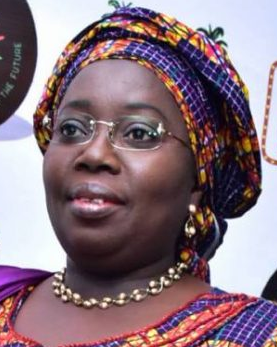
Senator Fadahunsi: The burden of leadership and grace of perspective, By Akin Fadeyi

The burden of leadership and grace of perspective, By Akin Fadeyi. Leadership must leave something more enduring than political memories.
Leadership must leave something more enduring than political memories. It must leave people with better opportunities, stronger communities and a more credible reason to believe in the possibility of progress. Commentaries on leaders must be objective, come with self scrutiny without malice, altruistic and development-focused, because leadership carries heavy emotional, moral, and personal weight, marked sometimes by isolation, difficult choices, and the constant pressure of patronage and of course, responsibility.
Some public figures are known to us mainly through the loudest things said about them. Others are encountered in quieter settings: across a desk, in a living room during an interview, or in the ordinary exchanges that rarely make the news. Sometimes those encounters offer a useful counterweight to the political noise.
In preparing this article, I sat with a Permanent Secretary of Eastern Nigerian extraction. A very brilliant medical professional, kind, truthful and self-sacrificing gentleman man who holds pivotal responsibilities at one of Nigerian government ministries’ critical intersection and coordination. As an apolitical, civil service leader, he would not want to be mentioned. But he is someone who does not come from Senator Francis Adenigba Fadahunsi’s ethnic community. His description of the senator was simple but striking. In fact, he referred to him as Baba and said “Baba Adenigba is down-to-earth, kind and animating.” This was not a political endorsement or a claim that the senator is without fault. It was a personal impression from someone outside his immediate cultural setting.
I also spoke with Omor Bazuaye, a renowned television journalist with Arise TV and formerly of AIT. Omor is a fantastic gentleman whose untainted capacity to spot authenticity is unequivocal. How do I know, Omor is one of my age-long mentees who learnt corporate communications under my tutelage and today, plies his media trade covering the national assembly. So, I asked him, “tell me about Senator Adenigba”. Omor said he had interviewed the senator at his home on two occasions where he was able to assess him at close quarters, letting off his guard without the laced-up aesthetics of office comportment. His assessment was emphatic: “Senator Fadahunsi, is a liberal, kind, accommodating and straightforward personality… He is not someone who tells you it is still dark out there when indeed the day already broke.” He added: “I have interviewed him in his house like twice before. He is a genuinely good man who loves people.” Please note that Omor hails from Edo State. He is by far not from anywhere near Osun East Senatorial District where the distinguished senator holds sway.
Then there was the response from the senator’s Special Assistant, Yusuf Sikiru. In a brief exchange, when I thanked him and indicated that I hoped to remain in touch, he replied warmly before adding a concise description of his principal: “Senator Fadahunsi is exceptional.” Yusuf, a very respectful and amiable legislative Aide and SA to the Senator hails from Kogi State.
These are three different vantage points: a senior public servant outside the Senator’s home community, a journalist who has encountered him professionally and personally, and an aide who works closely with him. They are personal testimonials, not independent character certificates. They cannot settle every question about a public official. But they invite a more complete inquiry than the one often permitted by the speed and severity of contemporary political judgement.
That, in fact, is the larger point. There is a difference between holding people accountable and writing them off. There is also a difference between acknowledging someone’s shortcomings and refusing to recognise their contributions. We should never become so preoccupied with identifying people’s imperfections that we lose the capacity to recognise their virtues.
A democracy needs a free press — even when the questions are uncomfortable.
Perhaps the most revealing place to begin examining Senator Fadahunsi’s public record is not with an empowerment cheque or a commissioned project, but with a position he took in 2019.
In December of that year, Vanguard reported that Senator Fadahunsi opposed the proposed Hate Speech Bill, arguing that it could cripple quality journalism. He described vibrant journalism as a bedrock of Nigeria’s democracy and urged media practitioners to resist a measure he believed threatened their ability to scrutinise public authority. That position matters. A democracy is not sustained by elections alone. It depends on citizens having access to information, competing viewpoints and a press capable of asking difficult questions, investigating public institutions and exposing failures. Journalism must be accurate, fair and accountable; but regulation designed to address harmful expression must not become a convenient instrument for silencing legitimate criticism.
There is an important connection here. A representative who facilitates development in a constituency helps address the material needs of citizens. A representative who recognises the democratic value of a free and responsible press also recognises that citizens must be able to question how power is exercised. Both are part of a healthy relationship between government and the governed and that was one of Senator Fadahunsi’s shining moments, weighing-in at a critical moment in the nation’s democratic life when media freedom was threatened by those who benefited from it and were expected to uphold it.
The Adrenaline of Political Seasons — And the Limits of One Bad Moment
Political seasons have their own emotional weather. Campaigns compress complicated national anxieties into slogans, rallies, sharp exchanges and dramatic declarations. Supporters become energised; opponents become suspicious; public statements are clipped, circulated and interpreted at speed. In that atmosphere, political language can become more combative than the responsibilities of governing would ordinarily permit.
This is not unique to Nigeria. During the 2024 United States presidential campaign, Donald Trump repeatedly used incendiary language. Reuters documented his descriptions of political opponents and groups as “vermin”, his claim that migrants were “poisoning the blood” of the country, and his use of the word “bloodbath” at a rally. His campaign said the latter referred to the automobile industry; critics heard a more troubling political signal. The remarks drew widespread condemnation and concern about democratic norms. Yet Trump went on to win the election with 312 Electoral College votes. That result should not be mistaken for voters endorsing every utterance. It demonstrates that electoral judgement is rarely reducible to one controversy.
France offers another illustration. In January 2022, President Emmanuel Macron used a deliberately provocative expression when speaking about making life difficult for people who refused COVID-19 vaccination. The remark drew sharp criticism from political opponents and generated a national debate about the language expected of a president. Three months later, Macron was re-elected with 58.55 per cent of valid votes. Again, the result does not prove that voters approved of the remark. It shows that voters assess candidates through a wider set of considerations.
These examples are not offered to excuse wild rhetoric, equate different incidents or suggest that public officials should be tactless with their words. They remind us that political life is rarely judged through one isolated moment. A controversial statement can be serious and deserving of scrutiny without becoming the only available measure of a public figure’s entire record.
Research on the American election reinforces the point. Pew Research Center found that 81 per cent of registered voters considered the economy very important to their 2024 presidential vote. Voters also weighed immigration, healthcare, crime, abortion, democracy and other concerns. People do not enter the polling booth with only one thought in their heads.
At the end of the day, the cost of food, the availability of work, the ability to pay school fees, access to healthcare, reliable electricity and the prospects of a small business are the daily arithmetic of survival. The material conditions of life shape how people evaluate leadership. This is why empowerment and tangible development matter — not as substitutes for accountability, but as part of the substance by which representation is judged.
The controversy deserves scrutiny. So does the whole record.
Senator Fadahunsi became the subject of public controversy in August 2026 following a viral political video containing remarks interpreted by critics as encouraging violence against members of the Accord Party. The episode attracted condemnation and calls for investigation, and reports said he was questioned by police. Senator Fadahunsi disputed the interpretation of the circulating footage and maintained that his remarks concerned defeating a rival party through votes.
I do admit with a straight face: political leaders have a heightened responsibility to communicate with restraint, particularly in an environment where partisan tensions can spill into intimidation or violence. Public figures must consider not only what they intend to say, but also how their words may reasonably be understood and acted upon.
But neither should controversy become the sole lens through which every other aspect of a public record is viewed. Leaders are human beings, not spirits untouched by error, misjudgment or a bad day. That observation is not a defense of harmful speech. It is a call for proportion: where a mistake occurs, it should invite explanation, accountability, reflection and, where necessary, correction. It should not automatically erase years of other public activity from the record.
An intellectually honest assessment can hold two thoughts together: the language attributed to a public official may warrant political discourse nuancing interrogation, and the same official may also have a record of public interventions, relationships, and positions that deserve examination. Accountability loses credibility when it becomes selective; public recognition loses credibility when it becomes uncritical.
The development question: what has reached the people?
Senator Fadahunsi, a former Assistant Comptroller-General of Customs, chairs the Senate Committee on Industries. His legislative responsibilities intersect with industrial development, manufacturing, enterprise financing and Nigeria’s productive capacity. In an October 2026 interview, he spoke about wanting to be remembered for lives transformed, young people who secure employment and women who establish businesses. That emphasis on livelihoods provides a useful lens through which to examine his constituency work.
In December 2021, Vanguard reported that 115 young people from Osun East took part in a five-day ICT and solar-energy installation training programme. Participants were drawn from the district’s local government areas and Modakeke Area Office, and received tools intended to help them practise the skills acquired. In a country where unreliable electricity creates demand for alternative energy solutions, solar installation can offer young people a route towards self-employment while helping households and businesses address a practical problem.
Agriculture also features in the reported interventions. In September 2023, Tribune reported that 400 constituents received training in shrimp and catfish rearing, post-harvest management and marketing, facilitated with the Nigerian Institute for Oceanography and Marine Research. The programme included ₦20 million in cash grants, with beneficiaries receiving start-up support for their farming businesses. A separate poultry-management intervention reportedly reached 350 beneficiaries with training and production inputs.
In June 2025, Senator Fadahunsi launched a reported ₦70 million revolving-loan scheme targeting 700 small-business owners in Osun East, in partnership with the Osun State Ministry of Cooperatives and Empowerment. The revolving structure is potentially important: repayments can replenish the fund and allow subsequent beneficiaries to access working capital. That promise depends on sound administration, transparent selection, fair repayment terms and clear reporting of how many businesses remain active.
These programmes represent different responses to economic vulnerability: skills, productive equipment, agricultural enterprise and working capital. Their true value should ultimately be measured not only by the number of people enrolled or items distributed, but by business survival, income growth, jobs created and the durability of the opportunities.
Infrastructure: Beyond Commissioning Projects
Senator Fadahunsi’s reported constituency interventions also include roads, classroom construction and renovation, water projects, electricity infrastructure and community facilities. In October 2026, The PUNCH reported his donation and energisation of a 500KVA transformer to Peace Highland Community in Arimoro, Ilesa West Local Government Area.
A transformer is not electricity; a borehole is not necessarily sustained access to clean water; and a classroom block does not automatically guarantee quality education. Public infrastructure must be assessed by functionality, accessibility, maintenance and the difference it makes to daily life. Constituents deserve clarity about the source of funding, the agency responsible for implementation and the status of each project. This is not an unreasonable demand. It is the foundation of public accountability.
A Grassroots Approach With Global Relevance
The idea of elected representatives facilitating development opportunities in their constituencies is not unique to Nigeria. Kenya and India offer useful examples of how constituency-level development mechanisms can contribute to wider national priorities.
Kenya’s National Government Constituencies Development Fund, established in 2003, directs resources towards locally identified projects. Its official records say the fund has helped establish 3,087 schools, creating learning opportunities for more than 882,000 learners, and supports bursaries for needy students. The fund has also supported technical training institutes and community infrastructure. These are investments whose benefits extend beyond individual recipients: they can improve educational access, strengthen skills and stimulate local economic activity. Kenya’s experience also underlines the importance of oversight, community participation and transparent project selection.
India’s Members of Parliament Local Area Development Scheme provides another example of constituency-focused public investment. It allows parliamentarians to recommend eligible community assets in areas such as education, healthcare, drinking water, sanitation and roads. The comparison is not that an individual Nigerian senator’s constituency programme is equivalent in scale or structure to a national scheme. It is that bringing development planning closer to communities is an established approach in other democracies — and that its value depends on transparent selection, quality implementation and maintenance.
These examples do not prove that every intervention in Osun East has succeeded. They show why grassroots development deserves serious attention, and why it should be accompanied by public reporting and independent evaluation. The next measure of success must be what happens after the training, grant, loan or commissioning ceremony.
Osun’s Unfinished Business: Reconciliation and the Public Interest
There is another responsibility that should not be lost in this conversation: the imperative of reconciliation within Osun State. Political competition is legitimate and necessary in a democracy. But when rivalry becomes so consuming that it displaces the interests of the people, the purpose of representation is weakened.
Osun’s political actors, across party lines and tendencies, have a responsibility to lower the temperature, rebuild channels of communication and recognise that communities do not stop needing roads, jobs, schools, healthcare and economic opportunity because politicians disagree. Reconciliation does not require anyone to abandon principle, overlook wrongdoing or surrender legitimate political differences. It requires a willingness to keep the public interest above the gratification of political combat.
For Senator Fadahunsi, as for other leaders in the state, the opportunity is to ensure that political energy is redirected towards practical outcomes: stronger local enterprise, functioning infrastructure, youth opportunity and institutional cooperation. The people should not become collateral damage in the contest for political advantage. Politics must serve the people; the people must never be made to serve politics. The true measure of leadership is not the volume of political conversation surrounding an office-holder. It is the extent to which public responsibility translates into improvements that citizens can recognise, experience, and sustain.
Senator Fadahunsi’s reported interventions in Osun East — from ICT and solar training to agricultural enterprise, small-business finance and community infrastructure — provide material for a serious development conversation. So do the questions about project functionality, transparent reporting and political conduct. Neither reality should erase the other. The functionality of these interventions requires peaceful coexistence within the ecosystem of diverse political persuasions.
We should be able to disagree without dehumanising, criticise without destroying and recognise good without abandoning accountability. We should never become so preoccupied with identifying people’s imperfections that we lose the capacity to recognise their virtues. That is not indulgence. It is intellectual fairness.
For Osun East, the practical questions remain: how many people are now better equipped to earn a living? How many businesses have survived? How many communities enjoy functioning infrastructure? How many young people can look towards the future with greater confidence? And can the state’s political leaders create enough room for cooperation to make further progress possible?
Senator Fadahunsi may have had a momentary political adrenaline moment, which offered a learning curve. But it should not be permitted to become the entire story of a man whose public record also includes an accomplished career, constituency interventions, a verifiable defence of press freedom and personal testimonials from people who have encountered him in different, close settings.
Akin Fadeyi, a development enthusiast is the founder and executive director of the Akin Fadeyi Foundation.
- leadership
- senator
- fadahunsi
- burden
- grace
- perspective
- akin
- fadeyi