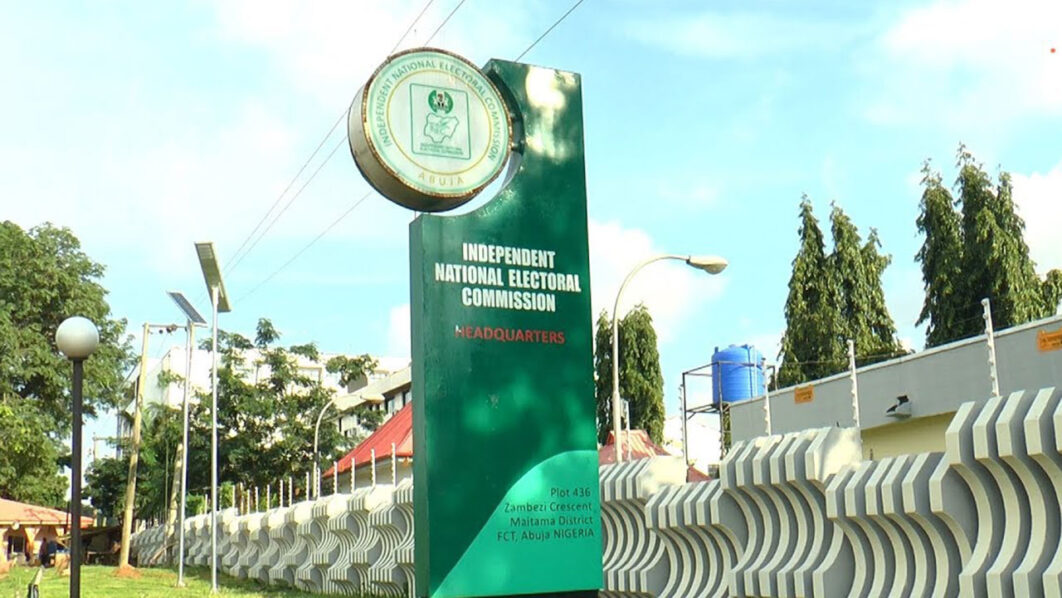
Obi 5.77m, Tinubu 5.61m, Atiku 5.47m: INEC disowns mock election figures on neis.ng

By Omeiza Ajayi ABUJA — The Independent National Electoral Commission (INEC) has disowned figures published on neis.ng, the website of the Nigeria Election Intelligence System (NEIS), which showed Peter Obi leading a purported mock presidential election with 5,775,102 votes, ahead of President Bola Tinubu, who was allocated 5,612,075 votes, and Atiku Abubakar with 5,471,831 votes. Its zonal breakdown showed the APC leading in the North Central, the ADC in the North East and North West, and the NDC in the South East.
By Omeiza Ajayi ABUJA — The Independent National Electoral Commission (INEC) has disowned figures published on neis.ng, the website of the Nigeria Election Intelligence System (NEIS), which showed Peter Obi leading a purported mock presidential election with 5,775,102 votes, ahead of President Bola Tinubu, who was allocated 5,612,075 votes, and Atiku Abubakar with 5,471,831 votes.
In a statement signed by its Chief Press Secretary and Media Adviser to the INEC Chairman, Adedayo Oketola, the commission said the website was “not affiliated with, authorised by or connected to INEC in any way”, describing the figures it displayed as “false and misleading”. INEC said it had drawn attention to neis.ng, which was publishing purported results of the mock accreditation and election conducted on Saturday and claiming that a named presidential candidate was leading.
The commission, however, did not identify the website’s operators or name the candidate allegedly leading in the figures. A review of the website by Vanguard showed a page titled “2027 Public Mock Election Night Simulation”, with the label “Collation in progress”. The page, marked as updated on November 28 at 17:14, indicated that 51.2 per cent of polling units had reported.
It listed Obi of the Nigeria Democratic Congress (NDC) in first place with 31.5 per cent of the votes, followed by Tinubu of the All Progressives Congress (APC) with 30.6 per cent and Abubakar of the African Democratic Congress (ADC) with 29.8 per cent. It put the NDC’s lead margin at 163,027 votes. Seyi Makinde of the Allied Peoples Movement (APM) was listed fourth with 964,546 votes, representing 5.3 per cent, while Adewole Adebayo of the Social Democratic Party (SDP) came fifth with 100,734 votes, or 0.6 per cent.
The website listed 14 other candidates. The page also displayed turnout and voting statistics, including 48,034,303 registered voters, 18,806,044 accredited voters, a turnout of 39.2 per cent, 18,335,722 valid votes and 470,322 rejected votes. Its zonal breakdown showed the APC leading in the North Central, the ADC in the North East and North West, and the NDC in the South East.
The website also displayed a view count of 712,600. But INEC said the mock exercise could not have produced such figures because it did not involve real political parties or candidates. “The mock exercise did not feature real political parties or candidates. It used pseudo names generated solely for the dummy ballot papers, which Nigerians saw during the exercise,” the commission said.
According to INEC, the exercise was designed to test its technology, processes and logistics, rather than generate results for candidates or political parties. “Any claim that a candidate or party won, led or trailed in the mock exercise is therefore baseless, and any website or platform presenting such figures as mock election results is deceiving the public,” Oketola said.
The commission urged Nigerians, political parties, candidates and the media to disregard and refrain from sharing the figures published on neis.ng and similar platforms. It said it would continue to publish verified information through its official website, inecnigeria.org, and verified social media accounts. INEC added that it was reviewing the matter and reserved the right to take appropriate action against those responsible for disseminating what it described as false election information.
- inec
- election
- vote
- website
- candidate
- figure
- cent
- obi