Trump’s media bans ‘deprive the public’, press freedom groups argue
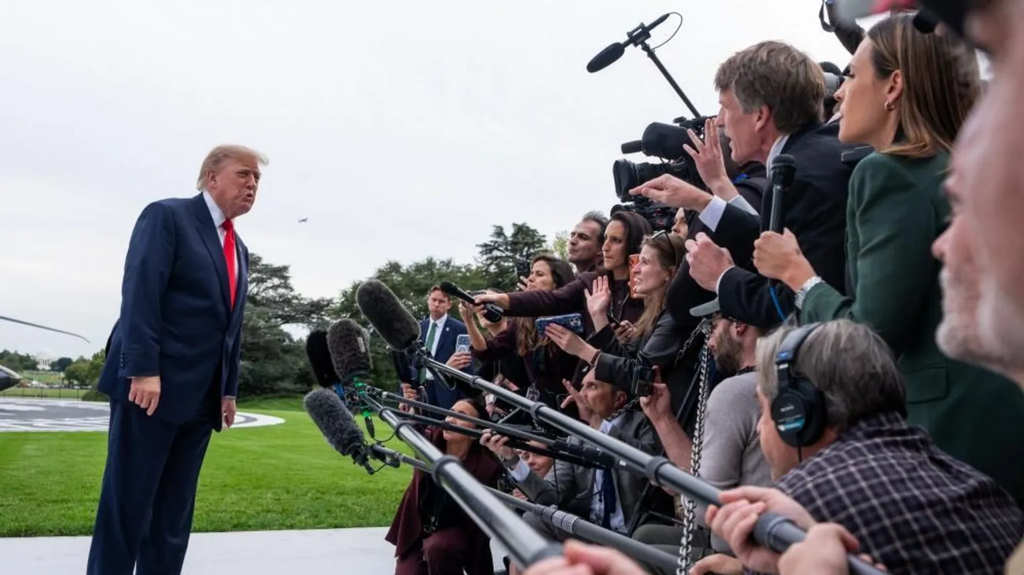
Press freedom groups are suing the Trump administration over its efforts to block mainstream US news outlets from covering the White House, according to court filings. Their lawsuit follows a separate legal challenge by CNN, Politico, and MSNOW over the White House’s attempts to revoke or restrict their press access.
Press freedom groups are suing the Trump administration over its efforts to block mainstream US news outlets from covering the White House, according to court filings.
The six plaintiffs, including scholars, advocates, and journalists, argue that media bans issued by the White House violate the First Amendment of the US Constitution, which protects the press and freedom of speech.
Their lawsuit follows a separate legal challenge by CNN, Politico, and MSNOW over the White House's attempts to revoke or restrict their press access.
The Knight First Amendment Institute and Yale Law School's Media and Information Access Clinic filed the legal case on the plaintiffs' behalf.
The six plaintiffs have asked a New York federal court to declare that the White House's selective media bans violate the First Amendment and to block the administration from enforcing them.
In court filings, the plaintiffs allege they can no longer do their work without access to information delivered by the White House press.
The White House policy, they argue, "deprives the public" of reporting and forces journalists covering Donald Trump "to account for the possibility that a critical or ill-advised word about the president may result in their access being summarily restricted or revoked".
Such a ban has a "distorting effect" on White House coverage, the court filing argues.
The BBC has asked the White House for comment.
The White House has, however, continued to selectively bar journalists, which news organisations in the US argue violates their press freedom protections.
CNN, for instance, has threatened further legal action as its reporters continue to be denied access aboard Air Force One.
Last week, the White House banned a correspondent from the Independent from covering the president's trip to Iowa after Trump berated the reporter from the UK news outlet during a news conference.
In his second term, Trump has also moved to bring conservative bloggers, influencers and other "new media" figures into the press room, arguing it is necessary to provide diverse perspectives in White House coverage.
In February, the White House announced it was taking control of the press pool - the small group of journalists that has access to the president on any given day - which for more than a century had been managed by the White House Correspondents' Association.
That same month, the White House moved to bar Associated Press journalists from spaces with limited access, such as the Oval Office or Air Force One, because the outlet used the term "Gulf of Mexico" rather than "Gulf of America".
AP filed a lawsuit, and the case remains ongoing.
Trump last week confirmed he was considering moving the entire press corps from the White House grounds after reports said he was contemplating rebuilding a swimming pool beneath the James S. Brady briefing room.
"I am thinking about moving the press, and putting them in a different location," he wrote on Truth Social. "I will use that location for very badly needed space."
The lawsuit did not ask a judge to award financial damages, only to require the defendants to cover their legal fees if they win.
Since Donald Trump returned to office in January 2025, the White House has engaged in a standoff with many longstanding US media outlets, which the president has frequently accused of publishing "fake news".
Last month, it banned reporters from CNN, Politico and MSNOW from the White House, leading several other media organisations to temporarily suspend their pooled coverage of the president in protest.
The affected news outlets sued, arguing the White House illegally discriminated against them because of their coverage.
A federal judge later ordered the White House to restore the impacted journalists' credentials while the lawsuit plays out.
The reporters later said they were allowed back into the White House complex.
- white
- house
- press
- trump
- freedom
- access
- medium
- news