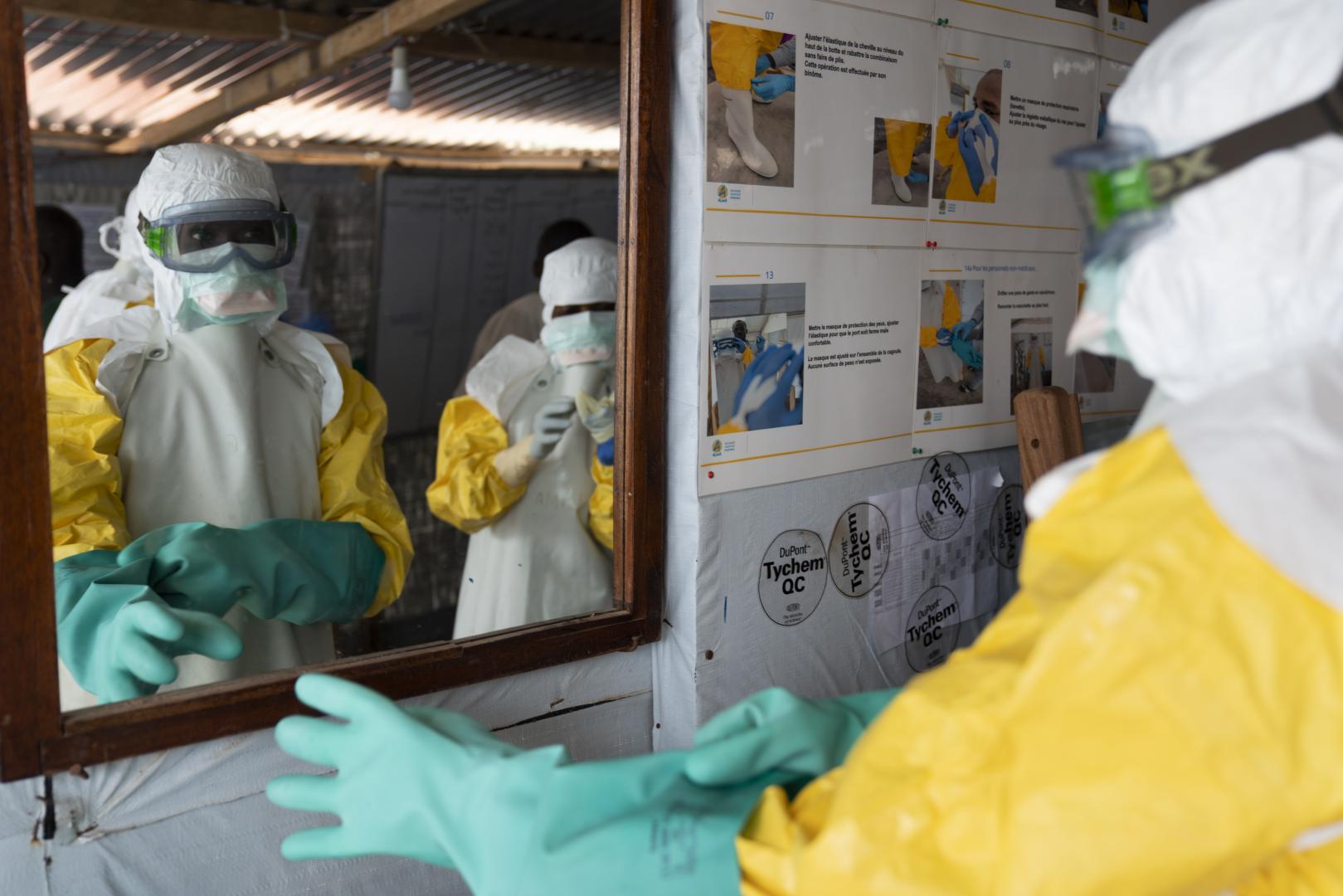
‘Ghana was very high risk, but we were fortunate’ – Prof Amuasi on 2014–15 Ebola outbreak

Ghana faced a very high risk of Ebola during the 2014–15 West African outbreak, despite recording no cases, Global Health Leader at the KCCR, Prof John Amuasi, has said. Speaking on Joy News’ PM Express on Monday, he described Ghana’s escape as fortunate.
Ghana faced a very high risk of Ebola during the 2014–15 West African outbreak, despite recording no cases, Global Health Leader at the KCCR, Prof John Amuasi, has said.
Speaking on Joy News’ PM Express on Monday, he described Ghana’s escape as fortunate. He also questioned whether airport temperature checks can detect infected travellers.
“Ghana was very high risk, but we were fortunate we did not get any cases,” he told host Kofi Agyei.
His comments followed a question about whether Ghana’s lack of recorded cases reflected inadequate screening during the outbreak.
Prof Amuasi explained that screening identifies people with possible symptoms. Testing must then establish whether they have the disease.
He said headaches, fever and a generally sick appearance were not specific to Ebola. Detecting those symptoms alone could not confirm an infection.
The regional experience showed how quickly the disease could cross borders.
Nigeria’s outbreak began in July 2014, after an infected traveller arrived from Liberia. It recorded 20 cases and eight deaths. Senegal recorded one confirmed case and no deaths.
Guinea, Liberia and Sierra Leone bore the greatest burden. The wider epidemic continued into 2016, with 28,610 reported cases and 11,308 deaths across those three countries, according to the US Centres for Disease Control and Prevention.
For Prof Amuasi, monitoring travellers after arrival deserves greater attention.
“The key is keeping tabs on every single person who is coming in,” he said.
He suggested that authorities could consider mandatory check-ins for basic signs and symptoms every two to three days.
“I mean, it's going to be a bit painful, but maybe that's a more efficient thing, better thing to do.”
He ruled out testing every arriving passenger.
“But certainly, we cannot introduce mass testing for Ebola for every single person there who lands. That's not practicable.”
At the time of the interview, he said Ghana had no confirmed or suspected case. He therefore stressed public awareness, particularly among people entering the country.
“And right now, given that there is no confirmed or even suspected case in the country, there is really nothing more to do than make people aware.”
- ghana
- prof
- amuasi
- ebola
- outbreak
- case
- risk
- traveller