The fight for Jaysley Beck: how her grieving mother turned detective – and took on the military
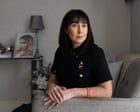
Five years on, Leighann McCready is still searching for answers When Leighann McCready phoned her 19-year-old daughter, Jaysley Beck, on 15 December 2021, she got no reply, but brushed away her worries. Soon, Beck was expected to be back home in Cumbria, where her parents – McCready and Anthony Beck – own a village pub.
In 2021, the young soldier took her life after being sexually assaulted by a sergeant major, then sent thousands of messages by her line manager. She was just 19. Five years on, Leighann McCready is still searching for answers
When Leighann McCready phoned her 19-year-old daughter, Jaysley Beck, on 15 December 2021, she got no reply, but brushed away her worries. “Jays always, always answered her phone, but it was early, eight in the morning,” she says. Beck, an army soldier in the Royal Artillery, had been at a party the night before at her Wiltshire barracks. She was probably asleep.
It was a busy time, the Christmas countdown. Soon, Beck was expected to be back home in Cumbria, where her parents – McCready and Anthony Beck – own a village pub. McCready had already bought matching Christmas pyjamas for Beck and her older sister Emilli to wear on the day.
Beck had been preparing for the holidays, too. She had been Christmas shopping two days earlier, calling and consulting throughout the day with her mum, who was transferring the cash to cover it all. She’d bought presents for herself and her sister: a Gucci bag, a belt and a purse. For her dad, she’d bought tickets for a James Blunt concert for the two of them to attend together in February. At the end of the spree, Beck had messaged her mum: “We’re two so lucky girls aren’t we, Mum? Thank you, thank you, thank you. I love you with all my heart!”
Despite all this, as the hours passed that Tuesday in December, with still no word from Beck, McCready began to feel a deep foreboding. She knew that, in the preceding weeks, her daughter had been struggling through a strange and intense period of escalating harassment from her line manager. With this in mind, Emilli offered to call one of Beck’s friends at the barracks, who assured them that Beck was probably fast asleep. “He said he was five minutes away and he’d go and wake her,” says McCready. “That five minutes just seemed like forever. I continued ringing Jays’ phone – until somebody else answered it. The voice said: ‘Hello, can I ask who I’m speaking to?’ And I just knew. They didn’t even have to tell me.”
Gunner Beck had taken her life, alone in her bedroom. Her suicide threw a spotlight on the British army and the treatment, safety and protection of female recruits. For the last five years, ever since Beck’s death, McCready has fought for answers and accountability. She has found some, but believes there is still far more to uncover. At every step – the service inquiry, the inquest and a subsequent police investigation – McCready has been in the public eye, talking to the press, advocating for her daughter. Now, she features in a Stacey Dooley documentary, Death in the Barracks, which follows the family’s continued search for justice. She still can’t quite believe that any of it is real.
“Grief is not what you see on TV, where you instantly fall to the floor and break down in tears,” says McCready, who has worked for 30 years in the care sector, much of it as an end-of-life nurse. “The moment I found out, I automatically went from being a mum, a partner, a daughter, to quite literally feeling as if I was putting my uniform on. It was about protecting a family and guiding them. No matter how many interviews I do or how many times I see Jays’ photo in the news, it doesn’t register. That isn’t my daughter – and this isn’t my life. I call it my ‘invisible uniform’ and I have never taken it off.”
Beck had joined the army at 16. “As a child, I used to call her my baby muck-magnet,” says McCready. “She was a cheeky little chops – pulling out her pigtails, collecting snails. She loved helping her dad with DIY. You always knew when Jays was around.” Aged 15, she’d returned from a school careers day intent on joining the army. McCready wasn’t keen. “I hadn’t expected that in a million years,” she says. “I thought it was a phase, but she was determined. She put her heart and soul into it. I remember her running round the village wearing backpacks weighted with bricks to build her strength up. She was only tiny – probably a size six in clothes.”
After Beck’s initial military training, her family attended her passing in parade at Army Foundation College Harrogate. “It was magical,” says McCready. “I was a proud mum.”
Beck settled happily into army life – but in her final six months, that changed. In July 2021, at a training exercise, Beck was sexually assaulted by Michael Webber (then 39, married, and a battery sergeant major). She escaped, then spent the night hiding in her car. When Beck reported the incident to senior officers, she was advised not to be “a female troublemaker”, and was urged to think of Webber’s career, and his family. Eventually, after she reported it a second time, Webber was asked to write Beck a letter of apology. He was promoted shortly afterwards. This meant that, three months later, when her line manager, bombardier Ryan Mason, 32, began showing an obsessive interest in Beck, she had no faith in any complaints process, and nowhere to turn.
McCready had known all this as it happened. “Jays told me everything,” she says. Her daughter had even shared Mason’s messages on a family WhatsApp – he sent more than 4,600 in two months. The family had tried to advise and support her, but they were hundreds of miles away, and military protocol was a strange, sealed world. “When she was assaulted by Michael Webber, she’d said: ‘Get off me, sir.’” says McCready. “I remember my first reaction was: ‘How, Jays, did you call him “sir”?’ Some of it was over my head.”
In the days after Beck’s death, as their home filled with military personnel, McCready became determined to bring all she knew to light. “Jays was not going to be another statistic. She was not another ‘sudden passing’,” she says.
“I was not a ‘grieving mum’. You have to be stronger than that,” she continues. “I had to keep going for Jays and also for Emilli. What would she do if I broke? She’d crumble, she wouldn’t be far behind me.” Christmas was days away, so McCready asked Emilli how they should spend it. Should they even get a tree? “Emilli said: ‘Lets do the tree, and let’s still go to Auntie’s as planned for Christmas Day.’ So that’s what we did,” says McCready. “It didn’t feel right, but nothing would have felt right. I printed up a big picture of Jaysley and asked if I could put it in the tree so she’d be watching.” McCready didn’t touch any alcohol – in fact, she hasn’t had a drop since losing her daughter. “I don’t want alcohol to affect my emotions,” she says. She doesn’t watch TV either. “I don’t think it’s good for my mindset. I remember trying to settle down one night – I think it was [with] Gogglebox – and the first thing that was shown was a mortuary. I couldn’t turn it off quick enough.”
Her “invisible uniform”, her years in end-of-life care, guided all her decisions in those first weeks. “I knew I needed to be kind to my mind, to bubble-wrap it and protect it,” she says. “I chose not to see Jays after her passing and I don’t regret it. I know from my work that it’s just a shell left behind, and do I want to see my daughter’s shell? Instead, I can close my eyes and she’s that happy little girl – she’s smiling, she’s singing, she’s running round the block with her backpack on. I didn’t deal with the coroner – I didn’t want to know details.”
What she did want, instantly and urgently, was to visit Beck’s room in Larkhill garrison. She had to push for access. “I was told I was not allowed, so we had a meeting. I explained how much I needed this moment. I wanted to lie on my daughter’s bed. I wanted to know the last bit of music she played – Jays loved music, we always shared songs and playlists. What was the last bit of laundry she put in her laundry basket? How do her clothes smell?”
The family were finally allowed entry on 28 December, although they were initially informed that they had to be accompanied. “I said: ‘Absolutely not.’” McCready had another motive, too. “I needed to gather as much information to find out what happened,” she says. “I wanted the letter of apology from Michael Webber – I knew exactly where she’d filed it. I wanted her smart watch and her laptop. I got all of them. I did want her phone, too – but Wiltshire police had already taken that.” Months later, when the police had done nothing with the phone, McCready returned to Wiltshire to collect it, having argued successfully that she had paid for it – so it was in fact hers, not Beck’s.
“Not only had I put my invisible uniform on, in my mind, I was also becoming a detective,” McCready says. “I sat down with a roll of wallpaper and I did a timeline.” She also found a lawyer through the Centre for Military Justice. “We’ve been on this journey together and we’ve had to push for every single inquiry and investigation since.”
There have been some answers. After the inquest, the coroner’s summing-up report found Mason’s “intolerable harassment” and “the daily barrage of messages, calls and face-to-face encounters” to have been a significant factor in Beck’s suicide. As her line manager, Beck found Mason possessive and manipulative, setting the rota so that they were always together. He said that he loved her, composed messages that ran to essays, called her at night and engaged in lengthy conversations, sometimes until 4am (when she had to be up at 6am).
On 7 December 2021 – a week before Beck’s death – Mason and Beck had been staying in a hotel for a recruitment event when Beck left suddenly in the night, after calling a friend while in tears, who drove over and took her back to barracks. At the inquest, giving evidence, Mason said that he did not know the reason for Beck’s sudden departure that night. (He left the army the day after the recruitment event.)
The summing-up also found that the earlier mishandling of Beck’s sexual assault complaint against Webber had left her “with a feeling of injustice but, more importantly, [a loss of] faith in her ability to complain effectively”. After the inquest, Webber was charged with sexual assault and, last October, pleaded guilty. He was sentenced to six months.
Other factors were identified as “significant” by the coroner, foremost Beck’s “turmoil” around her intimate relationships. In November 2021, she had separated from her long-term boyfriend – although the two remained friends. She’d then embarked on an affair with a married sergeant. She was a 19-year-old girl, says McCready, making some mistakes and finding her way – and none of this explains why her daughter, who had never reported any mental health problems, should so suddenly end her life.
“Truth be told, there are still so many unanswered questions,” says McCready, “but I’m trying not to let them into my head. It won’t change anything for Jays. Instead, I’m trying to focus on changing things for the next people.” She welcomes MoD plans to tackle “unacceptable behaviours” in the military, including a Violence Against Women and Girls taskforce and a tri-service team, covering the army, navy and RAF, which will take serious complaints out of the single chain of command.
“It’s going in the right direction,” she says, “but it’s not enough. The reporting system has to be independent, separate from the army. I’m still contacted daily by soldiers, veterans and their families who have their own stories of rape, assault, bullying, harassment – and it’s not just females.” She hopes the Dooley documentary will encourage more to come forward, and she’s in the process of establishing a formal organisation, Jaysley’s Voice, to advocate on their behalf.
Meanwhile, Christmas – that most difficult anniversary – is coming. This year, McCready and Anthony are flying out to Thailand to meet Emilli and her partner, who now live in Australia. “We’ve promised each other that we’ll always be together at Christmas,” says McCready. “Emilli went travelling 10 months after we lost Jaysley, so we’ve met her in Vietnam, Singapore, Thailand, Bali. She keeps us busy, living the best life possible, which is exactly what Jays would have wanted for her. She’d have wanted that for all of us.”
Sometimes, McCready wonders if she has left any time and space for grief. She has rarely cried, she says, and opted against counselling. Could it all come crashing down? “I do ask: ‘Is this it?’” she says. “What am I waiting to feel like? Am I in denial?” Usually, though, she prefers to believe that Jaysley is close by, holding her together, protecting her from the worst of it, still on guard. “Maybe she’s saying: ‘This is how it will be for you, Mum, I’m not going to let you be hurt,’” says McCready. “For me, she’s still here.”
Stacey Dooley: Death in the Barracks screens Tuesday 27 October at 9pm on BBC Three; 10.40pm on BBC One; and iPlayer
- beck
- jaysley
- mccready
- fight
- mother
- detective
- military
- soldier