China tipped to 'step forward' as Woodside exits Timor-Leste gas project
An analyst predicts China will swoop in to help Timor-Leste develop its long-planned Greater Sunrise oil and gas project after Woodside sells its stake.
Timor-Leste has vowed to press ahead with its controversial plan to build a pipeline from the Greater Sunrise gas fields to its south coast after Australian energy giant Woodside Energy walked away from the project.
On Tuesday Woodside announced it had agreed to sell its 33 per cent stake in Greater Sunrise to state-owned energy company Timor Gap for up to $285 million.
The move will hand full control of the project to the impoverished South-East Asian nation after years of negotiations.
It is a significant development for Timor-Leste, which has staked its economic future on delivering the pipeline and building a gas processing plant in the country's south.
But there are deep doubts in the sector about the commercial viability of the plan and one analyst predicts that the door is now open for "the Chinese to step forward".
The announcement comes 10 days after Timor-Leste President Jose Ramos-Horta told the ABC his nation was close to signing the first legal and administrative agreements with Woodside and the Australian government to allow the gas to be piped to his country.
In a statement, Woodside CEO Liz Westcott said Greater Sunrise had "been an important part of Woodside's portfolio for many years" and that the company recognised that the project had "the potential to deliver long-term economic and energy security benefits for Timor-Leste and the region".
She signalled that Woodside was more focused on less complex and uncertain gas developments.
Woodside was set to be the operator of Greater Sunrise with financial support from Timor Gap, a state-owned enterprise with no major gas project experience.
Despite this, Timor Gap CEO Rui Soares struck a bullish tone, saying "we are now in a stronger position than ever to expedite the development of Greater Sunrise".
He also said the purchase would "bring us closer to realising our nation's long-standing aspiration of developing Greater Sunrise on Timor-Leste's southern coast".
"Greater Sunrise represents far more than the development of natural gas resources," he said.
"It offers a strategic opportunity to transform Timor-Leste's southern coast into an industrial and energy hub, building skills, creating jobs for Timorese citizens, developing local businesses and supporting wider economic activity in the south."
But Mr Soares also acknowledged that taking full ownership of the project carried "significant responsibility" for the company.
"Our focus is now on translating this achievement into concrete progress towards the development of the project" he said.
The Greater Sunrise project has a sordid history spanning more than two decades.
A protracted battle between Australia and Timor-Leste over its maritime border, which involved Greater Sunrise and an Australian government spying controversy, was resolved in 2018.
Frustrated by a lack of movement on the project, Timor-Leste has long threatened to engage Chinese operators in the project in a bid to leverage political concerns in Canberra.
According to Rick Wilkinson, the head of consultancy EnergyQuest and a former chairman of Australia's second-biggest oil and gas company, Santos, the emergence of a Chinese bidder is now more likely.
He said Chinese operators could become interested in the project for the gas, but also for the potential geopolitical influence it could bring.
Mr Wilkinson said China was already an active and highly capable player in the industry, noting state-owned firms Sinopec and CNOOC holding major stakes in two of Queensland's three LNG projects.
"It'll be challenging [for Timor-Leste], but here is a chance for the Chinese to step forward," he said.
"If I was Timor-Leste, that is where I'd be going."
Beyond Chinese interests, Mr Wilkinson said it was also possible the Timorese government could seek expertise and funding from other "benign" Asian producers.
He said these included Malaysia, through its oil and gas arm PETRONAS, along with Indonesia, which he noted was starting to run short of its own gas supplies.
A spokesperson for the Department of Foreign Affairs Trade issued a brief statement saying Woodside had made a "commercial decision."
"The Australian Government remains committed to working with Timor-Leste and commercial partners to develop Greater Sunrise consistent with our Maritime Boundary Treaty," they said.
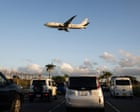
Earlier this year the ABC travelled to the south of the country, where the Timor-Leste government spent $670 million building a major freeway and international airport in anticipation of the project's gas being piped onshore.
The highway, which opened in 2017, is now riddled with potholes and the international airport is barely used.
In January oil and gas analyst Saul Kavonic said the long-held plan for Timor-Leste to pipe the gas onshore had been driven by "resource nationalism" and the "politics and personalities of very influential people in Timor", including Prime Minister Xanada Gusmão.
He said "no oil and gas company in the world" saw it as a priority project and that it would be "exceptionally risky" for the country to go it alone, essentially gambling "the entire national economy" on a single LNG project without a proven operator.
Mr Wilkinson said Woodside's decision to sell out of Greater Sunrise was unsurprising.
Although the combined Sunrise gas fields held about five trillion cubic feet of gas, he said the project was not huge by global standards and Woodside was pivoting away from Australia and towards the US.
"If you are locked down and can't make headway … sometimes you have to lean across the table and shake hands," Mr Wilkinson said.
"[Timor-Leste] better have a backup," he said.
"Let's see if they announce something in the next six months."
- china
- woodside
- gas
- project
- timor
- leste
- analyst
- greater