Why do we measure root ginger in ‘thumbs’ and centimetres rather than weight?
In other words, if Nick were to use a smidge more (or less) ginger than Cloake in, say, her dal, it’s unlikely to make or break it. However, Nick is right in that ginger does vary hugely in shape, Cloake says: “If it was a very thick piece, or it wasn’t thumb-shaped, I’d cut it so the cumulative flesh of the ginger was roughly the same as the cumulative flesh of a thumb.
When it comes to ginger, personal taste often trumps strict precision, say our experts as they get to the root of the issue
Why do so many recipes state the amount of fresh ginger in “thumbs” or centimetres. With it being so variable in shape, why don’t you use weight? Nick, by email Let’s gather some of the Guardian food troops and ask them to explain themselves. First up in front of the class is our own perfectionist, Felicity Cloake: “That’s a very good question, and I don’t think there is a very good answer,” she says. “Maybe it’s just convention, because sometimes it feels a bit fussy to give a precise weight for the likes of ginger, onions and other staples if you’re not, say, Heston Blumenthal.” Often, it doesn’t really matter that much, either: “If you give a precise weight, people will perhaps think it’s very important and worry if they’re a few grams out,” she adds. In other words, if Nick were to use a smidge more (or less) ginger than Cloake in, say, her dal, it’s unlikely to make or break it.
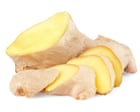
Cloake’s fellow columnist Georgina Hayden agrees: “Unlike measuring a ratio of risotto rice to stock, or making a cake, the typical recipes I use ginger in, such as curries, don’t have to be precise,” she says. “After all, cooking should be as instinctive as possible, rather than relying on digital scales.” However, Nick is right in that ginger does vary hugely in shape, Cloake says: “If it was a very thick piece, or it wasn’t thumb-shaped, I’d cut it so the cumulative flesh of the ginger was roughly the same as the cumulative flesh of a thumb. You’re just trying to give a rough amount, without being too prescriptive. But he’s right, we should probably move to grams.”
In that same spirit, another columnist, Ravinder Bhogal, nails down the thumb measurement even further, taking it to mean a piece that’s about 5cm long, the length of an average adult thumb, and weighing about 15g. “I get that ‘a thumb’ as a measurement is not exactly scientific, but how much ginger you put in a dish is also up to you – more if you like it stronger and less if you don’t,” Bhogal says. If, for example, a recipe were to call for garlic as well as ginger, she would be inclined to use the same weight of each, although, she adds: “Remember the flavour of ginger softens as it cooks. But a centimetre here or there is not going to make a huge difference, so go with your own personal taste.”
After all, that’s a big part of cooking, right? When Hayden writes a recipe, she says, its purpose is also to empower home cooks to take a bit of creative licence: “A knob of butter, a pinch of salt, a bunch of herbs … sometimes, vague measurements are a good thing. Also, it’s mad to get out the scales for something as small as ginger.”
Cloake, however, imagines Nick “to be a more scientifically minded cook” than she is, so here are some final words: “Essentially, there’s no good reason for it, except to say that it gives an idea that you don’t have to worry too much. It’s just a guideline.” And there’s plenty enough to worry about in this world already right now.
Got a culinary dilemma? Email feast@theguardian.com
- ginger
- weight
- root
- thumb
- nick
- cloake
- recipe
- shape