‘We did everything wrong!’ The tragedy of the hit-free band behind Blondie’s Hanging on the Telephone
The tragedy of the hit-free band behind Blondie’s Hanging on the Telephone. When the music industry ignored them, the Nerves opted to make their own luck, pressing their own EP and booking a gruelling nationwide tour that saw them share stages with Devo and the Ramones.
They gigged wildly, helped other groups to fame and their songwriting brilliance gave Blondie a signature track. Could a deathbed wish now see the Nerves finally making it big?
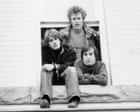
The Nerves should have had it all. Formed in 1974 and gifted with earworm melodies, good looks and a painstaking work ethic, the trio of Jack Lee (guitar, vocals), Peter Case (bass, vocals) and Paul Collins (drums, vocals) wrote, rehearsed and gigged as if their lives depended on it. Not quite punk and dismissive of the description “power pop”, they aimed to cram epic brilliance into effervescent, two-minute songs.
When the music industry ignored them, the Nerves opted to make their own luck, pressing their own EP and booking a gruelling nationwide tour that saw them share stages with Devo and the Ramones. After they split in 1978, a bittersweet coda to their brief career swiftly followed: Parallel Lines, Blondie’s smash-hit third album, opened with a cover version of their song Hanging on the Telephone. Previously a Nerves calling card, the Blondie take seemed to scrub them from history.
“I figured it would be two weeks, or a month tops, before we were famous,” smiles Paul Collins from his New York home today. A Juilliard student with a bohemian upbringing and an overriding love of rock’n’roll, Collins dropped out and headed for the west coast. “I was barely 18, I had 80 bucks in my pocket and I was scared to death,” he recalls. Within three days of arriving in San Francisco, he found an ad tacked to the wall of a record store which led him to the enigmatic Jack Lee, a transplant from Sitka, Alaska.
Peter Case proved harder to woo. Baling on school at 15 and ditching Buffalo for San Francisco, he played blues and country standards on the street to pay for food. “I slept in a beat-up van parked down by the water,” says Case. “It wasn’t even my van.” Lee and Case struck up a friendship when the latter was busking. When Collins came on board, the Nerves were transformed from idea to actuality. “You just couldn’t find people that wanted to do something that was that out of joint,” Case recalls. “There was nobody else like Jack around – someone who had a vision, wanted to go with it and could write.”
The band set up shop in a three-storey flophouse, immersing themselves in practice sessions that could last up to 16 hours. “It was like being in boot camp,” says Collins. “My snare drum would be covered with blood because we were playing so fast. It was three people acting as one person, and it was a 24-hour endeavour. There was no on and off.”
For all their commitment, it soon became apparent that the Nerves were going nowhere. With no peers beyond the Flamin’ Groovies and the aloof, leather-clad Crime, the trio saw no future playing to barflies and fist-swinging off-duty servicemen. After Lee recovered from a near-fatal stabbing, the band left for LA. There they rubbed shoulders with scenesters such as Kim Fowley and Rodney Bingenheimer, and organised early shows for punk bands the Germs and the Weirdos. “It turned out to be a bitter pill to swallow, because they instantly became much more popular than we did!” says Collins.
Unperturbed, the band concocted a national tour in 1977 that spanned 71 days, 39 gigs and 16 cities, during which they connected with the Dead Boys and Cheap Trick, and played a series of dates with the Ramones. “The Ramones’ work ethic was even more stringent than ours,” recalls Collins. “They’d be practising before the show, and afterwards they’d go back to the hotel and work on songs. I remember sitting at this big wooden table with them after a show, and Dee Dee goes, ‘May I be excused? I have to go to the bathroom.’ It was like he was at the dinner table with his parents!”
If the Ramones were a picture of politeness, other soon to be stars were less welcoming. “We played Boston, and when we were loading in, there were these four guys completely dressed in leather,” says Collins. “One of them goes, ‘What the fuck do you think you’re doing? You’re touring all over the country. You don’t have a manager. You don’t have an agent. It’s bullshit. We know what we’re fucking doing. We’re going to be huge.’ So we look at them and say, ‘Yeah, well what’s the name of your band? The Cars? What a stupid name…’”
Inevitably, travelling thousands of miles in a station wagon and booking gigs on the fly took its toll. “It’s like a plant,” says Collins. “You don’t give it water, you don’t give it sunlight, it’s gonna die. We couldn’t get any industry acceptance, and I think we’d taken all we could.”
After a stint in the Breakaways, Collins and Case respectively formed the Beat and the Plimsouls, with both bands enjoying the success that eluded the Nerves. Lee, meanwhile, worked on a solo career, self-funding two albums and encountering more proxy success when Come Back and Stay became a hit for Paul Young. While Hanging on the Telephone would be covered by everyone from L7 and Def Leppard to Girls Aloud, the Nerves remained perennially under the radar, never achieving the same cut-through as the bands they’d served with in the trenches.
Fifty years on, a new anthology may redress the balance. “My dad tasked me with this on his deathbed,” says Lee’s daughter, Cynthia Cook. “His dream was to be on Jack White’s label Third Man Records.” While Cook may have grown up writing songs with her father – their first was titled Rock’n’Roll Rabbit, penned when she was five – the music industry wasn’t her home turf. “My dad was all about the long shot,” she smiles. “You know, I’m a mom who works in real estate … but I should go get a deal with Third Man.”
The long shot eventually paid off, however, and Cook seems both overwhelmed and overjoyed by the challenge of sifting through a lifetime’s worth of songs. “I have cassettes from the 70s, 80s, 90s and 2000s,” she says. “There’s about three albums’ worth of releasable material.” Her finds to date include a swiftly junked MySpace cut preserved by a fan, and a live tape recorded by an off-duty Whiskey a Go Go waitress and unearthed in a closet 50 years later.
As for the Nerves’ legacy, the surviving members are philosophical. “It makes me realise that we did everything wrong in certain ways, and everything right in others,” says Case. “It didn’t work out well at the time, but the music is here now, 50 years later. Who would have ever thought that?”
- blondie
- telephone
- nerves
- vocal
- tragedy
- band
- hanging
- brilliance