LPO/Gardner review – Mark Simpson’s piano concerto leaves its audience panting
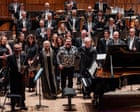
Royal festival hall, London Pianist Tamara Stefanovich gave the world premiere of Mark Simpson’s fearless and uncompromising new concerto, with Edward Gardner and the London Philharmonic mostly keeping up ‘Restless and impassioned.” Before a note of Mark Simpson’s new Piano Concerto has sounded, it’s clear from the movements that this is music with the volume dialled up: louder, faster, bigger, fiercer.
Royal festival hall, London Pianist Tamara Stefanovich gave the world premiere of Mark Simpson’s fearless and uncompromising new concerto, with Edward Gardner and the London Philharmonic mostly keeping up
‘Restless and impassioned.” “Very fast.” “Explosive, with abandon!” Before a note of Mark Simpson’s new Piano Concerto has sounded, it’s clear from the movements that this is music with the volume dialled up: louder, faster, bigger, fiercer. And it’s no idle promise. We open in a landslide of sound and barely draw breath for half an hour. This is a concerto that leaves the audience panting – let alone the soloist.
Simpson’s music is larger than life. The British composer and clarinettist (who famously won both BBC Young Musician and BBC Young Composer of the Year back in 2006, aged just 17) plays with big forces and sounds at their extremes – whether that’s a barrage of percussion or extremes of register – and is rarely far from the kinetic twitch of nervous energy.
His Piano Concerto – premiered here by soloist Tamara Stefanovich with Edward Gardner and the London Philharmonic Orchestra – shows no fear of the genre’s historical greats. An opening volley of virtuosity from the soloist could be Rachmaninov or Tchaikovsky, but arrives thickly encrusted with orchestral weight, barely audible through the layers.
Throughout this first movement we must excavate through sound to find the piano, which finally breaks free in a quicksilver central scherzo that sees it dancing with tuned percussion, rippling briefly above the orchestra in glinting passagework. The finale introduces a new vein of introspection, but once again extremity prevails as the pianist explores the outer reaches of the keyboard, goading the orchestra on to ever more athletic feats. Stefanovich wrestled bodily with Simpson’s demands, assertive and uncompromising, seizing the fleeting opportunities for lyricism, while Gardner and his band mostly kept up.
Did the Simpson take all the rehearsal time? The framing works – Dorothy Howell’s pleasant, French-accented tone-poem Lamia and Stravinsky’s ballet The Firebird – should have been all drama, all colour. But there was a workaday quality to the Stravinsky, a lack of tension to the pacing, a lack of precision to the woodwind solos and brass ensembles. Everything was there – villain Kashchei’s brooding evil, delicate princesses, the dazzling, darting Firebird itself – but in grayscale, waiting for that spark that turns Kansas into fairytale Oz.
- simpson
- concerto
- mark
- gardner
- piano
- audience
- lpo
- review