MIKTA envoys, FG seek stronger climate finance partnerships ahead of COP31
By Favour Ulebor, Abuja Diplomats from MIKTA member countries and the Federal government have called for improved access to climate finance, stronger international partnerships and increased investment in practical solutions to help developing countries address climate change. The discussions brought together representatives of Australia, Türkiye, Indonesia, the Republic of Korea, Mexico, Ethiopia and relevant stakeholders from the climate change sector to examine ways of translating climate commitments into projects that support economic growth, energy access, agriculture and community…
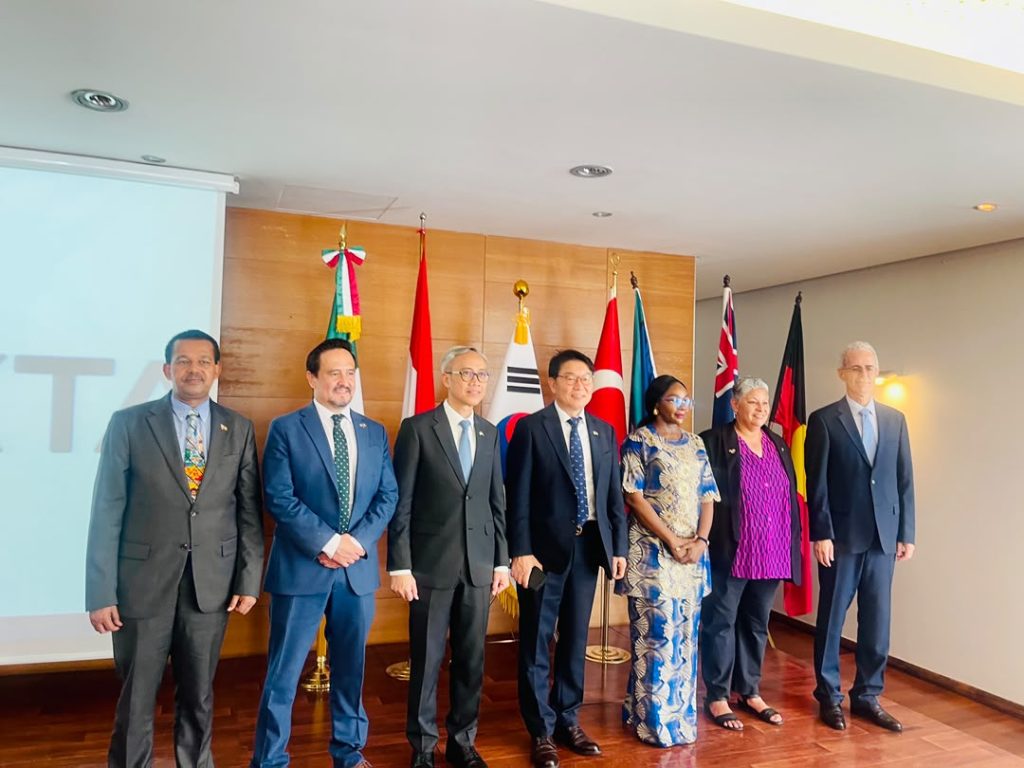
By Favour Ulebor, Abuja Diplomats from MIKTA member countries and the Federal government have called for improved access to climate finance, stronger international partnerships and increased investment in practical solutions to help developing countries address climate change. The call was made at a MIKTA roundtable on Climate Finance and Implementation Partnerships in Africa, held on Tuesday in Abuja, ahead of the 31st United Nations Climate Change Conference, COP31, scheduled to hold in Antalya, Türkiye, from November 9 to 20.
The discussions brought together representatives of Australia, Türkiye, Indonesia, the Republic of Korea, Mexico, Ethiopia and relevant stakeholders from the climate change sector to examine ways of translating climate commitments into projects that support economic growth, energy access, agriculture and community resilience. Speaking at the meeting, the Australian High Commissioner to Nigeria, Ms Leilani Bin-Juda PSM, said climate action must deliver practical outcomes, particularly for developing countries and communities most vulnerable to its effects.
Bin-Juda said many developing countries continued to face difficulties accessing climate finance because of complex applications, fragmented funding systems, reporting requirements and delays. She said Australia was working with Türkiye towards COP31 and with Pacific partners to ensure their priorities were reflected in the global climate discussions.
The High Commissioner also highlighted a Pacific-led Action Plan on access to climate finance for Small Island Developing States and Least Developed Countries, launched at Pre-COP in Fiji on October 8. She said the initiative sought to simplify funding applications, approvals and disbursement, mobilise private investment and strengthen countries’ capacity to develop investment-ready projects.
Bin-Juda urged Nigeria to support the initiative, noting that broader international backing would strengthen efforts to make climate finance more accessible and responsive to the needs of vulnerable countries. “For Australia, COP31 is about turning climate ambition into practical outcomes,” she said. The Turkish Ambassador to Nigeria, Mehmet Poroy, said COP31 should focus on implementing existing commitments and ensuring that climate ambitions translated into measurable results.
Poroy said African countries needed adequate financial resources, technology, institutional capacity and support for project preparation to implement their national climate plans. He said climate finance should also support development priorities, including energy systems, sustainable agriculture, food security, green industries and climate-resilient cities.
The ambassador highlighted Türkiye’s Climate Implementation Bridge initiative, being developed with the United Nations Development Programme, to help developing countries bridge the gap between climate commitments and investment-ready projects. He explained that the initiative was not designed to establish a new fund or replace existing climate finance mechanisms, but to help countries connect their climate priorities with appropriate financing and private capital.
Poroy said cooperation between MIKTA countries and African partners could help strengthen implementation as the international community prepares for COP31 and COP32, expected to be hosted by Ethiopia in 2027. Meanwhile, the Indonesian Ambassador to Nigeria, Bambang Suharto, said the scale of investment required to achieve climate targets in developing countries highlighted the need to combine public resources, private investment and international support.
He said Indonesia estimated that it would require about $472.6bn to achieve its climate targets, with annual financing needs of approximately $14.5bn through 2030, compared with an annual state budget allocation of about $4.42bn. Suharto said Indonesia was exploring different financing instruments, including green sukuk, blended finance, thematic bonds and concessional funding, to support climate action.
He called for existing international climate finance commitments to be delivered and for greater support for project preparation to help countries develop proposals capable of attracting investment. The envoy also highlighted the importance of ocean conservation and coastal resilience, including mangrove restoration, early-warning systems and sustainable fisheries.
He expressed Indonesia’s readiness to consult with Nigeria and interested partners on a possible Indonesia-Nigeria Climate Finance and Resilience Partnership, with potential areas of cooperation including climate-resilient agriculture, land restoration, coastal protection, clean energy and green industrialisation. Similarly, South Korea’s Ambassador to Nigeria, Jeong Yoan, outlined opportunities to deepen climate cooperation with Nigeria through renewable energy, agricultural technology, infrastructure and green investment.
Jeong said South Korea was committed to achieving carbon neutrality by 2
- climate
- finance
- country
- investment
- türkiye
- project
- nigeria
- initiative