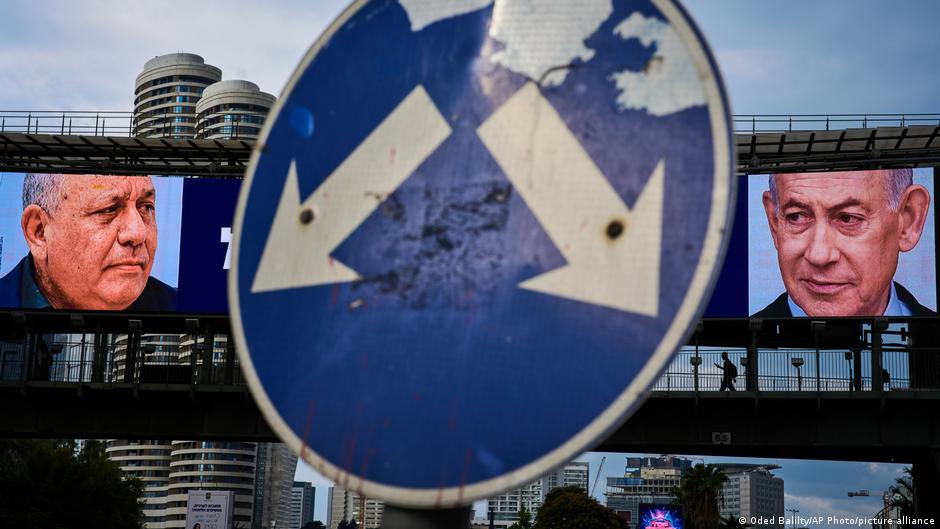
Israel election: Anti-Netanyahu bloc ahead, but no majority
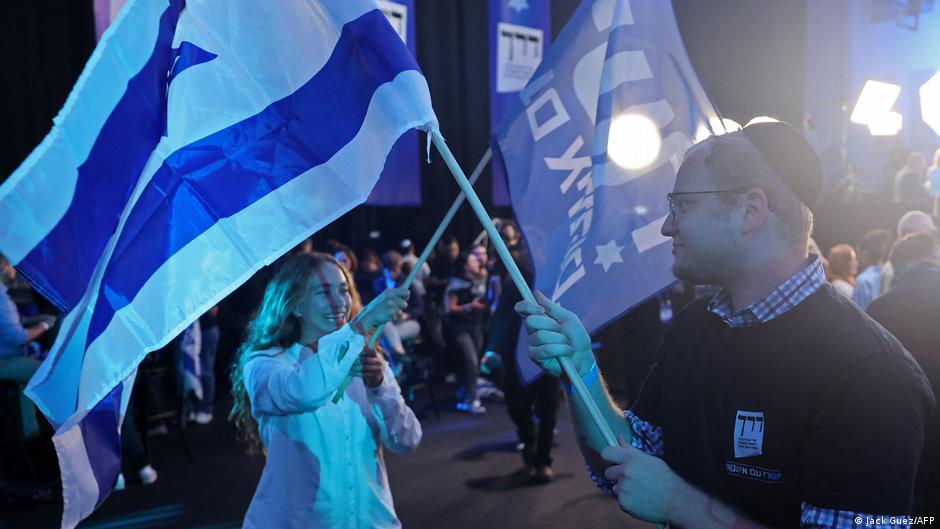
While Netanyahu's party is projected to be the biggest in parliament, the anti-Netanyahu coalition looks set to have more seats. But no bloc has a clear majority.
Follow below for all the latest on the Israeli election on October 27, 2026, and its aftermath:
Much of the Israeli media labeled the Israeli election an opinion poll on Israeli Prime Minister Benjamin Netanyahu.
If the exit polls of Israel's main news outlets are anything to go by, the Israeli public voted against the country's longest-serving prime minister.
While Netanyahu's current coalition includes 68 seats, the exit polls gave his bloc between 50 and 51 seats.
The Israeli prime minister is unlikely to concede defeat despite his coalition having taken a significant hit, but it remains to be seen how Likud's own ranks, as well as its coalition partners, will react to the exit polls.
The success of Ra'am, which exit polls predict will take seven seats, means no Israeli government can be established without the religious Muslim party playing some part.
The party already made headlines after appointing Yoav Segalovich, a Jewish former high-ranking police chief, as the number two candidate to leader Mansour Abbas. The raging criminality and violence across the Arab and Palestinian community, as well as the war in Gaza, both could have played a role in Ra'am's result.
Both the Likud-led coalition and large parts of the Israeli opposition may have ruled out a coalition with Ra'am, but the current results may leave them little choice but to seek some form of cooperation with the party.
As one Israeli pollster put it, "Tonight, Israelis were reminded that their population also includes Arabs and Palestinians with Israeli citizenship."
Exit polls from Israel's major television networks project that a majority of Israelis voted against Prime Minister Benjamin Netanyahu's coalition, but his Likud party has emerged as the largest single group in the Knesset, with 25 projected seats.
Challenger Gadi Eisenkot's bloc has emerged as the largest group with a projected 53, just ahead of the ruling coalition on 50, but well short of the 61 needed for a majority.
Neither bloc has a clear majority without the support of Arab parties.
These projected numbers are from public broadcaster Kan 11; other numbers vary by channel, but only slightly.
It's now 10 p.m. across Israel, which means that polling stations around the country either should have closed or should be making preparations to do so as the last people in line cast their ballots.
Exit polls should follow shortly on Israeli television. These have a fairly good reputation overall but of course are only projections.
Results will start to trickle in through the night and are unlikely to be finalized until Wednesday.
And of course, there's every chance that even once the dust has settled and the final results are in, we will have a longer wait until there's clarity about who might be able to form a coalition government.
In any case, stick with us and we'll keep you posted.
The Central Elections Committee has rejected a request by Prime Minister Benjamin Netanyahu's Likud party and some other groups to extend voting beyond 10 p.m. (2000 UTC/GMT).
"High nationwide turnout across all sectors of society reflects strong public engagement in the democratic process, and no need to extend voting hours was identified," a commission statement said.
The committee noted, however, that this decision was based on the circumstances "as things stand," leaving open the possibility for matters to change.
For instance, voting hours have been extended in some areas, including a polling location used by Israeli settlers in Hebron, in the occupied West Bank, where a power outage led to an extension of the closing time from 8 p.m. to 10 p.m. Polling stations with fewer than 350 eligible voters typically close two hours earlier than larger polling stations in urban areas.
The commission has also said several times that anybody who started queueing before closing time will be given a chance to vote.
Artificial intelligence is emerging as a major factor in Israel's election campaign, with political parties using AI-generated videos, automated calls and online content on a large scale.
DW's Josh Axelrod examined the growing role of AI in the campaign, as researchers and analysts raise concerns about misleading content, bots and deepfakes ahead of the vote.
The expected high turnout means the number of votes needed to cross the 3.25% threshold to enter the Knesset, the Israeli parliament, is going to be higher, meaning smaller parties are at risk of not making it.
According to opinion polls from last week, the two parties that are on the threshold limit are Amcha Israel, a far-right party led by former military commander Ofer Winter, and the Reservists Party, which has not declared support for either main bloc.
Winter repeatedly said he intends to join a Netanyahu coalition, and a scenario in which his party doesn't make it to parliament puts Likud's chances of a future coalition at risk.
Either way, Israel's Central Elections Committee will have to make a decision on the matter within the hour.
Voter turnout reached 66.7%, or roughly two in every three eligible voters, by 6 p.m. local time, according to an update from the Central Elections Committee.
This remains the highest partial turnout figure since such records were first taken in 1973.
The level is only slightly clear of the previous high of 65.2% in 1973 and 1988 — but it quite considerably surpasses the 57.7% who had voted by this time in 2022.
And that figure had already been the highest 6 p.m. turnout of the 21st century before being surpassed today.
Arab voters could play a decisive role in Israel's election. With neither Benjamin Netanyahu nor Gadi Eisenkot expected to win a Knesset majority, Arab parties could become key to forming the next government.
Activists worked to boost voter turnout, especially among young voters.
Prime Minister Benjamin Netanyahu continued issuing appeals to supporters to go out and vote online as the day progressed.
One common theme was apparent in almost all of the posts: warnings about high turnout in Arab and to a lesser extent left-leaning communities.
"We're at war for our home," one of Netanyahu's posts read, using a phrase that appeared repeatedly in his messaging. "Muslim Brotherhood supporters are raiding the polling stations and stealing the elections. Go out and vote, recover it!!"
In another post he showed an image claiming to show a long line of voters queueing in Rahat, with a crowd of women wearing niqab coverings prominently visible at the front of the queue, suggesting that they were Muslim Palestinian voters.
Sami Abou Shahadeh, the leader of the Balad party, which is part of the alliance known as the Joint List, in turn called on his supporters to vote before the deadline expired, also highlighting similar appeals to voters from the leader of the far-right Jewish Power party, Itamar Ben-Gvir.
"There is one response to the incitement by Ben-Gvir and Netanyahu against the Arab citizens that has been going on all day: go out and vote for the Joint List!" he wrote.
The president of the German-Israeli Society, Green party politician Volker Beck, said in a TV interview on election day that he believed a change in leadership might be in Israel's interests.
"It would be good for Israel, if it were to come to a change, because I believe that [Prime Minister Benjamin] Netanyahu has squandered a great deal of trust in recent years, both in foreign and domestic policy," Beck said in an interview broadcast on sister channels RTL and ntv.
Beck, a Bundestag lawmaker for more than two decades with the Greens who was perhaps best known as a politician as a campaigner for LGBT rights and advocate of an uncompromising Israeli foreign policy, is not typically associated with stern criticism of Netanyahu or his government.
"Although he has also done some things right and has done some necessary things, a change is really needed" to allow Israel to recoup support among the international community, Beck said, as Netanyahu becomes an increasingly polarizing figure on the world stage.
He also criticized domestic efforts by the Likud-led government to reform the legal system and its influence over politics, saying this would "fundamentally change Israel's character, and should be stopped."
Beck said he hoped that a functioning majority would emerge from the vote, but acknowledged that pollsters anticipated a stalemate. In that scenario, he said, he would personally favor a national unity government incorporating all the major players.
But at present he thought the "divide between the two camps is so deep, that it really would be a bit of a masterstroke to be able to bring them together." He made a similar comment online, saying such a unity govermment "would be good" but was "not very likely."
Prime Minister Benjamin Netanyahu's Likud party wrote on the Telegram social media channel that it has submitted a request for polling stations to stay open later.
"Likud: We have submitted a request to extend the voting hours!" the post said.
It offered no further details, for instance, how long an extension it was seeking or whether it was to be nationwide or at individual polling stations.
The Ultra-Orthodox Shas party also joined the petition, according to the Times of Israel, saying: "The parties are trying to prevent a situation in which citizens waiting in line won’t be able to vote."
The main opposition Yashar party rejected the extension, saying: "No exceptional incident has occurred that would justify granting this request, which is intended to lay the groundwork for allegations challenging the integrity of the election, continuing the lies Netanyahu has been spreading since this morning."
Politicians of all stripes have been trying hard to mobilize voters for what's expected to be a tight race. Turnout has also been high so far, with long lines at some polling stations as a result of this.
Voting was already set to continue quite late into the night, with polling stations scheduled to close at 10 p.m. local time. Voters who are in line at polling stations at closing time will still be allowed to vote.
Polls show Israel's many young voters are more likely to vote for far-right parties, particularly Itamar Ben-Gvir's Otzma Yehudit (Jewish Power) party.
An opinion poll by Agam Labs at Jerusalem's Hebrew University predicts that supporters of Otzma Yehudit are younger than the average Israeli voter, with as many as a third voting for the first time.
Over 500,000 Israelis have reached voting age since the 2022 election. Of those voters, three in every four define themselves as right or center-right, according to a recent poll for Channel 12. The poll did not survey Palestinian citizens of Israel.
First-time voters were teenagers when Ben-Gvir joined Netanyahu's incumbent government in 2022, making up Israel's most far-right government to date.
A year later, they witnessed the Hamas-led October 7 terror attack which killed 1,200 Israelis, mostly civilians, and saw some 251 others taken hostage and brought to Gaza. The attack triggered a 2-year war on the Palestinian enclave that resulted in tens of thousands of Palestinians killed and intensified settler violence against Palestinians in the West Bank. Hamas is designated as a terrorist group by several countries.
Previously, Otzma Yehudit's support was concentrated primarily among settlers in the occupied West Bank.
While security remained the dominant issue for Israeli voters, one topic was largely absent from the election campaign: a peace process with the Palestinians.
After years of conflict and failed negotiations, that debate has been pushed to the political margins.
Has Israeli society abandoned the idea of coexistence?
Avraham Burg, an Israeli writer and former Speaker of the Israeli Parliament, shares his insights with DW.
Turnout in Israel's election keeps rising. It reached a record 44.9% by 2 p.m. (1200 UTC), the Central Elections Commission said.
Some 3.29 million Israelis had cast their ballots by that point, commission head Dean Livne said.
It was the highest turnout recorded at that hour since the commission began collecting comparable statistics in 1973.
- bloc
- majority
- israel
- election
- netanyahu
- anti
- party
- parliament