Giant ball of 2.8 million eels gathers off Tasmania's coast to spawn
CSIRO scientists have identified an underwater mountain off Tasmania where a threatened deep-sea eel species gathers annually.
Ocean surveys reveal that around 2.8 million eels gather for months at an underwater mountain off Tasmania.
The annual aggregation is the only known spawning site globally for purely oceanic eels.
Further studies may determine where the eels come from and where their offspring go after spawning.
Millions of eels gather like clockwork each year to make out along a ridge at the bottom of a deep-sea mountain off Tasmania.
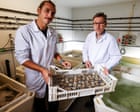
About 2.8 million basketwork eels (Diastobranchus capensis) — or 3.5 tonnes' worth — make the pilgrimage to a site next to Patience Seamount in the Huon Marine Park, according to a CSIRO-led study published in Royal Society Open Science.
CSIRO fisheries acoustics researcher and study lead author Ben Scoulding said finding a spawning site for any eel species was unique.
"It's the only known aggregation of … any deep-sea eel anywhere."
Basketwork eels are apex scavengers that grow to about 1.8m in length and get their name from a crosshatch-like pattern on their skin.
"It's like those old woven baskets," Dr Scoulding said.
Patience Seamount has been a known hot spot for basketwork eels since the 80s.Dr Scoulding said fishers nicknamed the site "Eel Hill" as they regularly caught the species as bycatch while targeting orange roughy (Hoplostethus atlanticus).
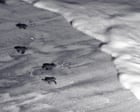
"Then CSIRO conducted some work on the RV Southern Surveyor in the mid 2000s and put a camera down … to confirm the presence of the eels."
But it took until more recent surveys between 2023 and 2025 to determine how many eels were there.
Dr Scoulding said researchers used a combination of techniques to calculate the size of the aggregation and what the eels were up to.
These included hydro-acoustic surveys, which Dr Scoulding described as a "really expensive scientific fish finder", from Australia's flagship ocean science ship the RV Investigator.
"We're essentially 'pinging' sound down into the water column," Dr Scoulding said.
That sound then bounces off different objects and back to the scientists with unique signatures depending on what is hit.
Dr Scoulding said basketwork eels reflected a lot of sound because they had a big swim bladder (an organ filled with gas to regulate a fish's buoyancy).
"Air is a really good reflector of sound," he said.
Knowing how much sound is reflected by a single eel, and using camera surveys, the researchers estimated the eel aggregation was about 1,000 metres deep and covered an area of about 2 by 3 kilometres.
"The eels are almost touching each other in that centre part," Dr Scoulding said.
"And then the further you get out, it's almost like having one eel in a living room, so every 20 metres cubed."
The eels start gathering at Patience Seamount in December every year.
Dr Scoulding said numbers then peaked around May to August before the eels disappeared in October.
"One of the interesting things is the persistence of the aggregation … it is there for the majority of the year," he said.
The researchers caught several eels and found all of them had empty stomachs.
Dr Scoulding said one female had spawned and all the others were close to spawning.
Why exactly the eels chose to gather at Patience specifically was unknown.
"It's one of 120 seamounts within Huon Marine Park … so it's quite unique that all the eels chose Patience to aggregate at," Dr Scoulding said.
Research is ongoing into the connectivity of basketwork eel populations around Australia and New Zealand and whether they all gather at Patience.
Basketwork eels are considered vulnerable to extinction on a global list of threatened species.
This is in part because of their status as bycatch in orange roughy fisheries (a popular species on the dinner plate).
Populations of the eel on a particular continental slope in New Zealand have declined 85 per cent in the past 40 years.
Whether similar collapses happened at Patience Seamount in the past was unclear.
Parks Australia island and marine parks branch head Shaun Barclay said the new study helped give a baseline for measuring future change for the eels.
"It's a great example of what marine parks are designed to do, protecting extraordinary places and to let us undertake the science to manage them in the future," he said.
Mr Barclay said Patience Seamount was protected from the fishing practice of bottom trawling through a new management plan last year.
- ball
- eel
- tasmania
- coast
- scientist
- mountain
- sea
- specie