Miners’ deaths: Panel recommends summary dismissal, prosecution of NSCDC officers, N1.4bn for victims
•Says overcrowding, heat stress, dehydration caused deaths •Rules out use of chemicals; as FG vows justice By Omeiza Ajayi ABUJA—An independent ministerial committee has recommended summary dismissal, administrative sanctions and prosecution of some officers of the Nigerian Security and Civil Defence Corps, NSCDC, over the deaths of 33 detainees in the custody of its Niger State command in Minna, along with N1.4 billion in compensation for victims and survivors. The committee’s chairman, Jonathan Kure, who presented the report to the Minister of Interior, Olubunmi Tunji-Ojo, in Abuja,…
•Says overcrowding, heat stress, dehydration caused deaths •Rules out use of chemicals; as FG vows justice By Omeiza Ajayi ABUJA—An independent ministerial committee has recommended summary dismissal, administrative sanctions and prosecution of some officers of the Nigerian Security and Civil Defence Corps, NSCDC, over the deaths of 33 detainees in the custody of its Niger State command in Minna, along with N1.4 billion in compensation for victims and survivors.
The committee’s chairman, Jonathan Kure, who presented the report to the Minister of Interior, Olubunmi Tunji-Ojo, in Abuja, yesterday, described the deaths as “entirely preventable.” Kure said the committee concluded that the incident was a preventable custodial tragedy, caused by severe overcrowding, unlawful and unsuitable detention conditions, failure of duty of care, disregard of repeated distress warnings, inadequate supervision, and wider systemic deficiencies.
He said the evidence did not support claims that the deaths resulted from a disease outbreak. According to him, “available medical and forensic evidence instead indicated that the fatalities resulted from an environmental asphyxia, an acute respiratory failure caused by prolonged confinement in a severely overcrowded and poorly ventilated detention cell, aggravated by heat stress and dehydration.” The 65-page report, of which 46 pages form the main body, examined the arrest, detention, treatment and deaths of detainees between September 15 and 17, 2026.
It was commissioned by the minister, following a presidential directive. The committee said the tragedy stemmed from enforcement operations against suspected illegal mining in and around Minna. No headquarter’s approval Kure said: “The operation was undertaken without an approved operational order, proper planning and consultation with relevant mining authorities, or involvement of the specialised Mining Marshals unit.
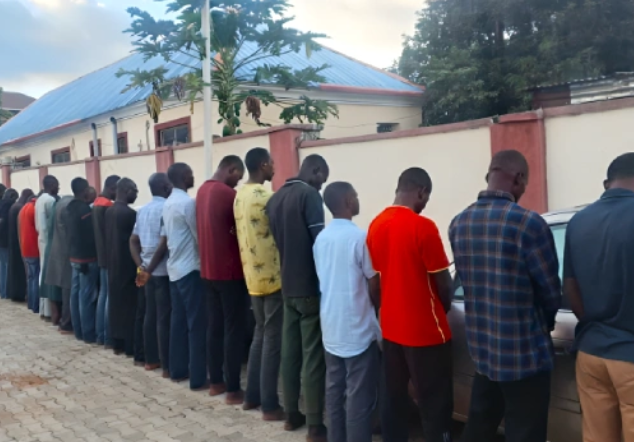
National headquarters was not informed before the operation commenced,” he added. He said the raids led to the arrest of men, women and children, and that by the evening of September 16, 75 persons had been detained. He said after one release, 74 remained in custody overnight, with about 50 male detainees confined in a cell measuring about 20 square metres.
The committee said the cell had “a solid metal door, inadequate airflow, no running water, poor lighting, and no functioning toilet.” It said food and drinking water were either unavailable or grossly inadequate, adding that adults and minors were held together. It found that the conditions breached constitutional safeguards, the Administration of Criminal Justice Act, the Child Rights Act and accepted international standards.
The committee concluded that they “amounted to cruel, inhuman, and degrading treatment, and created an environment, in which fatalities became foreseeable and preventable.” Kure said signs of distress began shortly after 7pm on September 16 and continued through the night. “Detainees repeatedly banged on cell doors and walls, shouted for assistance, and pleaded for water,” he said.
“These distress calls were heard by officers assigned to nearby duties,” he said. He said medical personnel had earlier raised concerns about poor ventilation and the risk of suffocation, but “were not acted upon.” Officers, he said, “failed to open the cell, decongest the facility, or arrange emergency intervention.” The deaths occurred inside the male cell between 8pm on September 16 and 7am on September 17, 2026.
“By the time the cell was opened, many detainees had died,” Kure said. The committee authenticated 33 deaths, 14 of them minors, and identified 41 survivors, adding that the higher figures reported immediately after the incident “could not be reconciled with available records and identified victims.” Though some survivors alleged that an aerosol substance was sprayed into the cell before the deaths, Kure said the committee found no evidence to support this claim and concluded that the allegation remained unproven on the available evidence.
The committee held individual officers responsible, stressing that the State Commandant, Suberu Siaka, authorised and supervised the operation without proper planning, approval or oversight, giving rise to overcrowding. It said the Head of the Investigation Unit, T. S. Sodiq, facilitated unlawful detention practices, ignored legal and medical concerns, and failed to act, despite direct awareness of the deteriorating conditions.
SC Usman Ndamaka was accused of maintaining overcrowded conditions, instructing subordinates not to open the cell, failing to respond to emergency alerts, and taking part in the cleaning and alteration of the detention area before independent examination. The committee said ASC I Hassan Mohammed failed to open the cell, despite repeated distress signals and did not adequately escalate the emergency, while DSC Abubakar Dabang profiled the suspects into detention, including minors, and failed to prot
- death
- committee
- cell
- detainee
- kure
- september
- summary
- dismissal