FG kicks off $100m Southeast gas pipeline project
Tinubu says S’East must rise from potential to reality …Mbah, governors hail Tinubu, pledge support for 400km pipeline The Federal Government, through the South East Development Commission (SEDC) has kicked off a $100 million gas distribution pipeline project to boost industrialisation, attract investments and create jobs in the South East. The President said the pipeline would benefit manufacturers in Aba, strengthen industrial clusters in Nnewi and Onitsha, attract productive enterprises to Enugu, expand agro-processing and manufacturing in Ebonyi and connect Imo’s gas resources to the…
…As SEDC seals deal with GasSync, commits $3m .. Tinubu says S’East must rise from potential to reality …Mbah, governors hail Tinubu, pledge support for 400km pipeline The Federal Government, through the South East Development Commission (SEDC) has kicked off a $100 million gas distribution pipeline project to boost industrialisation, attract investments and create jobs in the South East.
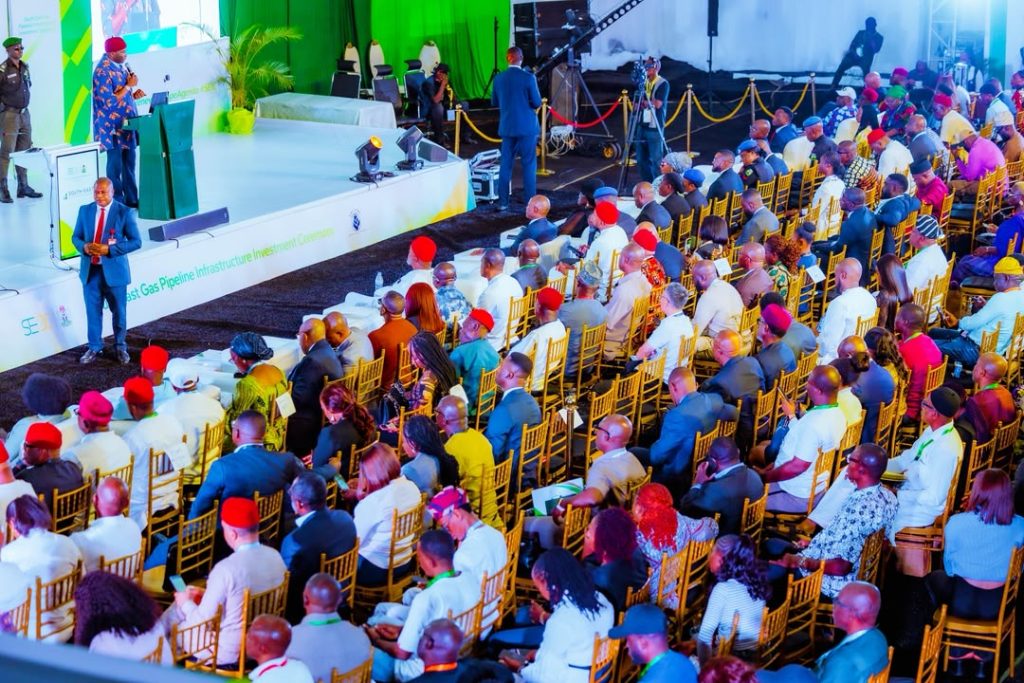
The 400-kilometre pipeline, designed to connect gas resources to industrial and commercial centres across Enugu, Anambra, Imo, Abia and Ebonyi states, has about 150 potential customers identified, with projected demand of 254 million standard cubic feet of gas per day. The investment agreement for the project was signed on Tuesday at the South-East Gas Infrastructure Investment and Project Development Ceremony held at Hotel Presidential, Enugu, marking a significant step towards establishing a regional gas distribution network.
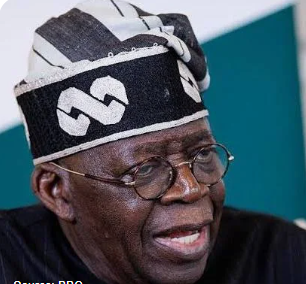
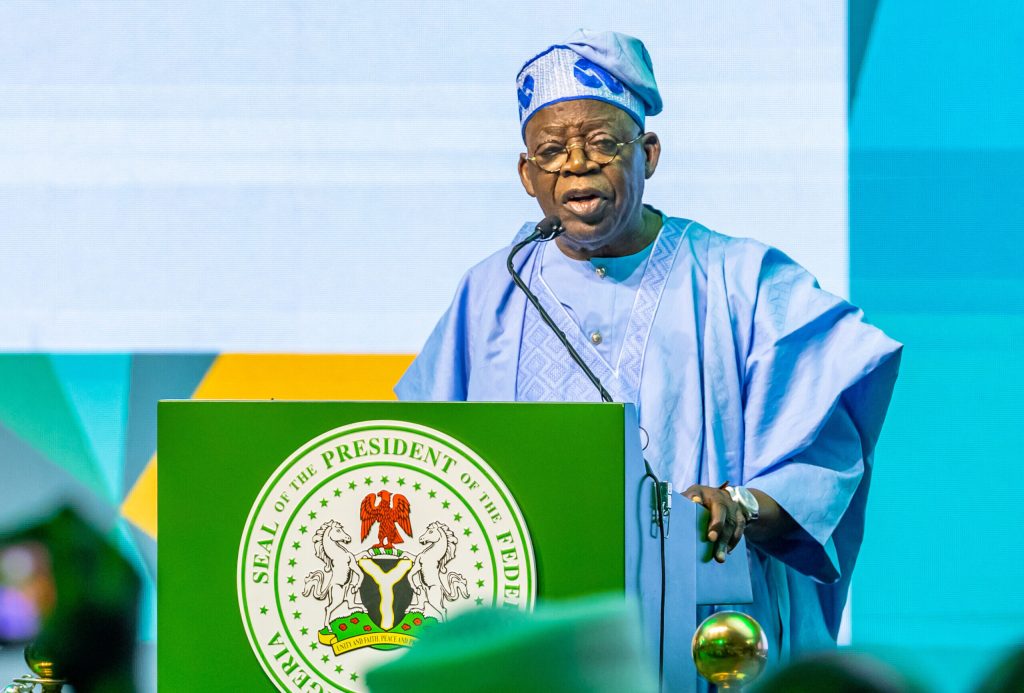
Tinubu, represented by the Deputy Speaker of the House of Representatives, Benjamin Kalu, described the project as a strategic investment that would connect the region’s natural gas resources to industries, strengthen manufacturing and unlock economic opportunities across the five states. “The Southeast’s entrepreneurial spirit is one of Nigeria’s greatest economic assets.
I have always believed that the prosperity of the Southeast is inseparable from the prosperity of Nigeria,” the President said. He said the project aligned with his administration’s commitment to building an integrated regional economy, stressing that gas infrastructure should support industrial development across state boundaries rather than serve isolated markets.
“Gas infrastructure must therefore serve industries and markets, not stop at political boundaries. That is the economic logic of regional integration,” he said. The President said the pipeline would benefit manufacturers in Aba, strengthen industrial clusters in Nnewi and Onitsha, attract productive enterprises to Enugu, expand agro-processing and manufacturing in Ebonyi and connect Imo’s gas resources to the wider regional economy.
He, however, said the ambition extended beyond supplying existing factories to creating the conditions for new industries, industrial parks and investments that had stalled because of unreliable energy supply. “Our ambition is not simply to deliver gas to existing factories. It is to make possible factories that do not yet exist, industrial parks yet to be developed, and investments that have remained on the drawing board because reliable energy was unavailable,” Tinubu said.
He described the South-East Development Commission (SEDC) as an institution established to deliver measurable development outcomes, urging it to assess its performance by the investments it mobilised, infrastructure it enabled, opportunities it created and lives it improved. The President said the South-East Vision 2050 development framework, supported by Vice-President Kashim Shettima and the governors of the region, provided a foundation for coordinated economic growth.
He also cited his approval of the South-East Investment Company as part of efforts to attract private capital into strategic development projects, noting that governments could not finance every development ambition from public funds. “This is the model I expect from our development institutions: identify strategic economic opportunities, prepare credible projects, commit public resources responsibly and mobilise private capital at a scale government budgets alone cannot achieve,” he said.
Tinubu commended the SEDC for committing $3 million to the gas project and establishing a framework to mobilise additional investments from state governments, institutions and private investors. He said the project’s initial phase required approximately $100 million, describing the partnership between public institutions and private investors as essential to developing sustainable infrastructure.
“We are not investing in pipelines for their own sake. We are investing in the industries, businesses and jobs those pipelines will make possible,” the President said. He urged the commission and its partners to uphold commercial discipline, transparency, environmental responsibility, community engagement and the highest safety standards throughout the project’s implementation.
“The true measure of government’s commitment is not what we promise, but what we deliver,” he said, expressing optimism that the investment would help create an industrial economy capable of competing in African and global markets. Tinubu said the ultimate objective was to translate the region’s natural resources into productive economic activity, employment and improved living standards.
“Let the gas beneath our soil power our industries. Let that energy become production. Let production become employment. Let employment become prosperity for our people,” he said. The President urged the SEDC, state governments and project partners to establish clea
- gas
- project
- pipeline
- development
- investment
- southeast
- south
- east