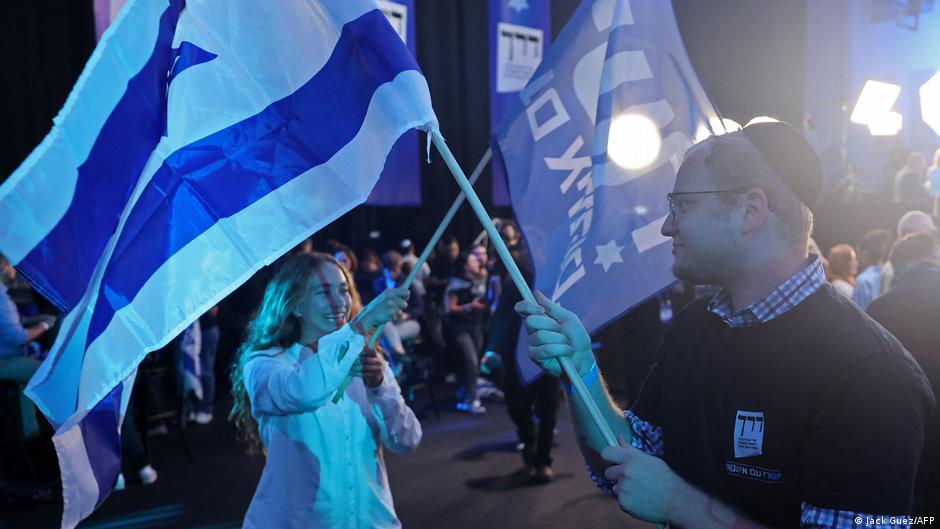
Israel’s parliamentary election too close to call as Netanyahu seeks another term

This election will determine whether Netanyahu remains in power or Israel sees a change in leadership.
Israeli Prime Minister Benjamin Netanyahu.
Prime Minister Benjamin Netanyahu’s right-wing bloc takes an early but marginal lead in the Israeli parliamentary election, with a third of the votes counted.
However, exit polls suggest Israel’s election hangs in the balance, as neither Mr Netanyahu nor Gadi Eisenkot can secure a clear parliamentary majority.
The two revised exit polls released so far showed Mr Netanyahu’s right-wing camp and his opponent Mr Eisenkot’s bloc tied at 51 seats. Israeli news outlets rely heavily on polls to predict elections.
The winning bloc needs at least 61 seats to form a majority government.
This election will determine whether Mr Netanyahu remains in power or Israel sees a change in leadership.
The election is a referendum on the country’s leadership after the 7 October 2023 Hamas attack, its subsequent wars, and the political and security decisions that have shaped Israel since then. The result could influence the direction of the war, relations with the Palestinians, Israel’s international standing and its domestic political future.
After polls showed a neck-and-neck race, Mr Netanyahu called for a strong right-wing government among the Zionist public and called for the formation of a “national right-wing government.”
He warned against forming one dependent on Arab parties. Arabs make up one-fifth of Israel’s population. Many of them also identify as Palestinians.
He recounted what he called his government’s military achievements and argued its work remained unfinished.
“Iran is weaker than ever; Israel is stronger than ever,” he said.
He also said Israel has a “unique opportunity” alongside President Donald Trump to “remove the Iranian threat once and for all.”
Meanwhile, the opposition has disputed the initial projection of 50 seats for Mr Netanyahu’s bloc, arguing that the prediction underestimated its support.
Mr Eisenko described the election as Israeli society’s response to the 7 October attacks and three years of war.
“People had not remained indifferent. They had come out to vote,” he said.
Mr Eisenkot said Israelis voted for “change” which he intends to introduce by forming “a government that represents the entire society.”
Meanwhile, Arab-led parties are also celebrating, with exit polls projecting they will win 19 seats. It will be the most they’ve ever held in parliament.
- israel
- election
- netanyahu
- term
- power
- change
- leadership